
Why your Culpeper dentist needs a 3D CBCT scan to see what traditional X-rays miss
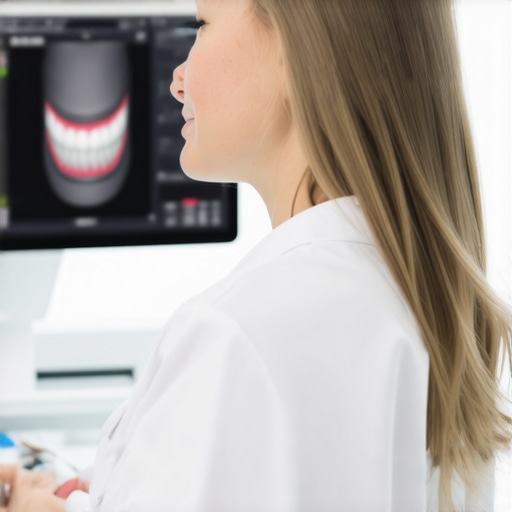
Why Your Culpeper Dentist Needs a 3D CBCT Scan to See What Traditional X-rays Miss
In the world of modern oral health, what your dentist can’t see isn’t just a mystery – it’s a potential risk to your long-term wellness. For decades, the standard of care relied on two-dimensional images to diagnose three-dimensional problems. However, as any all smiles dentist will tell you, the human mouth is a complex landscape of curves, depths, and overlapping structures. Relying solely on flat images is like trying to navigate a bustling city using only a single, static photograph taken from a mile away. You see the buildings, but you miss the alleys, the foundations, and the intricate infrastructure beneath the surface.
Today, the best dentistry practices in Virginia are moving beyond the limitations of the past. By integrating Cone Beam Computed Tomography (CBCT), an oral care dentist can now visualize your teeth, bone, and nerves with unprecedented clarity. Whether you are visiting for routine dental preventive care services or a complex restorative procedure, understanding why this technology is necessary is the first step toward a healthier smile. At our practice, we believe that providing the highest standard of primary care dentistry means investing in the tools that ensure your safety and treatment success.
What is CBCT? Understanding the “Cone Beam” Revolution
Cone Beam Computed Tomography, or CBCT, represents one of the most significant leaps forward in dental diagnostics in the last fifty years. Unlike traditional X-rays that send a flat beam through your jaw to a sensor, CBCT uses a cone-shaped X-ray beam. As the scanner rotates 360 degrees around your head, it captures hundreds of high-resolution images from every possible angle. These “slices” are then digitally reconstructed into a single, comprehensive 3D model of your entire craniofacial structure.
What makes CBCT a cornerstone of modern dentistry services is its ability to capture bone and soft tissue simultaneously. In a single scan, a dentist in culpeper va can see the density of your jawbone, the exact position of tooth roots, the path of critical nerves, and even the state of your sinuses. This holistic view is essential for comprehensive treatment planning, moving us away from the “guesswork” that sometimes accompanied older diagnostic methods.
One of the most common questions patients ask is how this differs from the CT scans found in hospitals. While they share the “Computed Tomography” name, CBCT is specifically designed for the dental office. The most striking difference is the radiation dose. CBCT uses significantly less radiation – up to 96% less than traditional medical CT scans. This makes it a safe, efficient, and highly effective tool for an all smiles dentistry provider to use right in the office, often taking less than a minute to complete.
The Limitations of Traditional 2D X-rays
To understand why a dentist culpeper va would recommend a 3D scan, we must first look at the inherent flaws of 2D imaging. Traditional bitewing or panoramic X-rays are excellent for detecting surface-level cavities or general bone loss, but they suffer from a phenomenon known as “overlap.” Because a 2D image flattens all structures into one plane, a tooth root might appear to be touching a nerve when it is actually millimeters away, or a hidden infection might be masked by a dense piece of jawbone.
Think of it like a photograph of a dense forest. In the photo, it might look like two trees are touching, but if you were to walk through that forest, you would see they are actually several feet apart. This lack of depth perception can be a major hurdle in primary care dentistry. When a dentist culpeper is planning a procedure based only on a flat image, they are essentially looking at a shadow. Shadows can be distorted, elongated, or obscured.
For patients seeking a dentist in culpeper va, the transition to 3D imaging means fewer surprises during surgery. In the past, a dentist might start a procedure only to find that the anatomy was different than what the 2D X-ray suggested. By using CBCT, culpeper va dentists can “walk through” your mouth digitally before ever picking up a dental instrument, ensuring that your prophy dentistry and advanced treatments are handled with the highest level of foresight.
5 Critical Things CBCT Sees That Traditional X-rays Miss
The diagnostic power of CBCT allows us to identify issues that would otherwise remain invisible until they caused significant pain or treatment failure. Here are five critical areas where 3D imaging changes the game:
1. Intricate Root Canal Anatomy
Root canals have a reputation for being difficult, often because the internal anatomy of a tooth can be incredibly complex. Traditional X-rays often miss “accessory canals” – tiny branches off the main nerve canal. If these are left untreated, they can harbor bacteria and lead to recurring infections. By using 3D imaging, we can see the exact shape of every canal. This is especially useful when determining how to tell if you need a root canal under an existing crown, as the crown itself often blocks 2D X-rays from seeing the underlying structure clearly. For more advanced cases, allsmilesdentalculpeper.com provides specialized insights into how 3D mapping improves endodontic success.
2. Bone Density and Volume for Implants
Dental implants require a specific amount of healthy bone to anchor successfully. A 2D X-ray can show the height of the bone, but it cannot show the width or the quality (density). CBCT provides “millimeter precision,” allowing your culpeper dentist to measure the exact volume of bone available. This prevents implant failure and ensures that the replacement tooth functions just like a natural one. This precision is also vital when planning for Invisalign Innovation, as moving teeth requires a clear understanding of the bony housing surrounding the roots.
3. Precise Nerve Mapping
One of the biggest risks in oral surgery, particularly wisdom tooth extractions, is damage to the mandibular nerve. This nerve provides sensation to your lower lip and chin. In a 2D image, the tooth root often appears to be sitting directly on the nerve. A CBCT scan allows the dentists culpeper va to rotate the image and see that the nerve actually passes safely behind or to the side of the root, allowing for a much safer extraction process.
4. TMJ Disorders and Jaw Alignment
If you suffer from jaw pain, clicking, or headaches, the issue often lies in the Temporomandibular Joint (TMJ). Traditional X-rays provide a very poor view of this joint. With CBCT, we can visualize the condyle and the surrounding bone in 3D, identifying signs of arthritis, erosion, or misalignment that are invisible on flat films. This is a core part of providing Family Dentistry: Building Healthy Smiles for Every Generation, as TMJ issues can affect patients of all ages.
5. Airway Analysis and Sleep Apnea
Surprisingly, your culpeper va dentists might be the first to spot signs of obstructive sleep apnea. CBCT scans capture the upper airway, allowing us to measure its volume and identify potential obstructions. If the airway is constricted, we can refer you to a sleep specialist or discuss dental appliances that can help keep the airway open at night.
Is it Safe? Addressing Radiation Concerns in Culpeper
It is natural to have concerns about radiation exposure. At any reputable dental care clinic near me, patient safety is the top priority. However, it is important to put the radiation levels of CBCT into perspective. While a CBCT scan delivers more radiation than a single bitewing X-ray, it is far less than what most people realize.
Research indicates that the radiation from a dental CBCT scan is roughly equivalent to 3 to 48 days of natural background radiation (the radiation we all receive just by living on Earth). In technical terms, it is about 5 to 74 times that of a single panoramic X-ray. While that sounds like a lot, the trade-off is the quality of data. One 3D scan provides exponentially more information than a dozen 2D films. By getting a clear picture the first time, we often reduce the need for multiple follow-up scans and, more importantly, reduce the risk of surgical complications or the need for exploratory procedures.
When you seek out the best dentistry, you are looking for a team that follows the ALARA principle: As Low As Reasonably Achievable. We only recommend a CBCT scan when the diagnostic benefit significantly outweighs the minimal risk. For routine dental preventive care services, traditional digital X-rays are usually sufficient. But for extractions, implants, or mysterious pain, the 3D scan is the safest path forward because it ensures the treatment is done right the first time.
Why This Matters for Your Next Appointment at a Culpeper Dentist
Choosing a dentist culpeper va who utilizes CBCT technology means you are choosing a higher standard of care. For residents of our community, this technology translates directly into a better patient experience. Because the dentists in culpeper va can plan every detail of a surgery digitally, the actual time you spend in the chair is often significantly reduced. Faster surgeries mean less anesthesia, smaller incisions, and a much quicker recovery time.
Furthermore, this technology is invaluable in emergency situations. If you are searching for 24hr dental care or need to know how to handle a chipped tooth on a Sunday morning, having a provider who can quickly and accurately assess the full extent of the damage is vital. A 3D scan can reveal hidden fractures in the root or bone that a 2D X-ray would miss, ensuring that the emergency treatment addresses the root cause of the problem, not just the visible symptom.
The use of CBCT is a hallmark of culpepper family dentistry that looks toward the future. It allows an oral care dentist to communicate more effectively with you. Instead of looking at a grainy grey-and-white film, you can look at a 3D model of your own jaw. You can see exactly where the problem lies, making it easier to understand your treatment options and feel confident in your dental decisions.
Conclusion: The Future of Your Smile is 3D
In summary, 3D imaging is no longer just a luxury for specialized clinics; it is a diagnostic necessity for any dental care clinic near me that aims to provide comprehensive, modern care. From ensuring the “millimeter precision” of a dental implant to uncovering the hidden canals in a complex root canal, CBCT provides the clarity needed to protect your oral health.
While traditional 2D X-rays still have their place in prophy dentistry, the “Cone Beam” revolution has set a new benchmark for safety and accuracy. If you are looking for a dentist in culpeper va, ask about their diagnostic technology. Choosing a team that invests in CBCT is an investment in your own peace of mind. The future of dentistry is here, and it is three-dimensional. Don’t settle for a flat view of your health when you can have the full picture.