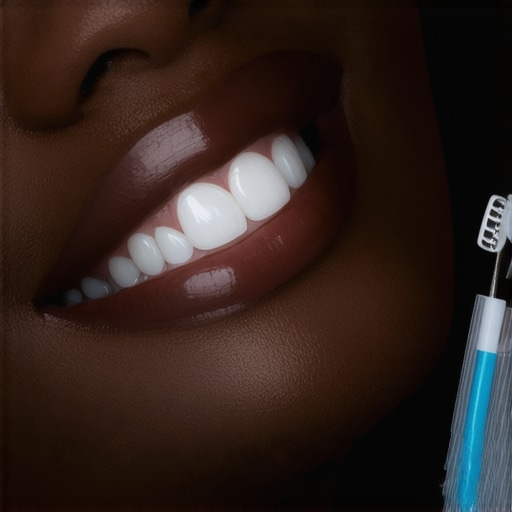
Elevating Dental Aesthetics: The Confluence of Cutting-Edge Teeth Whitening and Invisalign Innovations
In the ever-evolving realm of cosmetic dentistry, the pursuit of a radiant, confident smile necessitates a nuanced understanding of the latest advancements in teeth whitening and Invisalign technology. As we approach 2024, professionals in the field are increasingly integrating these modalities to achieve optimal results that not only meet but exceed patient expectations. The strategic combination of these treatments requires a comprehensive grasp of their synergistic effects and potential limitations.
Why Personalized Treatment Plans Elevate Smile Outcomes
Developing a tailored approach is paramount. By leveraging digital smile design tools and intraoral scanning, clinicians can craft precise treatment pathways that align with individual aesthetic goals. Integrating professional-grade whitening agents with Invisalign’s aligner therapy ensures that patients attain both alignment and brightness simultaneously, reducing overall treatment time and enhancing satisfaction. For instance, in-office whitening protocols, such as hydrogen peroxide-based gels, can be synchronized with aligner wear schedules to maximize efficacy.
Advanced Techniques for Maximizing Whitening Efficacy During Invisalign Therapy
One emerging trend involves the use of custom bleaching trays paired with the Invisalign system. This approach allows for targeted whitening of stubborn stains without compromising aligner fit. Additionally, the application of light-activated whitening systems during appointments has shown promising results, especially when combined with enamel protection strategies. Evidence from clinical studies indicates that such combined protocols can lead to a visible enhancement in shade within a shorter timeframe.
Addressing Complex Cases with Integrated Solutions
Patients presenting with tetracycline staining or post-orthodontic discoloration benefit from a multidisciplinary approach. Here, in-office whitening, veneers, and Invisalign are orchestrated to deliver a comprehensive aesthetic overhaul. For example, porcelain veneers can be reserved for areas where whitening alone cannot achieve the desired shade, ensuring a harmonious, natural appearance. Such complex cases underscore the importance of expert diagnostic capabilities and precise execution.
What are the latest innovations in minimally invasive whitening that complement Invisalign treatments?
Recent breakthroughs involve the use of laser-assisted whitening and the development of bioactive whitening agents that promote remineralization. These innovations facilitate rapid results with minimal sensitivity, making them ideal adjuncts during orthodontic treatment. Staying informed about ongoing research, such as the findings published in the Journal of Esthetic and Restorative Dentistry, ensures practitioners can deliver state-of-the-art care.
For those interested in elevating their practice, exploring comprehensive resources on smile design and treatment integration is invaluable. Consider visiting our detailed article on best teeth whitening tips for a bright smile in 2024 to deepen your understanding. Engage with fellow professionals or contribute your insights through industry forums to refine your clinical approach.
Harnessing New Technologies to Enhance Smile Transformation
In the realm of cosmetic dentistry, the integration of emerging technologies with traditional treatments is revolutionizing patient outcomes. For example, digital smile design tools enable practitioners to simulate post-treatment aesthetics, helping patients visualize their future smile with combined whitening and Invisalign procedures. These virtual previews are crucial for setting realistic expectations and customizing treatment plans that maximize both alignment and brightness.
Why Custom-Designed Whitening Regimens Matter for Invisalign Success
Custom whitening protocols, tailored to individual enamel characteristics and stain types, significantly improve results during orthodontic treatment. Using advanced whitening gels and LED-activated systems, practitioners can target stubborn stains without disrupting aligner fit or treatment schedule. As highlighted in recent studies published in the Journal of Esthetic and Restorative Dentistry, these synergistic approaches enhance patient satisfaction and reduce overall treatment time.
What Future Innovations Will Redefine Smile Makeovers
Emerging innovations such as bioactive whitening agents that remineralize enamel while bleaching are poised to transform clinical protocols. These agents minimize sensitivity, enable faster results, and support overall oral health during cosmetic treatments. Moreover, nanotechnology-based whitening solutions are under investigation for their potential to deliver uniform, long-lasting brightness. Keeping abreast of these developments allows clinicians to provide state-of-the-art care and stay ahead in competitive markets.
Integrating Cosmetic Enhancements for Maximum Impact
Combining teeth whitening with other cosmetic interventions like veneers or enamel microabrasion can further elevate aesthetics. For instance, porcelain veneers can be reserved for areas where whitening cannot achieve desired shades, ensuring a harmonious appearance. This comprehensive approach underscores the importance of precise diagnostics and interdisciplinary collaboration, especially in complex cases involving discoloration or structural issues.
How can advanced diagnostic tools improve the precision of combined whitening and Invisalign treatments?
Advanced diagnostic tools, such as 3D intraoral scanners and spectrophotometers, enable precise mapping of enamel thickness, stain distribution, and tooth morphology. These insights empower practitioners to tailor bleaching protocols and aligner designs more effectively, reducing trial-and-error and enhancing predictability. Incorporating such technologies aligns with the principles outlined in the latest Invisalign innovations and supports optimal aesthetic outcomes.
If you’re interested in expanding your knowledge, explore our detailed guide on veneers and cosmetic enhancements for 2024. Sharing insights and experiences with fellow professionals can foster continuous improvement in clinical practice, ultimately benefiting your patients’ confidence and satisfaction.
Harnessing AI and Digital Smile Design for Precision Smile Makeovers
The integration of artificial intelligence (AI) with digital smile design tools is revolutionizing the way clinicians approach aesthetic planning. By leveraging machine learning algorithms, practitioners can analyze thousands of smile patterns and predict the most harmonious outcomes tailored to individual facial features. Such sophisticated software not only enhances predictability but also minimizes the need for multiple adjustments, significantly shortening treatment times. According to a study published in the Journal of Esthetic and Restorative Dentistry, AI-driven planning improves patient satisfaction by aligning digital simulations more closely with real-world results.
Biomimetic Materials and Their Role in Long-Lasting Restorations
Emerging biomimetic materials mimic the natural properties of enamel and dentin, providing restorations that are more durable, esthetically pleasing, and less invasive. These materials facilitate better integration with existing tooth structure, reducing the need for aggressive prep work. For instance, bioactive glass composites not only restore function but also actively promote remineralization, which is crucial during orthodontic treatments like Invisalign where enamel integrity is vital. The latest research from the International Journal of Biomaterials demonstrates their superior performance in resisting microleakage and staining over traditional composites.
What are the implications of nanotechnology in developing next-generation whitening agents?
Nanotechnology enables the creation of ultra-fine particles that penetrate deeper into enamel and dentin, delivering enhanced whitening effects with reduced sensitivity. These nanoparticles can be engineered to release active agents gradually, ensuring sustained results and minimizing adverse effects. Notably, recent trials highlighted in the Journal of Nanomedicine reveal that nanotech-based whitening gels outperform conventional products in both speed and longevity of brightness, setting a new benchmark for cosmetic treatments.
To stay ahead in this rapidly advancing field, clinicians should consider continuous education through specialized courses and peer-reviewed journals dedicated to biomaterials and nanotechnology innovations. Engaging with professional networks, such as the American Academy of Cosmetic Dentistry, can also facilitate knowledge sharing and practical implementation of these breakthroughs.
Innovative Techniques for Non-Invasive Enamel Rejuvenation
Enamel microabrasion and laser-assisted remineralization are gaining popularity as minimally invasive options for correcting superficial stains and surface irregularities. These techniques preserve the natural tooth structure while delivering immediate aesthetic improvements. Modern laser systems, such as Er:YAG lasers, allow precise removal of surface lesions with minimal discomfort and downtime. The combination of these modalities with advanced whitening agents creates a synergistic effect, providing comprehensive aesthetic enhancement without the need for veneers or crowns. According to a review in the Journal of Laser Dentistry, such protocols improve patient acceptance and reduce overall treatment costs.
Future-Proofing Aesthetic Treatments with Regenerative Dentistry
The horizon of cosmetic dentistry is shifting towards regenerative approaches that aim to restore and repair damaged tissues rather than replace them. Stem cell therapy and growth factor applications are under investigation to regenerate enamel and dentin naturally, potentially revolutionizing how aesthetic concerns are addressed. These techniques could allow for ‘living restorations’ that adapt and respond to the oral environment, offering truly personalized and sustainable solutions. Researchers are optimistic, as evidenced by ongoing clinical trials documented in the ClinicalTrials.gov database, which suggest a promising future where cosmetic and regenerative dentistry converge seamlessly.
Engaging Patients with Virtual Reality for Better Treatment Acceptance
Incorporating virtual reality (VR) technology into patient consultations allows for immersive visualization of potential outcomes. This innovative approach not only enhances understanding but also builds trust and confidence in the proposed treatment plan. Patients can explore their future smile in a 3D environment, making informed decisions with greater clarity. As VR technology becomes more accessible and affordable, forward-thinking practices will leverage it to improve patient engagement and satisfaction. A recent study in the Digital Health journal confirms its efficacy in patient education and treatment acceptance.
For practitioners eager to implement these cutting-edge strategies, continuous professional development and active participation in industry conferences are essential. Stay connected with leading organizations to access the latest research, tools, and techniques that will define the future of aesthetic dentistry.
Embracing the Future of Aesthetic Dentistry Through Innovative Materials
In the pursuit of perfecting smile aesthetics, the advent of biomimetic materials has become a game-changer. These advanced substances replicate the natural properties of enamel and dentin, offering enhanced durability and seamless integration with existing tooth structures. For instance, bioactive glass composites not only restore function but actively promote remineralization, making them ideal for patients undergoing orthodontic treatments like Invisalign. According to the International Journal of Biomaterials, these materials demonstrate superior resistance to microleakage and staining, setting new standards for restorative longevity.
How Can Nanotechnology Elevate Whitening Efficacy?
Nanotechnology introduces ultra-fine particles capable of penetrating deeper into enamel, resulting in more effective and rapid whitening with minimal sensitivity. These nanoparticles can be engineered for sustained release, ensuring prolonged brightness and reducing adverse effects. Recent studies, such as those published in the Journal of Nanomedicine, reveal that nanotech-based whitening gels outperform traditional counterparts in speed and longevity, heralding a new era of cosmetic care.
What Role Does Artificial Intelligence Play in Precision Smile Design?
The integration of AI with digital smile design tools is transforming aesthetic planning. Machine learning algorithms analyze countless smile patterns, facial features, and aesthetic preferences to generate highly personalized treatment simulations. This synergy improves predictability and reduces the need for multiple adjustments, streamlining the process. The Journal of Esthetic and Restorative Dentistry highlights AI’s capacity to align virtual outcomes closely with real-world results, elevating patient satisfaction.
How Can Regenerative Techniques Reshape Future Treatments?
Stem cell therapies and growth factor applications are pioneering regenerative approaches that aim to naturally restore damaged dental tissues. These methods could enable the development of ‘living restorations’ that adapt dynamically to the oral environment, offering sustainable and personalized solutions. Clinical trials, such as those documented on ClinicalTrials.gov, showcase promising progress toward integrating regenerative dentistry with aesthetic procedures, promising a paradigm shift in patient care.
Why Virtual Reality Is Becoming a Must-Have in Patient Engagement
Immersive VR technology allows patients to visualize their potential smile transformations vividly, fostering better understanding and trust. By exploring their future appearance in a 3D environment, patients can make more informed decisions, heightening overall satisfaction. The Digital Health journal confirms VR’s efficacy in enhancing communication and treatment acceptance, making it an invaluable tool for modern practices.
Take Your Practice Beyond Conventional Boundaries
To remain at the forefront of cosmetic dentistry innovation, continuous education and active participation in industry conferences are essential. Embracing new materials, digital planning, regenerative strategies, and immersive patient engagement will not only elevate your clinical outcomes but also solidify your reputation as a trailblazer in aesthetic dentistry. Stay informed, experiment with emerging technologies, and contribute to the collective knowledge to shape the future of smile transformation.
Expert Insights for Cutting-Edge Smile Makeovers
Leverage Digital Smile Design for Precise Outcomes
Utilize state-of-the-art digital smile design tools to offer personalized, predictable results that align with patient expectations, especially when combining whitening and Invisalign treatments.
Incorporate Minimally Invasive Technologies
Adopt laser-assisted whitening and bioactive agents that promote enamel remineralization, reducing sensitivity and enhancing treatment comfort during orthodontic interventions.
Prioritize Multidisciplinary Approaches
Integrate veneers, microabrasion, and advanced diagnostics for complex cases involving discoloration or structural anomalies, ensuring harmonious aesthetic results.
Stay Abreast of Emerging Materials
Explore biomimetic and nanotechnology-based materials that improve restoration longevity, esthetics, and patient satisfaction in combination with modern orthodontic and whitening modalities.
Enhance Patient Engagement with Virtual Reality
Implement immersive visualization tools to help patients understand and commit to their smile transformation plans, boosting confidence and satisfaction throughout the process.
Curated Resources for the Modern Aesthetic Dentist
- International Journal of Biomaterials: Provides cutting-edge research on bioactive and nanotechnology materials revolutionizing restorative dentistry.
- Journal of Esthetic and Restorative Dentistry: Offers comprehensive studies on minimally invasive whitening, AI in smile design, and combined aesthetic techniques.
- ClinicalTrials.gov: Stay informed on promising regenerative therapies and innovative biomaterials under clinical evaluation.
- American Academy of Cosmetic Dentistry: A vital platform for continuous professional development and peer collaboration on emerging aesthetic trends.
Embrace the Future of Smile Aesthetics Today
Integrating advanced digital diagnostics, minimally invasive whitening, regenerative materials, and immersive patient engagement strategies positions you at the forefront of aesthetic dentistry. Engage with these resources and innovations to elevate your practice and deliver exceptional, long-lasting results. For a deeper dive, explore our comprehensive guide on best teeth whitening tips for a bright smile in 2024 and share your insights with your professional community. Your mastery of these techniques will define the next era of smile perfection.
Leave a Reply