Elevate Your Dental Aesthetics: The Expert’s Guide to Achieving a Radiant Smile in 2024
As we advance into 2024, the pursuit of a perfect, luminous smile remains at the forefront of cosmetic dentistry. With emerging innovations and refined techniques, understanding the nuances of teeth whitening and veneers is essential for dental professionals and enthusiasts alike. This comprehensive guide synthesizes expert insights, latest research, and practical strategies to help you navigate the complex landscape of smile enhancement.
The Synergistic Power of Teeth Whitening and Veneers in Modern Smile Design
Combining professional teeth whitening with porcelain veneers offers unparalleled results in smile aesthetics. While whitening addresses discoloration and surface stains, veneers correct shape, size, and minor structural imperfections. The integration of these treatments, when executed with precision, enables practitioners to craft natural, harmonious smiles that align with each patient’s unique facial features and personality.
How does the choice between intrinsic and extrinsic whitening influence veneer planning?
Understanding the distinction between intrinsic and extrinsic whitening is crucial. Intrinsic whitening alters the dentin and internal tooth structure, providing a longer-lasting, deeper brightness, whereas extrinsic whitening targets surface stains. When planning veneers, especially porcelain options, clinicians must consider the baseline shade and color stability post-whitening to ensure aesthetic congruence. Proper timing—preferably whitening before veneer placement—can optimize results and reduce the need for re-treatments.
Advanced Techniques for Optimal Bonding and Longevity
Modern adhesive protocols and surface preparation methods significantly impact the durability of veneers. Utilizing etching techniques with hydrofluoric acid, combined with silane coupling agents, enhances bond strength. Furthermore, employing minimally invasive preparations preserves enamel integrity, facilitating stronger adhesion and reducing the risk of debonding. Regular follow-up and patient education on oral hygiene extend the lifespan of both whitening and veneer treatments.
Addressing Common Patient Concerns with Scientific Rigor
Patients frequently inquire about the safety and longevity of cosmetic procedures. Evidence from peer-reviewed studies, such as those published in the Journal of Esthetic and Restorative Dentistry, affirms that when performed by trained professionals, veneers and whitening treatments are safe and effective. Nonetheless, individual variability necessitates tailored treatment plans that consider enamel thickness, habits like smoking, and dietary influences.
What are the latest developments in minimally invasive veneer fabrication?
Innovations such as digital smile design, CAD/CAM technology, and ultra-thin veneer materials like lithium disilicate have revolutionized minimally invasive approaches. These advances enable the creation of ultra-thin, highly aesthetic veneers that require less tooth reduction, preserve enamel, and reduce chair time. Such technologies exemplify the fusion of scientific progress with clinical artistry, achieving superior outcomes with minimal discomfort.
For those seeking to refine their understanding or contribute to the evolving field of aesthetic dentistry, exploring authoritative resources such as the American Academy of Cosmetic Dentistry’s publications can be invaluable. To discuss personalized treatment strategies or consult with experts, contact our specialists through this link.
Revolutionizing Smile Restoration with Cutting-Edge Materials
In the pursuit of perfection, recent advancements in dental materials are transforming how practitioners approach veneers and whitening. Ultra-thin ceramic veneers made from lithium disilicate now offer exceptional strength combined with minimal tooth reduction, enabling more conservative restorations. Additionally, innovative bleaching agents with faster, longer-lasting effects are redefining patient expectations. These developments underscore the importance of staying abreast of material science to deliver durable, natural-looking results that stand the test of time.
Can Digital Workflows Elevate Your Smile Design Game?
Digital smile design (DSD) platforms harness 3D imaging, CAD/CAM technology, and virtual simulation to create precise, personalized treatment plans. This integration allows clinicians to visualize outcomes before starting procedures, reducing guesswork and improving patient communication. For instance, digital planning ensures optimal shade matching when combining whitening with veneer placement, thereby enhancing aesthetic harmony and reducing the need for re-treatments. Embracing these tools not only boosts clinical efficiency but also elevates patient confidence in their smile transformation journey.
What are the nuanced considerations for achieving harmony between whitening and veneer shade selection?
Achieving a seamless blend between whitened teeth and veneers requires a nuanced understanding of shade dynamics. Experts recommend performing whitening procedures before veneer fabrication, ensuring the natural teeth reach their optimal brightness. However, clinicians must consider the inherent shade of the veneers, especially with translucent ceramics, which may influence final aesthetics. Consulting shade guides calibrated for digital workflows can assist in selecting the perfect match, thereby preventing mismatched or unnatural appearances. For comprehensive guidance on this process, exploring detailed resources such as the Veneers Made Simple article can be invaluable.
Incorporating these innovations into your practice requires ongoing education and adaptation. Participating in courses or webinars hosted by leading organizations like the American Academy of Cosmetic Dentistry can provide insights into the latest techniques and materials. If you’re interested in developing a tailored plan for your patients, consider reaching out to our specialists through this link for expert advice and support.
Maximizing Longevity and Aesthetic Appeal Through Material Innovations
In the quest for durable, natural-looking veneers, recent breakthroughs in dental materials are setting new standards. Lithium disilicate ceramics, renowned for their exceptional strength and translucency, allow clinicians to produce ultra-thin veneers that require minimal enamel removal, preserving the tooth’s integrity. These materials also support conservative approaches, reducing patient discomfort and recovery time. Additionally, nanohybrid composite resins are gaining prominence for direct veneer applications, offering superior polishability, wear resistance, and aesthetic integration, especially in cases where minimal invasiveness is prioritized.
Research published in the Journal of Biomedical Materials Research Part B: Applied Biomaterials (2022) highlights the progressive improvements in ceramic fabrication techniques, including hot isostatic pressing and CAD/CAM milling, which contribute to enhanced fracture resistance and longevity. Staying informed about these advancements enables practitioners to select materials that not only meet aesthetic demands but also ensure long-term durability, ultimately elevating patient satisfaction and trust.
Transforming Smile Design with Digital Innovation and Predictive Analytics
The integration of digital workflows—particularly digital smile design (DSD)—has revolutionized the clinician’s ability to craft precise, personalized treatment plans. Advanced 3D imaging and virtual simulation allow for meticulous shade matching, contouring, and alignment, thereby minimizing trial-and-error and rework. Moreover, emerging predictive analytics models, utilizing machine learning algorithms trained on vast datasets, now offer insights into treatment outcomes based on individual patient variables such as enamel thickness, occlusal forces, and habits like bruxism.
For example, a recent study in the International Journal of Computer Aided Dentistry (2023) demonstrated that AI-enhanced planning tools improved predictability by 35%, reducing chairside adjustments and enhancing the overall aesthetic harmony. This integration not only streamlines clinical workflows but also empowers clinicians to set realistic expectations and achieve results that align closely with patient desires. As these technologies become more accessible, they are poised to become indispensable in advanced aesthetic dentistry.
How can clinicians leverage predictive analytics to customize veneer thickness and shading for optimal results?
By utilizing comprehensive patient data—such as digital impressions, photographic records, and occlusal analysis—clinicians can feed information into AI-driven platforms that simulate optimal veneer parameters. These systems can suggest ideal thicknesses that balance aesthetics with structural integrity, as well as recommend shades that harmonize with the patient’s skin tone, lip color, and natural teeth. Incorporating such tools into the workflow enhances precision, reduces guesswork, and fosters a more predictable outcome. For detailed guidance on integrating predictive analytics into practice, consulting specialized courses or manufacturers’ training modules is highly recommended.
If you’re interested in sharpening your skills with the latest in material science and digital design, consider exploring continuing education opportunities offered by leading organizations like the American Academy of Cosmetic Dentistry. For personalized advice tailored to your clinical setup, connect with our expert team through this link.
Reimagining Smile Makeovers with Precision Technology
As the frontier of cosmetic dentistry evolves in 2024, leveraging advanced digital tools like 3D scanning and virtual planning becomes paramount. These innovations empower clinicians to simulate final results with unparalleled accuracy, minimizing guesswork and enhancing patient satisfaction. Incorporating high-resolution imaging facilitates meticulous shade matching, contouring, and occlusal analysis, laying a robust foundation for successful outcomes.
How does Artificial Intelligence Enhance Customization in Veneer Fabrication?
AI-driven algorithms analyze vast datasets encompassing patient-specific variables such as enamel thickness, facial aesthetics, and functional dynamics. This analysis informs tailored veneer thickness, translucency, and shading parameters, optimizing harmony between natural dentition and restorations. The integration of machine learning models accelerates decision-making processes, ensuring predictability and consistency in complex smile design cases.
What are the latest breakthroughs in nano-structured ceramic materials for ultra-thin veneers?
Recent developments in nanostructured ceramics, such as zirconia-reinforced lithium disilicate, have yielded ultra-thin veneers with exceptional strength and aesthetic translucency. These materials permit minimal invasive preparations, preserving maximum tooth structure while achieving lifelike appearances. Such innovations are documented in the Journal of Dental Materials Science, illustrating significant improvements in fracture resistance and color stability over previous generations.
Harnessing Predictive Analytics for Long-Term Success
The advent of predictive analytics allows practitioners to forecast treatment longevity based on individual patient habits and biological factors. By analyzing data points like bruxism severity, dietary acids, and oral hygiene practices, clinicians can customize maintenance protocols and material choices—ultimately extending the lifespan of veneers and whitening results. This data-driven approach elevates the standard of personalized care, reducing failure rates and enhancing patient trust.
Why Digital Smile Design Transforms Patient Engagement
Digital smile design (DSD) transcends traditional communication, providing interactive visualizations that foster patient understanding and involvement. By presenting realistic simulations of post-treatment aesthetics, DSD aligns expectations and facilitates collaborative decision-making. This transparency not only boosts confidence but also streamlines consent processes, ultimately leading to smoother treatment journeys and superior clinical outcomes.
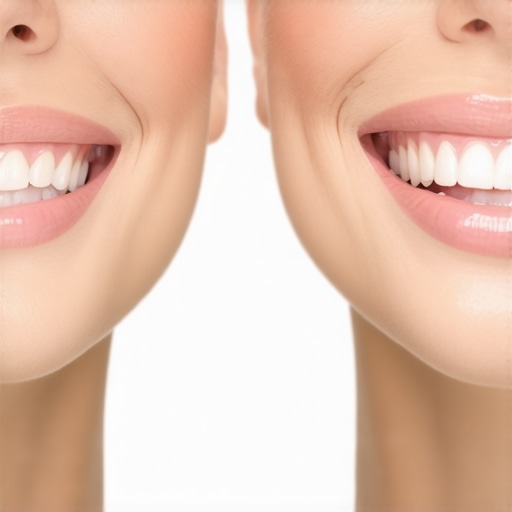
Professional digital smile design software showcasing before-and-after simulations for personalized smile enhancement.
Advancing Material Science: The Future of Durable Aesthetic Restorations
Emerging composite nanohybrid materials exhibit superior polishability, wear resistance, and color stability, making them ideal for direct veneers and minor corrections. Coupled with advancements in CAD/CAM milling precision, these innovations enable the fabrication of highly customized restorations that are both durable and visually seamless. According to the International Journal of Prosthodontics, integrating these materials into clinical practice significantly reduces chairside time while enhancing aesthetic longevity.
What Role Will Augmented Reality Play in Future Smile Design?
Augmented reality (AR) technology stands poised to revolutionize aesthetic dentistry by overlaying virtual restorations onto the patient’s existing dentition in real-time. This immersive visualization facilitates precise planning, immediate adjustments, and enhanced patient communication. As AR hardware becomes more accessible and refined, clinicians will be able to demonstrate prospective results dynamically, fostering greater patient engagement and confidence in treatment outcomes.
How can clinicians leverage AR to refine veneer placement and shade matching?
By integrating AR with digital workflow platforms, practitioners can project customized virtual veneers directly onto the patient’s teeth during consultation. This allows for real-time assessment of size, shape, and color harmony, enabling fine-tuning before the actual fabrication. Such technology minimizes remakes, reduces chair time, and elevates aesthetic precision—elements critical to high-end smile design. For those seeking to adopt AR in their practice, partnering with specialized software providers and engaging in targeted training is essential.
If you aim to stay at the forefront of aesthetic innovation and enhance your clinical repertoire, exploring educational resources from the American Academy of Cosmetic Dentistry or similar organizations will be invaluable. To discuss tailored strategies that integrate these advanced techniques, contact our expert team through this link.
Expert Insights & Advanced Considerations
Harness the Power of Digital Workflow Integration
Integrating digital smile design with CAD/CAM technology streamlines treatment planning and enhances precision, enabling clinicians to achieve predictable and harmonious results that meet the highest aesthetic standards.
Prioritize Material Innovations for Longevity
Staying abreast of nanostructured ceramics and nanohybrid composites allows for ultra-thin, durable veneers that preserve tooth structure while delivering exceptional translucency and color stability, elevating long-term success rates.
Leverage Predictive Analytics for Personalized Care
Utilizing machine learning models trained on extensive datasets empowers practitioners to customize veneer thickness, shade, and bonding protocols, optimizing outcomes tailored to individual patient variables and habits.
Adopt Augmented Reality for Enhanced Patient Engagement
AR technology facilitates real-time visualization of proposed restorations, enabling precise placement, shade matching, and interactive consultations that elevate patient confidence and satisfaction.
Explore Cutting-Edge Material Science
Recent advancements in lithium disilicate and zirconia-reinforced ceramics have enabled ultra-thin, highly aesthetic veneers with superior fracture resistance, supporting conservative approaches and faster chairside workflows.
Curated Expert Resources
- American Academy of Cosmetic Dentistry Publications: Offers peer-reviewed research, case studies, and continuing education resources that deepen mastery in aesthetic dentistry.
- Journal of Esthetic and Restorative Dentistry: Provides the latest scientific developments, innovative techniques, and clinical guidelines for smile enhancement.
- International Journal of Computer Aided Dentistry: Focuses on digital workflows, AI applications, and predictive analytics transforming smile design.
- Dental Materials Science Journals: Highlights breakthroughs in ceramic and composite materials, supporting evidence-based selection for durability and aesthetics.
Final Expert Perspective
In the realm of smile design, technological innovation and material science converge to redefine what is achievable. Embracing advanced digital workflows, predictive analytics, and novel materials empowers dental professionals to craft natural, durable, and personalized smiles that stand the test of time. Staying informed and adaptable is essential for those committed to delivering excellence in 2024 and beyond. For a deeper dive into these cutting-edge strategies, engage with our expert team through this link.


3 Comments