Why your child’s first adult tooth is jagged on the edge
I remember the exact moment my daughter’s first bottom adult tooth finally peaked through the gum line. I’d spent weeks helping her navigate that first loose tooth, expecting a miniature version of my own straight-edged smile to appear. Instead, I saw what looked like a tiny, serrated steak knife. My heart sank. I was convinced she’d chipped it on a rogue LEGO brick or that her enamel was failing before she’d even hit second grade. I’ve spent years obsessing over family dentistry tips for a healthy smile, yet in that moment, I felt like a total amateur. I even found myself wondering if we’d be looking at cosmetic dental solutions by the time she was ten. It turns out, I was worrying over a perfectly natural phenomenon that most parents mistake for a dental emergency. Today, I want to pull back the curtain on those jagged edges, explain why they are actually a sign of healthy development, and share the common mistake I made so you don’t have to repeat it.
Your Child’s Teeth Aren’t Broken—They are Just Brand New
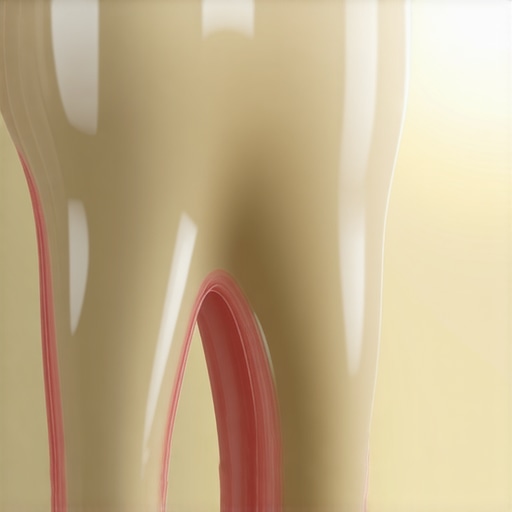
If you are staring into your child’s mouth and seeing ridges that look like a mountain range, take a deep breath. Those bumps are called mamelons. I initially made the mistake of thinking they were a defect, much like the time I panicked about why her permanent teeth looked so yellow compared to her milky baby teeth. Nature is actually quite clever; these three little ridges on the biting edge of the incisors are there to help the tooth break through the thick gum tissue more efficiently. According to the American Association of Orthodontists, mamelons are a standard feature of newly erupted permanent teeth and are usually present because the tooth hasn’t had to do any ‘work’ yet. They are essentially the factory-fresh treads on a new tire. I remember feeling so silly when our dentist explained that her teeth weren’t ‘damaged’—they were just so new they hadn’t been worn down by a single sandwich yet. It is one of those fundamental parts of family dentistry that nobody warns you about in the parenting handbooks.
Is This Jagged Look Actually Permanent?
It’s natural to feel a bit skeptical when your neighbor tells you ‘not to worry,’ especially when your kid’s smile looks like a saw blade. You might wonder if those edges will stay that way forever or if they’ll eventually cause issues with how their teeth fit together. The reality is that for most kids, these ridges naturally smooth out over time through a process called attrition—basically, the simple act of chewing and the top and bottom teeth rubbing together. However, if your child has an open bite or teeth that don’t meet properly, those mamelons might hang around longer than expected. I’ve seen parents get caught in a cycle of worry, wondering why the adult teeth are coming in crooked alongside these ridges. Did you notice these serrated edges the moment your child’s first tooth popped up, or did it catch you by surprise weeks later?
Stop Freaking Out About the Saw-Tooth Look
If you’ve just noticed those ridges, your first move should be a simple ‘serration check.’ Look closely: are the bumps uniform and only on the biting edges of the front teeth? If so, you are looking at mamelons, not damage. When I first saw them on my daughter, I actually grabbed a small magnifying glass and tried to see if I could feel a crack with my fingernail. Don’t do this. All it does is annoy your child and potentially introduce bacteria to their mouth. Instead, observe how their top and bottom teeth interact during a meal. This observational step is a core part of ensuring family dental care what parents need to know in 2025. If the teeth are making regular contact, those ridges are already on their way out. Nature has a built-in ‘sanding’ system, but it only works if the machinery is aligned.
How Everyday Eating Smooths Those Edges
Think of these ridges like the tiny rubber ‘hairs’ you see on a brand-new car tire. They are a byproduct of the manufacturing process—in this case, the way the tooth enamel forms in three distinct lobes before fusing together. They help the tooth pierce the gum tissue, but they are designed to be sacrificial. Every time your child bites into a crisp apple or chews through a piece of toast, they are performing a natural dental smoothing. I remember getting so impatient with the process that I started serving my daughter raw carrots and thick-crust bread every single day, convinced I could ‘file’ them down faster. The result? A very grumpy seven-year-old and a kitchen floor covered in half-chewed vegetables. I learned the hard way that patience is the most effective tool in family dentistry building healthy smiles for every generation.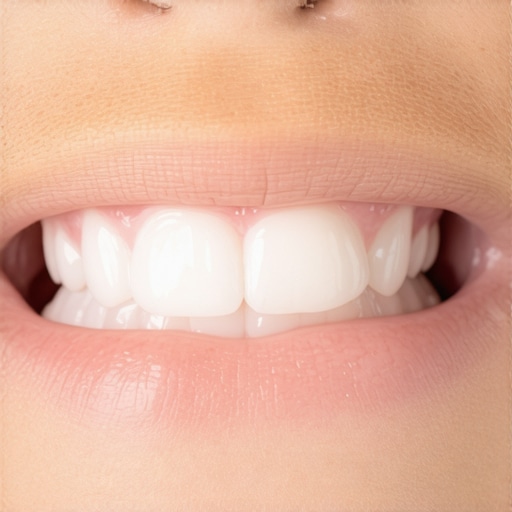
Check the Alignment Before You Blame the Enamel
If your child is hitting double digits and those saw-blade edges are still as sharp as day one, the issue usually isn’t the enamel; it’s the mechanics of their bite. For the natural wearing process to occur, the upper and lower incisors must rub against each other during normal function. If your child has an open bite or an overjet, those teeth are essentially ‘floating’ without any friction to smooth them down. This is often the same reason why your child adult teeth are coming in crooked or failing to lose their ‘new tooth’ appearance. In some instances, a particularly prominent ridge can catch on the lip or tongue. While you might be tempted to look up how to fix a sharp edge on your tooth until you can reach the clinic, a professional can usually buff these away in a painless five-minute appointment. For older teens or adults whose mamelons never wore down due to alignment issues, we often discuss modern solutions like invisalign innovation invisible braces changing smiles in 2025 to bring the bite together. If the shape still bothers them after alignment, veneers made simple transform your tooth aesthetics in 2025 at 1822 provide a way to create that perfectly straight edge manually.While we wait for those natural mamelons to smooth out on our children’s teeth, many of us look at our own adult smiles and consider a quick refresh. But here is where the advanced nuances of ensuring family dental care what parents need to know in 2025 get tricky. Most people assume that once you get cosmetic upgrades, you are done with dental worries for a decade. That is a common myth. In my experience, high-end restorations often require more precise care than natural enamel. If you treat them with the same reckless abandon as a child’s new teeth, you will find yourself back in the chair sooner than expected.
Why Perfect Veneers Can Sometimes Look Fake
Most people walk into a clinic demanding the brightest shade on the chart, but the ‘Hollywood White’ look is often a failure of aesthetic design. I frequently have to guide patients through how to tell if your veneers are too white for your complexion. A natural tooth has a subtle translucency at the biting edge—a ghost of the mamelons we talked about earlier—which allows light to pass through. If your dental work is a solid, opaque block of white, it loses that life-like quality. When choosing veneers made simple transform your tooth aesthetics in 2025, the goal should be ‘believable beauty,’ not just maximum brightness. 
The Danger of Abrasive Toothpaste on Porcelain
One of the biggest traps in family dentistry building healthy smiles for every generation is actually found in the toothpaste aisle. You see ‘whitening’ on a label and think it’s helping maintain your investment. However, if you have porcelain work, you must stop brushing your veneers like they are real teeth. Many commercial whitening toothpastes contain abrasive silica that can microscopically scratch the surface glaze of your veneers or crowns. Once that glaze is compromised, the material will actually pick up stains from coffee or wine faster than your original teeth would have. It is a frustrating cycle that many people fall into without realizing they are causing the damage themselves.
Why did your professional whitening session fall short this time?
It is incredibly frustrating to invest in a bright smile and walk away with lackluster results. If your results feel muted, you might be looking for why your professional whitening didn’t work as well as last time. A study published in the Journal of Evidence-Based Dental Practice indicates that ‘rebound’ effects or poor uptake are often linked to enamel dehydration or existing micro-fractures that we can’t see with the naked eye. To get the most out of your treatment, you need to understand the teeth whitening secrets for a sparkling smile in 2025, which often involve stabilizing the pH of your mouth before the gel is even applied. Have you ever fallen into this trap where a ‘quick fix’ ended up needing more work than the original problem? Let me know in the comments.
Ditch the Hard Scrubbing and Use Science Instead
After spending a fortune on professional care, the last thing you want to do is ruin it with a stiff-bristled toothbrush and a ‘can-do’ attitude. I learned this the hard way when I noticed my own enamel looking duller just months after a treatment. It turns out that mechanical abrasion is the enemy of longevity. I personally swear by a high-frequency ultrasonic cleaner for anything removable—be it a night guard or an aligner tray. According to the Journal of Cosmetic Dentistry (published by the AACD), biofilm removal is significantly more effective with ultrasonic cavitation than with manual brushing, and it prevents those microscopic scratches where bacteria love to hide. This is a game-changer when you are trying to clean your aligner case without a dishwasher or keep a retainer from smelling like a locker room. If you are serious about ensuring family dental care what parents need to know in 2025, stop thinking about ‘cleaning’ and start thinking about ‘preservation.’
The One Tool That Saved My Veneers
For my friends who have invested in porcelain, the maintenance routine is a totally different beast. You can’t just treat them like natural teeth and hope for the best. I’ve found that using a pH-balanced, non-abrasive gel rather than a standard paste is the only way to avoid ‘glaze-stripping.’ It is also vital to know how to prevent coffee stains on your new veneers without reaching for harsh whitening strips that can actually weaken the bonding agent. I keep a dedicated interdental brush set in my travel kit specifically for the margins where the porcelain meets the gumline. This is the same level of detail you need for the best routine for keeping your dental implants clean. If you aren’t cleaning the ‘basement’ of the restoration, the ‘roof’ won’t stay pretty for long.
How can I make my cosmetic dental work last a lifetime?
The short answer is: you have to change your habits, not just your tools. Most people fail because they treat their new smile like a finished project rather than a living investment. I predict that by the end of this decade, we will all be using AI-powered home scanners that plug into our phones to check for micro-fractures or seal failures before they become painful emergencies. This is already happening with invisalign innovation invisible braces changing smiles in 2025, where remote monitoring is becoming the gold standard. Until that tech is in everyone’s bathroom, your best bet is a rigorous, non-abrasive routine. My advanced tip for today? Swap your standard mouthwash for one that contains xylitol and zero alcohol; it prevents the ‘dry mouth’ effect that leads to rapid staining and decay around the edges of expensive dental work. Try switching your toothpaste to a low-RDA (Relative Dentin Abrasivity) formula tonight—your future self will thank you for the extra decade of sparkle.
The Hardest Truth About Waiting for Adult Teeth to Level Out
After years of monitoring my own family’s dental milestones, I’ve realized that the ‘perfect’ smile is a moving target. Here are the three most important lightbulb moments I had while managing my kids’ teeth and my own cosmetic work: First, those jagged mamelons are a badge of health, not a sign of weakness; they prove the tooth is robust and ready for work. Second, if you try to rush nature by over-cleaning or over-whitening, you often end up with sensitivity that lasts for years. I learned this the hard way after trying a viral whitening hack that did more harm than good. Third, ensuring family dental care what parents need to know in 2025 means realizing that dental health is 90% what you do at home and only 10% what happens in the chair. Patience really is the greatest tool in your kit.
Tools That Actually Protect Your Investment in Porcelain and Enamel
If you want to keep those mamelons smoothing out naturally or keep your veneers looking fresh, you need to be picky about your supplies. I’ve refined my routine down to three essentials. I always recommend a low-abrasive gel over heavy pastes to ensure you stop brushing your veneers like they are real teeth and preserve the glaze. I also steer everyone away from ‘natural’ fads; after seeing the damage it can do, I’ve found the truth about the charcoal whitening trend and your enamel is that it’s just too scratchy for long-term use. Finally, look for clinics that use advanced diagnostics; I’ve found that the real reason culpeper dentists are swapping traditional x-rays for 3d-scans is to catch alignment issues that prevent those jagged ridges from wearing down properly. High-quality tools aren’t just about cleaning—they are about preservation.
Trust the Process of a Growing Smile
It’s easy to get caught up in the aesthetics of a ‘perfect’ row of teeth, but remember that a healthy mouth is a functional one. Whether you are watching your child’s first adult teeth emerge with those unique ridges or you are maintaining your own professional whitening, the goal is the same: longevity and comfort. Take the pressure off yourself to have a Hollywood smile overnight. If you focus on gentle, consistent habits and professional guidance, the beauty of your family’s smiles will naturally follow. Modern family dentistry building healthy smiles for every generation is about more than just filling cavities; it’s about giving your children the confidence to show those teeth off, jagged edges and all. Have you noticed any unique ridges or ‘saw-tooth’ edges on your child’s newest adult teeth yet? Let me know your experience below.