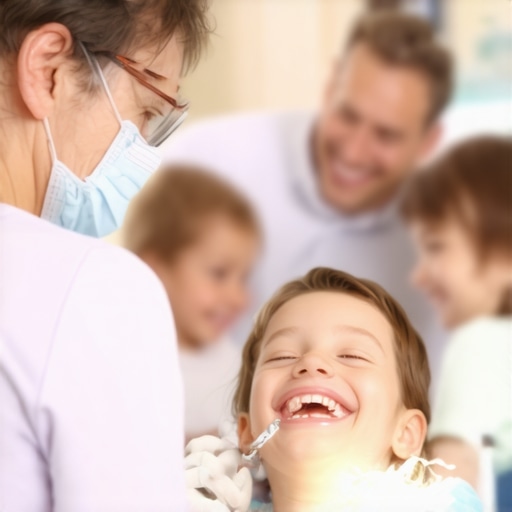
As we advance into 2024, the landscape of family dentistry is evolving rapidly, driven by technological innovations, an increased emphasis on preventive care, and the rising demand for minimally invasive aesthetic procedures. For dental practitioners and informed patients alike, understanding the nuanced interplay between traditional practices and emerging techniques is crucial for fostering healthy, confident smiles that stand the test of time. This article explores the sophisticated strategies that underpin effective family dental care, with a focus on cutting-edge solutions like Invisalign, teeth whitening, and veneers, elucidating how these modalities integrate into a holistic approach to comprehensive oral health.
Enhancing Preventive Strategies through Personalization and Technology
The cornerstone of successful family dentistry in 2024 hinges on personalized preventive measures that leverage digital diagnostics and patient-specific risk assessments. Modern families benefit from tailor-made oral health plans that incorporate advanced tools such as digital radiography and intraoral scanners, enabling early detection of caries and periodontal issues. Customized fluoride regimens and nutritional counseling support the maintenance of healthy enamel, underscoring the shift from reactive to proactive care models.
The Role of Minimally Invasive Cosmetic Interventions in Family Practice
In the realm of cosmetic enhancements, innovations have democratized access to aesthetic treatments traditionally reserved for adults. The integration of veneers and teeth whitening within family practices underscores a paradigm where esthetic harmony and functional integrity coexist seamlessly. These interventions not only elevate self-esteem but also bolster overall oral health by correcting structural imperfections that predispose teeth to decay or wear. Notably, the advent of composite veneers offers a reversible, minimally invasive alternative that aligns with the preservation ethos central to family dentistry.
Leveraging Orthodontics for Functional and Aesthetic Synergy
Orthodontic solutions such as Invisalign have revolutionized malocclusion correction, particularly within family dental settings, owing to their discreet nature and improved patient compliance. The strategic timing of orthodontic interventions, often during pre-adolescence, facilitates optimal jaw development and establishes a foundation for long-term oral health. Incorporating orthodontics with restorative and cosmetic procedures enhances both function and appearance, presenting a comprehensive smile makeover strategy that is rooted in early intervention and continuous care.
Addressing Advanced Queries: How Does the Integration of Cosmetic and Preventive Dentistry Impact Long-Term Oral Health?
What are the best practices for balancing aesthetic improvements with the preservation of natural tooth structures in family dentistry?
Balancing aesthetic enhancements with conservative tooth preservation requires meticulous planning grounded in evidence-based protocols. Employing minimally invasive techniques, such as partial veneers or composite bonding, minimizes removal of healthy tissue. Additionally, integrating routine diagnostics with patient education ensures that aesthetic goals do not compromise long-term function. Regular follow-ups and maintenance are vital to monitor restorations and prevent secondary issues, emphasizing the importance of an individualized approach that respects the integrity of natural dentition while achieving desired esthetic outcomes.
For those interested in expanding their knowledge on innovative smile enhancement strategies, exploring detailed case studies and the latest research in cellular regenerative protocols can be enlightening. Engaging with reputable sources like the American Academy of Cosmetic Dentistry offers invaluable insights into evidence-based practices that harmonize esthetics with health (American Academy of Cosmetic Dentistry).
Interested in discovering how integrating these advanced techniques can elevate your family’s oral health? Visit our contact page to connect with expert practitioners committed to delivering personalized, cutting-edge dental care.
Prioritizing Tooth Preservation: A Paradigm Shift in Family Dentistry
In recent years, the emphasis on conserving natural tooth structure has gained significant traction among dental professionals aiming to optimize both long-term health and aesthetic outcomes. Advanced minimally invasive techniques like partial veneers, resin composites, and air abrasion have transformed restorative procedures, allowing clinicians to correct surface imperfections and functional issues with minimal removal of healthy tissue. This shift not only preserves the natural biomechanics of the tooth but also reduces patient discomfort and recovery time, reflecting a nuanced understanding that preserves the foundational integrity of the dentition.
Which Innovative Materials Enable Seamless Aesthetic and Structural Balance?
The evolution of composite resins and ceramic materials has played a pivotal role in balancing cosmetic appeal with structural conservation. High-strength porcelains and nano-hybrid composites offer translucency, durability, and easy reparability, making them ideal choices for conservative restorations. Experts advocate for the use of ultra-thin veneers and bonded indirect restorations that adhere to the principle of minimal removal, further aligning with the ethos of prevention-first dentistry. For insights into material selection, the American Academy of Cosmetic Dentistry provides comprehensive guidelines on integrating the latest innovations into clinical practice (American Academy of Cosmetic Dentistry).
How Can Professionals Ensure Restorative Success Without Compromising the Tooth’s Natural Lifecycle?
Achieving harmony between aesthetic improvements and the preservation of natural tissue demands meticulous case assessment, precise execution, and ongoing maintenance. Employing conservative bonding techniques, leveraging digital planning tools, and advocating for patient adherence to preventive care regimens are crucial steps in this process. Additionally, integrating regenerative procedures, such as biological fillers or growth factors, can support the revitalization of compromised pulp tissue, extending the lifespan of restorations and the natural dentition. Exploring comprehensive treatment planning methods that incorporate both cutting-edge materials and minimally invasive techniques ensures that smile enhancements do not sacrifice long-term oral health.
If you’re interested in deepening your understanding of how innovative materials and techniques can revolutionize family dental restorations, consider reviewing the latest research articles and clinical case studies available through professional dental associations or reputable journals.
Embracing Digital Diagnostics for Early Detection and Customized Care Plans
The integration of digital diagnostics, such as 3D cone-beam computed tomography (CBCT) and intraoral scanners, has transformed family dentistry by enabling clinicians to identify issues at their inception with remarkable accuracy. These technologies facilitate comprehensive treatment planning, allowing practitioners to visualize complex root anatomies or detect subtle carious lesions that might elude traditional methods. By creating digital models of a patient’s oral cavity, dental teams can tailor preventive strategies and restorative interventions with a level of precision previously unattainable, significantly reducing the likelihood of future complications and optimizing long-term outcomes.
High-Performance Materials: The New Standard for Longevity and Aesthetics
The advancements in restorative materials, specifically nano-hybrid composites and ultrathin ceramic veneers, are elevating the standards of durability and natural appearance. Ultra-fine composites, with their superior polishability and resistance to staining, allow for conservative restorations that mimic natural enamel effortlessly. Similarly, the development of high-strength, translucent ceramics provides veneer options that require minimal tooth reduction while delivering outstanding esthetics and wear resistance. These innovations support a minimally invasive approach, vital for maintaining the integrity of the natural dentition in family populations, especially children and adolescents where ongoing development is a concern.
How Can Digital Workflow Minimize Trauma During Restorative Procedures?
Executing restorations within a digital workflow streamlines the clinical process, reducing chair time and enhancing patient comfort. Digital impressions eliminate the discomfort associated with traditional impression materials and help in accurately capturing details crucial for precise restorations. When coupled with computer-aided design and manufacturing (CAD/CAM), these technologies allow for same-day provisionalization and final restorations, minimizing the need for multiple appointments. This integrated approach not only enhances procedural efficiency but also diminishes the risk of iatrogenic damage, ensuring the preservation of surrounding tissues and maximizing the longevity of restorations.
Addressing Complex Challenges: Combining Orthodontics and Restorative Strategies for Optimal Outcomes
When managing malocclusions that involve extensive restorative work, a multidisciplinary strategy becomes indispensable. Early interceptive orthodontics, such as phase I treatments using clear aligners, can correct skeletal discrepancies while maintaining aesthetic harmony. Post-orthodontic restorations, including minimally invasive veneers and contouring, can refine alignment and occlusion, resulting in a harmonious functionally stable smile. Employing digital smile design (DSD) tools allows practitioners to visualize predictive outcomes, ensuring patient expectations align with achievable results. This collaborative approach exemplifies personalized, data-driven treatment planning tailored to each family member’s unique needs.
What Are the Ethical Considerations When Implementing Cosmetic and Restorative Procedures in Children and Teenagers?
Administering aesthetic treatments in younger populations necessitates a careful balance between enhancing self-esteem and safeguarding long-term oral health. Ethical practice mandates thorough patient assessments and informed consent processes that encompass understanding the procedure’s benefits, limitations, and potential risks. For instance, reversible or minimally invasive options like resin composites should be prioritized, avoiding aggressive interventions that could compromise future growth or development. Moreover, practitioners must recognize the psychological impact of such treatments and ensure they serve as adjuncts to comprehensive behavioral and educational strategies promoting oral health literacy among young patients and their guardians.
For clinicians and parents alike, staying abreast of evolving guidelines—from organizations like the American Academy of Pediatric Dentistry—ensures that aesthetic interventions align with best practices and uphold patient well-being. Curious about integrating these principles into your family’s dental routine? Explore detailed case reports and the latest clinical guidelines by consulting reputable professional resources and engaging with expert practitioners through professional conferences and continuing education modules.
Innovative Diagnostic Technologies That Transform Early Intervention
Harnessing the power of digital diagnostics, such as cone-beam computed tomography (CBCT) and intraoral 3D scanning, has emerged as a game-changer in family dentistry. These tools enable practitioners to detect dental anomalies and pathologies at their inception, facilitating anticipatory care plans that are both precise and minimally invasive. Early identification of developmental anomalies, occlusal discrepancies, or carious lesions becomes possible, which significantly reduces the need for extensive restorative procedures in the future. The integration of these technologies ensures a proactive approach, aligning with the overarching goal of preserving natural dentition over the lifespan.
Material Science Breakthroughs Enhancing Restorative Longevity
Recent advances in composite resins and ceramic materials have redefined the standards of durability and esthetics in restorative dentistry. Nano-hybrid composites, characterized by their fine fillers and superior polishability, mirror the optical properties of natural enamel while offering exceptional resistance to staining and wear. Concurrently, high-translucency zirconia and lithium disilicate ceramics provide conservative veneer options that are not only highly aesthetic but also robust enough to withstand functional stresses. These materials, when used in conjunction with digital planning and CAD/CAM fabrication, support a minimally invasive paradigm, crucial in maintaining healthy tooth structure in growing individuals.
< >
>
Streamlining Restorative Procedures with Digital Workflows
The advent of digital workflows, from impression-taking to milling, minimizes patient discomfort and procedural errors. Intraoral scanners eliminate traditional impression materials’ mess and discomfort, offering accurate data swiftly. Coupled with CAD/CAM technology, clinicians can fabricate and place restorations in a single visit, reducing chair time and stress—particularly beneficial in pediatric populations. This seamless integration also allows for precise prototyping and predictive visualization, enhancing patient engagement and consent processes. Adopting such innovations ensures that long-term maintenance and repairs are less invasive, driven by a foundation of accurate, conservative restorations that respect the natural tissue architecture.
The Role of Orthodontic Timing and Techniques in Preventing Future Complications
Strategic timing of orthodontic interventions, especially with aligners like Invisalign, can mitigate complex malocclusions and guide jaw development effectively. Early corrective treatments establish functional occlusion and prevent secondary issues such as periodontal strain, uneven wear, or TMJ disorders. Integrating orthodontics within comprehensive family care facilitates a harmonious balance between aesthetics and function, often reducing the need for invasive restorative procedures later. Innovations like Temporary Anchorage Devices (TADs) now enable intricate movements with minimal patient discomfort, further expanding the scope of early intervention. Such interdisciplinary approaches epitomize the complexities achievable through personalized, data-driven treatment planning.
Addressing Specialist-Level Queries: How Does a Multidisciplinary Approach Fortify Long-Term Outcomes?
What strategies can clinicians employ to synchronize cosmetic, restorative, and orthodontic efforts for optimal patient results?
Achieving synergistic results demands meticulous interdisciplinary coordination, underpinned by comprehensive digital planning and shared case documentation. Implementing digital smile design (DSD) allows visual consultation that aligns patient expectations with clinical possibilities. Regular team meetings and case reviews ensure that each specialization’s efforts are harmonized, minimizing procedural redundancies and tissue trauma. Careful sequencing—such as orthodontic alignment before definitive restorations—preserves natural tissue health and simplifies maintenance. Moreover, employing minimally invasive techniques in all phases conserves healthy structure, extending the longevity of outcomes. Staying abreast of emerging biomaterials and regenerative technologies further enhances this holistic approach, providing durable, esthetically pleasing results that stand the test of time.
Professionals eager to deepen their expertise should consult sources such as the American Society for Preventive Dentistry, which offers evidence-based guidelines on integrating multidisciplinary strategies for lasting oral health.
Ensuring Ethical and Personalized Care for Every Family Member
Incorporating aesthetic and restorative procedures within pediatric and adolescent dentistry requires a nuanced understanding of developmental needs and psychosocial impacts. Ethical considerations revolve around informed consent, temporal reversibility of treatments, and prioritization of health over vanity. For instance, emphasizing reversible procedures like resin bonding and avoiding unnecessary cosmetic alterations preserves growth potential and prevents psychological dependency. Tailoring treatments based on individual risk factors—including dietary habits, genetic predispositions, and socio-behavioral aspects—aligns with evidence-based personalized care models. Cultivating open communication and involving parents or guardians in decision-making ultimately fosters trust and compliance, ensuring that aesthetic advancements complement the broader goals of health and development.
To stay current with ethically appropriate strategies and innovative solutions, dental practitioners should regularly review guidelines from organizations such as the American Academy of Pediatric Dentistry and participate in specialized continuing education focused on youth-centric preventive and aesthetic care.
Expert Insights & Advanced Considerations
Personalized preventive care drives early detection of issues, reducing invasive treatments later.
Employing digital diagnostics like intraoral scanners and risk assessments enables tailored plans that catch problems before they escalate, ensuring longevity and health.
Minimally invasive cosmetic procedures preserve natural tissue while elevating confidence effortlessly.
Choices like composite veneers or whitening are not only safer but align with a conservative philosophy that maintains structural integrity over time.
Timing orthodontic interventions optimizes jaw development and simplifies subsequent restorative work.
Early solutions such as Invisalign facilitate discreet corrections, setting a solid foundation for a resilient, functional smile that minimizes future complications.
Material science breakthroughs now offer durable, aesthetic restorations requiring minimal tooth reduction.
High-strength composites and translucent ceramics balance beauty and conservation, supporting a holistic, health-first approach to family dentistry.
Digital workflows streamline procedures, reduce patient discomfort, and ensure precise, conservation-focused restorations.
From quick impressions to same-day restorations, technology enhances long-term outcomes by protecting natural tissues from unnecessary trauma.
Curated Expert Resources
- American Academy of Cosmetic Dentistry: Offers comprehensive guidelines and cutting-edge research on aesthetic materials and techniques.
- American Academy of Pediatric Dentistry: Provides ethical frameworks and best practices tailored to young patients, ensuring safe aesthetic interventions during growth.
- Journal of Dental Research: Features the latest studies in biomaterials, regenerative procedures, and digital diagnostics relevant to advanced family care.
- Implant & Regenerative Dentistry Journal: Delivers insights into cellular regenerative protocols and innovative materials sustaining natural dentition.
- Dental Technology Review: Highlights the newest digital workflows and CAD/CAM innovations transforming clinical efficiency and tissue preservation.
Final Expert Perspective
Embracing innovation in family dentistry means harmonizing cutting-edge materials, digital diagnostics, and minimally invasive techniques to foster long-term oral health and beauty. The convergence of these advanced strategies doesn’t just elevate aesthetic outcomes but safeguards natural tissues, ensuring smiles that are both radiant and resilient. For practitioners committed to excellence, engaging with evolving research and professional resources is essential to maintain a leading edge. Your journey towards delivering future-proof dental care starts now—explore our contact page and discover how personalized, expert approaches can redefine your practice’s success.
Leave a Reply