Marrying Aesthetic Excellence with Functional Durability in Modern Dental Practices
In the evolving landscape of cosmetic and family dentistry, understanding the nuanced interplay between veneer applications, teeth whitening techniques, clear aligner systems like Invisalign, and comprehensive family oral health strategies is crucial. These modalities, when integrated with scientific precision, not only enhance visual appeal but also ensure long-term dental health, aligning with evidence-based clinical guidelines from peer-reviewed journals such as the Journal of the American Dental Association.
Reevaluating the Role of Veneers in Contemporary Smile Makeovers
How can clinicians optimize veneer selection to balance natural aesthetics with structural integrity amid rising patient demand?
Veneers have transcended their traditional cosmetic niche, now serving as minimally invasive solutions for correcting minor orthodontic discrepancies, discoloration, and fracture lines. Recent advancements, such as lithium disilicate ceramic veneers, offer enhanced translucency and strength, aligning with research advocating for material properties that mimic natural enamel. Clinicians must, therefore, consider biocompatibility, preparation technique, and patient-specific occlusal dynamics to achieve durable results.
The Intricacies of Teeth Whitening in Professional Practice
What are the latest developments in whitening agents and delivery systems that maximize efficacy while safeguarding enamel integrity?
Professional whitening procedures have benefitted from novel peroxide formulations and controlled delivery methods, including custom trays and LED activation. Notably, carbamide peroxide remains a gold standard, supported by clinical studies demonstrating safe, effective bleaching. The focus now extends to patient education on the importance of post-treatment maintenance and the potential for enamel sensitivity, underscoring the role of tailored at-home kits and in-office protocols.
Invisalign Versus Traditional Braces: Beyond Aesthetic Preferences
While Invisalign’s transparency offers unparalleled aesthetic advantages, a deeper examination reveals differences in force application, treatment control, and suitability for complex malocclusions. According to recent comparative analyses, clinicians should evaluate patient-specific orthodontic needs, take into account biological factors such as alveolar bone response, and leverage technological integrations like intraoral scanning for optimal outcomes. Staying abreast of these dynamics is essential for delivering personalized, effective treatment plans.
Integrating Family Dentistry into a Holistic Smile Strategy
Effective family dentistry extends beyond routine cleanings, emphasizing preventative care, behavioral guidance, and early intervention. Establishing trust through consistent communication and evidence-based practices fosters lifelong oral health habits. For example, implementing fluoride varnish applications and dietary counseling can significantly reduce caries risk among pediatric patients, as highlighted in the American Academy of Pediatric Dentistry guidelines.
Coalescing these specialized domains requires a strategic, evidence-driven approach that anticipates future advancements such as biomimetic materials and minimally invasive techniques. For practitioners committed to excellence, continuous education and peer collaboration remain vital, prompting engagement with platforms like our expert community for insights and shared expertise.
Questions That Challenge Conventional Wisdom
Are emerging biomaterials poised to redefine the longevity and natural feel of veneers and crowns in the next decade?
This question encourages a discerning look at ongoing research in dental material science, including nanotechnology-enhanced ceramics. Staying informed through sources like the Journal of the American Dental Association can empower clinicians to innovate and elevate patient care standards.
If you’re interested in integrating cutting-edge dental techniques into your practice or enhancing your knowledge base, explore our comprehensive resources or contribute your professional insights for collective growth.
Revolutionizing Smile Makeovers with Innovative Materials
As dental technology progresses, clinicians now have access to biomimetic materials that closely replicate natural tooth enamel, offering improved longevity and aesthetic harmony. The advent of nanotechnology-enhanced ceramics allows for ultra-thin veneers with exceptional strength and translucency, satisfying patients’ demand for natural-looking results. Embracing these advancements not only enhances patient satisfaction but also aligns with modern evidence-based practices that emphasize durability and biocompatibility.
Personalizing Whitening and Alignment Strategies for Optimal Results
Combining professional teeth whitening with customized Invisalign treatments enables a comprehensive approach to achieving a radiant smile. New whitening gel formulations with reduced sensitivity profiles, combined with advances in LED activation technology, ensure faster, safer outcomes. By tailoring treatment plans to individual pH levels, enamel thickness, and lifestyle, dentists can optimize efficacy and reduce adverse effects, fostering patient trust and loyalty.
Can Smart Technologies and Artificial Intelligence Boost Smile Transformations?
Emerging tools like AI-driven diagnostics and 3D facial analysis are enabling more precise treatment planning, predicting aesthetic outcomes with high accuracy. These innovations facilitate simulations that help patients visualize post-treatment results, enhancing decision-making and satisfaction. Integrating such technologies into routine practice can lead to more predictable workflows, improve efficiency, and elevate the standard of care — all crucial in a competitive, patient-centric industry.
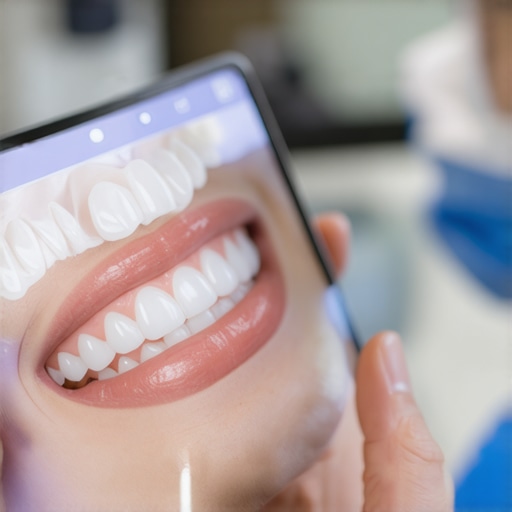
Implications of AI and 3D imaging in crafting personalized dental treatments.
Aligning Preventive and Restorative Care for Long-Term Beauty
Matching restorative procedures like veneers with preventative strategies—such as sealants, fluoride applications, and lifestyle counseling—encourages sustained oral health. Incorporating patient education on proper hygiene and dietary habits reduces the risk of future discoloration or structural damage, prolonging aesthetic results and minimizing retreatment frequency. Such an integrated approach emphasizes the dentist’s role in holistic care, underpinning long-term success.
What Next-Gen Technologies Will Continue to Reshape Smile Enhancement?
Breakthroughs like bioactive glass fillings, which promote remineralization, and 3D bioprinting of dental tissues, herald a new era of regenerative dentistry. Staying abreast of these innovations, as discussed in the Journal of the American Dental Association, allows practitioners to anticipate future capabilities—transforming the approach from correction to regeneration and truly redefining what a smile makeover can achieve.
If you’re eager to adopt these emerging techniques or share insights on the latest innovations, consider joining professional forums or subscribing to expert publications. Your active engagement fosters continuous growth and excellence in advancing smile aesthetics.
Harnessing Biomimicry to Transform Restorative Dentistry
Recent breakthroughs in biomimetic materials are revolutionizing how clinicians approach aesthetic and functional restorations. These innovations, inspired by natural biological processes, aim to replicate the intricate structure of native enamel and dentin, providing restorations that seamlessly blend with surrounding tissues. The integration of nanotechnology into ceramic matrices, for instance, enhances their mechanical properties and translucent qualities, offering a superior alternative to traditional materials.
Can Emerging Nanotechnologies Revolutionize Enamel Regeneration?
Nanotech-driven approaches, such as the application of nanoparticles capable of promoting remineralization, open new frontiers in preventive and restorative care. By facilitating the formation of durable mineral layers on compromised enamel, these interventions can potentially reduce the need for invasive procedures. According to recent findings published in the Journal of the American Dental Association, incorporating nanomaterials into dental products not only improves their efficacy but also enhances bioactivity, supporting tissue integration and regeneration.
To stay at the forefront, practitioners should explore the latest research on bioinspired nanomaterials and consider their application within treatment protocols to achieve long-lasting, natural-looking results.
Advanced Smile Design: Integrating Digital Precision for Personalized Aesthetics
The combination of 3D imaging, digital smile simulations, and AI-driven analytics allows for unparalleled customization in smile makeovers. By meticulously analyzing facial proportions, lip dynamics, and even speech patterns, clinicians craft restorations that not only look breathtaking but also function harmoniously within the patient’s unique anatomy. Such meticulous planning reduces uncertainties, enhances patient satisfaction, and elevates clinical outcomes to a new level of perfection.
What are the practical implications of integrating AI in smile esthetic planning?
Artificial intelligence facilitates predictive modeling, allowing clinicians to simulate various treatment scenarios swiftly and accurately. This technology can identify potential occlusal issues early, optimize material choices, and predict long-term stability. As shown in studies referenced in the JADA, AI algorithms improve workflow efficiency and consistency, providing a tailored blueprint that accounts for an individual’s biological and aesthetic parameters. Embracing these tools necessitates a commitment to ongoing education and investment in digital infrastructure.
If you’re considering integrating these advances into your practice, fostering collaborations with digital technology providers and engaging in specialized training can accelerate adoption and maximize benefits.
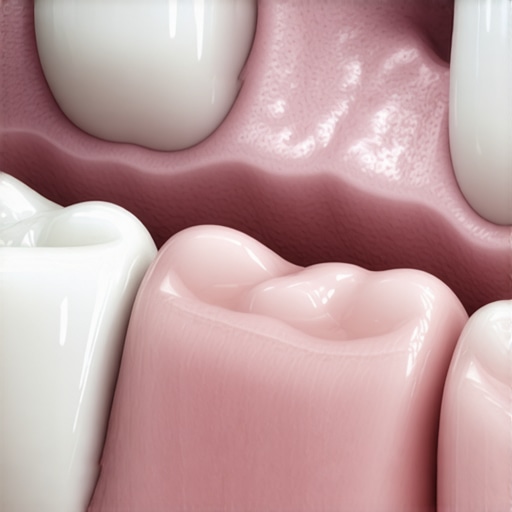
Visualization of AI-enhanced digital smile design integrating facial analysis and patient-specific data.
Minimally Invasive Techniques Building Long-Term Dental Wellness
The trajectory toward minimally invasive dentistry emphasizes preservation of natural tissues while achieving aesthetic excellence. Techniques like microabrasion, laser cavity preparation, and ceramic micro-veneers exemplify this philosophy, reducing patient discomfort and recovery time. These methods, complemented by biomimetic adhesives and etchants, create secure bonds without excessive tooth reduction.
Recent research suggests that combining such strategies with biological approaches—like growth factor applications—can stimulate remineralization and tissue regeneration, fostering a more resilient and aesthetic outcome. This paradigm shift underscores the importance for clinicians to stay informed about biological adjuncts that enhance material performance and tissue compatibility.
Could Regenerative Technologies Revolutionize the Future of Smile Makeovers?
Emerging regenerative techniques, including stem cell therapy and bioactive scaffolds, present promising avenues for restorative dentistry. The potential to regenerate lost dental tissues not only minimizes the need for synthetic restorations but also promises more natural and durable outcomes. Pioneering studies in tissue engineering, as documented in leading journals, indicate that harnessing these technologies could ultimately redefine the boundaries of aesthetic dentistry, transforming it from repair to true regeneration.
Continuous engagement with cutting-edge research, along with interdisciplinary collaborations, will be crucial for practitioners aiming to leverage these innovations in clinical practice. Embracing a forward-thinking mindset ensures readiness for the inevitable integration of regenerative solutions into comprehensive aesthetic protocols.
Unveiling the Future of Dental Material Science Through Biomimicry and Nanotechnology
Advancements in biomimetic materials are redefining what is achievable in restorative and aesthetic dentistry. By harnessing nanotechnology, researchers are developing ultra-thin, highly translucent veneers that mimic the natural enamel’s optical properties, providing seamless integration and heightened durability. Such innovations are not merely cosmetic but also functional, supporting the long-term health of tooth structures while fulfilling patients’ aspirations for natural-looking restorations.
How close are we to achieving true enamel regeneration with nanomedicine techniques?
Emerging studies in nanomedicine suggest that targeted delivery of bioactive nanoparticles can stimulate remineralization processes, potentially reversing early caries and damaged enamel. According to a report in the Journal of the American Dental Association, the development of bioengineered nanomaterials aims to create restorative solutions that not only repair but also restore native tissue architecture at the microscopic level, paving the way for minimally invasive, regenerative treatments.
Clinicians eager to incorporate these groundbreaking solutions should stay informed about ongoing clinical trials and collaborate with material scientists to evaluate their integration into everyday practice effectively.
The Synergy of Digital Precision and Biological Harmony in Smile Design
The integration of 3D facial scanning, sophisticated digital smile simulations, and AI-based aesthetic analytics is transforming how practitioners approach personalized smile makeovers. This convergence of technologies enables the crafting of restorations that are in harmony with the patient’s unique facial features, lip dynamics, and even speech patterns, resulting in more natural and functional outcomes.
In what ways can AI-driven facial analysis enhance predictability in complex aesthetic cases?
AI algorithms analyze vast datasets to assess ideal proportions, predict aesthetic harmony, and simulate soft tissue responses, allowing clinicians to customize treatment plans with unprecedented accuracy. A study published in the JADA highlights how AI-powered planning reduces errors, shortens treatment times, and elevates patient satisfaction through highly individualized outcomes.
Practitioners aiming to leverage these tools should consider investing in digital infrastructure and ongoing training to decode the full potential of AI in aesthetic dentistry.
Expert Insights & Advanced Considerations
The Future of Material Science Will Reshape Restorations
Developments in nanotechnology and biomimetic materials promise restorations that are indistinguishable from natural tooth structure, enhancing both function and aesthetics. Embracing these innovations ensures clinicians remain at the forefront of durable and biocompatible solutions.
Customized Digital Planning Transforming Smile Makeovers
Leveraging AI and 3D facial analysis enables precise, patient-specific treatment plans, increasing predictability and patient satisfaction. Integrating these tools into practice demands ongoing education to maximize their potential.
From Prevention to Regeneration—A Paradigm Shift
The focus is shifting from merely preventing decay to actively regenerating lost tissues using bioactive scaffolds and stem cell therapies. Staying informed about regenerative options will redefine long-term treatment strategies.
Minimal Invasiveness as a Standard, Not an Option
Advancements in laser dentistry and microablative techniques allow for tissue preservation while achieving optimal results, reducing patient discomfort and recovery times.
Digital and Biological Fusion in Smile Design
The synergy of digital smile simulations with biological considerations ensures harmonious, natural results that align with facial dynamics and soft tissue behavior.
Curated Expert Resources
- Journal of the American Dental Association: Premier peer-reviewed source offering the latest research in biomaterials, regenerative techniques, and digital dentistry innovations.
- International Journal of Esthetic Dentistry: Focuses on the latest cosmetic and minimally invasive procedures, including veneer advancements and aesthetic aligners.
- American Academy of Implant Dentistry: Provides guidelines on integrating regenerative materials and tissue engineering into clinical practice.
- Dental Traumatology: Essential insights into physiological responses and biological considerations for long-term restoration durability.
- Dental Science & Innovation: Emerging studies on nanotechnology applications and biomimicry in restorative dentistry.
Final Expert Perspective
Harnessing the latest developments in veneers, teeth whitening, Invisalign, and family dentistry positions practitioners to offer unparalleled care rooted in scientific evidence and innovative practice. Staying curious and connected through authoritative resources like the Journal of the American Dental Association ensures continuous growth. Engage actively in professional communities, contribute your insights, and remain receptive to emerging technologies; together, these steps will elevate your expertise and transform patient outcomes in the evolving landscape of modern dentistry.


3 Comments