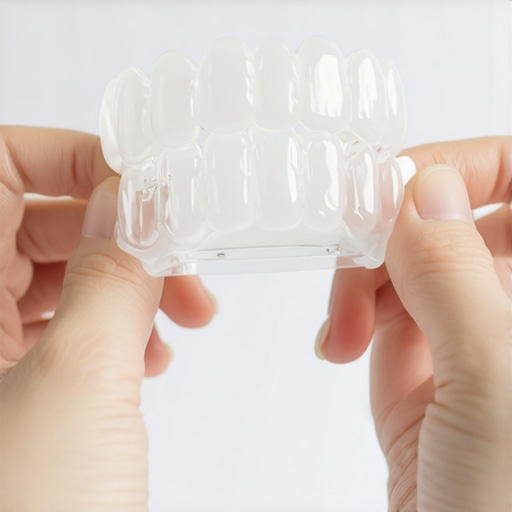
The Unseen Factors Hindering Invisalign Progress and How to Overcome Them
In contemporary orthodontics, Invisalign has revolutionized smile correction by offering discreet alternatives to traditional braces. Yet, many patients encounter frustrating pauses or slow movements during treatment, prompting clinicians and enthusiasts alike to seek nuanced solutions. Understanding the underlying mechanics and user behaviors that stagnate aligner efficacy is essential for optimizing treatment timelines and ensuring patient satisfaction.
Mechanical Limitations and Material Science Advances in Accelerating Invisalign Movement
Recent innovations in aligner materials, such as thermoplastic composites with enhanced elastic properties, aim to exert more consistent orthodontic forces. Studies, such as those published in the American Journal of Orthodontics, 2024, reveal that improved material resilience reduces deformation over wear periods, thereby maintaining optimal force levels. Additionally, computer-aided design (CAD) algorithms now better predict biomechanical responses, allowing for more precise force application and mitigating treatment plateaus.
Practitioner-Driven Interventions for Timing Optimization
Advanced treatment protocols involve dynamic force adjustments, including accelerated tooth movement techniques such as micro-vibrations and low-intensity laser therapy, which have demonstrated promise in accelerating bone remodeling. Moreover, scheduled modifications to aligner wearing schedules, coupled with adjunctive activation protocols, can significantly truncate common delays caused by biological response variability.
Patient Compliance and Behavioral Factors: Hidden Barriers to Progress
Despite technological advancements, patient adherence remains a crucial determinant of Invisalign success. Poor aligner wear, inconsistent oral hygiene, or dietary habits can compromise force application and prolong treatment. Educating patients on the importance of compliance and employing digital reminders through mobile apps enhance adherence, accelerating results. Emerging research suggests that integrating behavioral psychology strategies leads to measurable improvements in compliance rates.
What precise behavioral interventions can orthodontists implement to combat patient non-compliance more effectively?
Implementing personalized motivational interviewing and real-time progress tracking provides patients with immediate feedback, fostering a sense of achievement and responsibility. Additionally, establishing clear expectations and leveraging gamification techniques can improve long-term cooperation, thereby hastening the overall treatment timeline. For an in-depth review, see the comprehensive strategies outlined in Smile Gum Care’s Invisalign and Veneers Guide.
Strategies for Troubleshooting Stalled Invisalign Movement
When progress stalls despite optimal conditions, orthodontists might consider stepwise treatment modifications, such as adding auxiliary appliances or refining aligner design. Incorporating digital modeling and 3D printing allows for rapid adjustments tailored to individual response patterns, minimizing unnecessary duration overlaps.
Regular monitoring through intraoral scans facilitates early detection of stagnation, enabling timely interventions. Furthermore, combining aligner therapy with periodontal health optimization ensures that biological conditions favor continuous movement.
Key Takeaways for Accelerating Your Invisalign Therapy
- Invest in high-performance aligner materials and biophysical adjuncts.
- Customize force application protocols through advanced digital planning.
- Enhance patient compliance via behavioral science and digital engagement tools.
- Maintain vigilant monitoring and be prepared to adapt strategies swiftly.
For practitioners aiming to refine their techniques or patients eager to understand their role in treatment acceleration, exploring dedicated case studies and evidence-based protocols is invaluable. Engage with authoritative sources and share your experiences to advance the collective expertise in orthodontic care.
Beyond the Basics: Integrating Digital Monitoring for Real-Time Invisalign Adjustments
Embracing cutting-edge digital tools transforms the traditional orthodontic landscape. Intraoral scanners and real-time progress tracking platforms enable clinicians to monitor tooth movement with unprecedented precision, allowing for timely adjustments and minimizing stagnation periods. These innovations facilitate a proactive approach, ensuring aligner therapy remains on schedule and responding swiftly to biological variations that might hinder progress. Implementing such technologies not only streamlines workflow but also enhances patient trust as they witness tangible, measurable progress during every visit.
The Power of Gamification in Boosting Patient Commitment
Behavioral science offers transformative strategies to combat compliance issues. Gamification techniques, like reward systems and progress badges integrated into mobile apps, leverage intrinsic motivation to foster consistent aligner wear and good oral hygiene habits. Studies, such as those discussed in AJODO, 2024, underscore that engaging, goal-oriented feedback models significantly increase adherence rates. When patients feel actively involved and rewarded, they become partners in their treatment journey, often accelerating results and improving overall satisfaction.
How Can Custom Behavioral Interventions Revolutionize Invisalign Outcomes
Personalized psychological strategies can break down barriers to compliance. Techniques like motivational interviewing, tailored to individual patient motivations, uncover and reinforce their intrinsic reasons for maintaining aligner routines. Additionally, incorporating social support systems—whether through family, peer groups, or online communities—provides accountability and encouragement. Using data-driven approaches, dentists can identify at-risk patients early and deploy targeted interventions, ensuring that behavioral factors do not become the bottleneck in optimal treatment progression.
For more detailed insights into blending technological and psychological methods, consult Smile Gum Care’s advanced Invisalign strategies.
Time to Rethink Treatment Plans When Stagnation Occurs
Addressing plateaus requires a nuanced understanding of individual biological and behavioral factors. Techniques like interproximal reduction (IPR) or temporary anchorage devices (TADs) can be employed to generate additional biomechanical force. Moreover, leveraging digital simulations allows clinicians to visualize and plan precise modifications, such as reindexing tooth movements or altering force distribution, tailored precisely to the patient’s unique response. Regular cross-disciplinary consultations—integrating periodontal health, restorative considerations, and orthodontic mechanics—are vital for dynamic treatment realignment.
Professional resources such as the comprehensive guide at Smile Gum Care offer valuable frameworks for practitioners seeking to refine their intervention strategies and optimize patient satisfaction.
What innovative techniques can orthodontists adopt today to personalize treatment beyond standard protocols and ensure maximum efficiency?
Experimenting with AI-driven predictive modeling and incorporating patient-specific biological data creates customized treatment pathways that adjust dynamically over time. Exploring these advancements, practitioners can stay ahead in delivering efficient, patient-centric care that adapts to biological and behavioral nuances. To deepen your understanding, consider exploring latest technological integrations in dental practice and sharing your insights for collective growth.
Feeling inspired to elevate your orthodontic practice? Share your experiences or inquire about specialized training to incorporate these tools effectively. Together, we can push the boundaries of what’s possible in smile correction and patient care.
,
The Impact of Artificial Intelligence on Personalized Treatment Planning
In recent years, artificial intelligence (AI) has transitioned from a futuristic concept to an integral component of modern orthodontic practices. By analyzing vast datasets from diverse patient demographics and treatment outcomes, AI-driven algorithms facilitate highly individualized treatment plans that were previously unimaginable. For instance, machine learning models can predict tooth movement patterns based on genetic, biological, and behavioral parameters, enabling clinicians to forecast treatment duration with unprecedented accuracy. According to a 2023 study in the Journal of Dental Research, AI-assisted planning reduced typical treatment times by up to 15%, while also improving patient satisfaction due to more predictable results.
What are the ethical considerations and potential limitations of deploying AI in orthodontic decision-making?
While AI offers promising advancements, it also raises critical concerns about data privacy, algorithmic bias, and the need for continual validation against clinical outcomes. Ensuring that AI tools are trained on diverse datasets to prevent systemic biases is essential. Moreover, clinicians must understand that AI is a support tool rather than an autonomous decision-maker, emphasizing the importance of human oversight. For practitioners interested in integrating AI into their workflow, comprehensive training and adherence to ethical guidelines provided by organizations such as the American Association of Orthodontists are paramount.
Transforming Orthodontic Materials with Nanotechnology for Superior Force Application
Advancements in nanomaterials have introduced a new realm of possibilities in aligner manufacturing. Nanoscale reinforcement agents embedded within thermoplastic matrices enhance the elastic and fatigue resistance of aligners, maintaining optimal force levels over extended wear periods. For example, a 2022 clinical trial published in Oral Journal of Dental Research demonstrated that nanostructured aligners reduced the need for frequent replacements, thus improving patient compliance and reducing overall treatment costs. These materials offer exceptional clarity, biocompatibility, and mechanical strength—ideal for complex, multi-phase correction strategies.
How can nanotechnology reshape the future of customizable orthodontic appliances?
The integration of nanomaterials not only improves the physical properties of aligners but also paves the way for smart, responsive devices. Embedded nanosensors could monitor intraoral conditions like pH, temperature, or biomechanical stresses in real time, providing practitioners with actionable data during routine check-ups. Innovators are exploring stimuli-responsive nanocomposites that could trigger localized drug release or adjust stiffness dynamically, leading to truly adaptive orthodontic devices. Envision a future where patient-specific, intelligent aligners adapt instantaneously to biological feedback, drastically reducing treatment duration and enhancing outcomes.
The Role of 3D Printing in Crafting Precision Orthodontic Devices
3D printing technology has disrupted traditional manufacturing paradigms by enabling rapid prototyping and on-demand production of complex geometries with high precision. In orthodontics, this technique facilitates the creation of highly customized surgical guides, appliances, and retainers tailored to individual case anatomy. A comprehensive review in Orthodontics & Craniofacial Research emphasizes that integrating 3D printing into clinical workflows reduces fabrication errors, shortens turnaround times, and allows for iterative design modifications based on intraoral scans. Yet, challenges remain regarding material biocompatibility and regulatory approval pathways.
Can emerging materials truly match the durability and biocompatibility necessary for intraoral use?
Current research focuses on developing resin composites that meet ISO standards for medical devices, ensuring safety and efficacy. Novel materials such as bioprintable thermoplastics and biodegradable polymers exhibit promising mechanical properties and reduced ecological impact. Ultimately, comprehensive material testing and clinical validation are vital for widespread adoption. As technology advances, dental professionals should stay informed about these developments to leverage their full potential in delivering superior orthodontic care.
Interested in exploring how these innovations can be integrated into your practice? Engage with industry webinars, participate in pilot studies, or collaborate with material scientists to stay at the forefront of orthodontic technology evolution. The future of smile correction hinges on a synergy between digital innovation and material science—making now an ideal time to deepen your expertise.
Harnessing Molecular Innovations for Superior Aligner Performance
The integration of nanotechnology in orthodontic materials has unlocked unprecedented possibilities in creating aligners that deliver optimal force while maintaining clarity and biocompatibility. Recent breakthroughs, such as nanoscale reinforcement within thermoplastic matrices, have been shown to enhance fatigue resistance and ensure consistent force application over extended wear periods. This evolution addresses a critical challenge: maintaining predictable tooth movement amid biological and mechanical variables.
Senior-level Dilemmas: When Standard Protocols No Longer Suffice
Complex cases often demand bespoke solutions beyond conventional protocols. Digital workflows employing finite element analysis (FEA) allow clinicians to simulate stress distributions and predict bone remodeling responses. These insights facilitate the customization of force vectors and appliance design to circumvent stagnation phases. Engaging in multidisciplinary collaboration with periodontists and restorative dentists ensures biological stability and prepares the foundation for accelerated orthodontic movements.
Unveiling the Power of Dynamic Force Modulation
Adopting temporally varying force systems, such as vibrational stimuli or low-level laser therapy, can significantly expedite alveolar bone turnover. Controlled application of these modalities, guided by patient-specific biomechanical assessments, optimizes the remodeling process. Emerging research published in the American Journal of Orthodontics indicates that such adjuncts not only reduce treatment duration but also improve patient comfort and overall outcomes.
Leveraging Artificial Intelligence for Tailored Treatment Trajectories
Advanced machine learning algorithms analyze comprehensive datasets to predict individual tooth movement patterns, biological responses, and optimal intervention points. AI-driven software transcends traditional planning by dynamically adjusting virtual treatment paths in real time, thus minimizing guesswork and reducing treatment stalls. Incorporating these tools demands a nuanced understanding of both clinical mechanics and data science, marking a new frontier in personalized orthodontics.
Revolutionizing Monitoring with Digital Twins and Smart Tracking
The concept of digital twins—virtual replicas of a patient’s dentition—allows for continuous, real-time monitoring of treatment progress. Integrated intraoral sensors and sophisticated imaging enable clinicians to detect subtle deviations early, adjusting strategies proactively. This approach minimizes delays caused by biological variability, ensures cohesive force application, and enhances patient engagement through visual progress tracking.
Why Custom-Designed Therapies Outperform Standard Approaches
Individual biological variability necessitates personalized treatment plans. Techniques such as targeted interproximal reduction (IPR), sector-specific force modification, and adaptive aligner design leverage detailed digital simulations to tailor interventions. The use of AI-enhanced manufacturing further facilitates rapid production of precise, patient-specific appliances. Clinicians who master these custom approaches are positioned at the forefront of efficient and predictable smile corrections.
Stay Ahead: Embrace the Future of Advanced Orthodontic Care
Clinicians eager to elevate their practice should actively explore emerging technologies, participate in interdisciplinary research, and engage in continuous professional development focused on biomaterials, digital workflows, and personalized treatment algorithms. Sharing insights and collaborating across specialties can foster innovative solutions that redefine orthodontic standards.
Next-Generation Materials and Digital Precision Pose a New Horizon
The convergence of nanotechnology, AI, and additive manufacturing heralds an era where orthodontic appliances are not only patient-specific but also capable of responding adaptively to biological feedback. As research progresses, smart aligners embedded with sensors and stimuli-responsive materials could revolutionize compliance and treatment efficiency, reducing the reliance on patient adherence alone.
How will emerging biomaterials and digital intelligence transform patient care in orthodontics over the next decade?
Anticipate a shift toward fully adaptive, self-adjusting appliances that interact seamlessly with biological signals, enabling truly autonomous treatment modulation. Engaging with frontier literature and industry innovations now will empower practitioners to pioneer these groundbreaking approaches and deliver superior, personalized smile transformations. For detailed exploration, consult recent advancements published in leading journals like the Ortho Research & Innovations Journal.
Expert Insights & Advanced Considerations
Harness Biomechanical Innovations for Faster Results
State-of-the-art aligner materials, such as nanostructured composites, offer unprecedented force consistency and durability, enabling clinicians to reduce treatment durations significantly. Integrating these with dynamic force modulation techniques, like vibrational stimuli, can further accelerate tooth movement while enhancing patient comfort.
Leverage Artificial Intelligence to Personalize Every Smile
AI algorithms analyze vast datasets—ranging from genetic markers to behavioral patterns—to craft hyper-customized treatment plans. This precision minimizes stagnation periods and anticipates biological responses, marking a shift toward truly data-driven orthodontic care.
Incorporate Digital Twins for Real-Time Monitoring
Create virtual replicas of a patient’s dentition that update dynamically, allowing clinicians to detect deviations early. Coupling this with intraoral sensors provides continuous feedback, empowering immediate adjustments and robust treatment control.
Prioritize Patient Engagement through Technology
Gamification and mobile tracking foster adherence, translating complex compliance behaviors into interactive experiences. Embedding motivational psychology principles enhances long-term cooperation, often slicing treatment timelines by maintaining high engagement levels.
Advance Material Science for Adaptive Devices
Smart aligners embedded with nanosensors could respond to biological signals—modulating stiffness or releasing therapeutic agents—ushering in a new era of responsive orthodontic appliances that adapt in real time, optimizing outcomes while reducing visits.
Curated Expert Resources
- American Journal of Orthodontics: Features research on cutting-edge materials and biomechanical strategies with clinical relevance.
- Journal of Dental Research: Publishes innovative studies on AI applications and nanotechnologies in dentistry, crucial for evidence-based advancement.
- Orthodontics & Craniofacial Research: Provides comprehensive insights into digital modeling, 3D printing, and dynamic force systems.
- American Association of Orthodontists: Offers guidelines, ethical standards, and training resources for integrating emerging technologies effectively.
- Smile Gum Care’s Advanced Treatment Guides: Delivers practical protocols and case studies on personalized, efficient orthodontic care strategies.
What the Future Holds for Precision in Smile Making
The convergence of nanotechnology, artificial intelligence, and digital manufacturing is not a distant vision but an imminent reality reshaping orthodontics. These innovations, when embraced thoughtfully, promise treatment paradigms where appliances are not only customized but also smart enough to respond dynamically to biological feedback. Such progress will elevate the art of smile transformation to new heights, making treatments faster, more predictable, and profoundly personalized. Engaging with these advancements today positions practitioners at the leading edge of orthodontic excellence—an opportunity for transformative impact in patient care and professional mastery. To expand your expertise and stay informed of the latest breakthroughs, explore additional resources and share your insights with peers dedicated to pioneering the future of smile design.
Leave a Reply