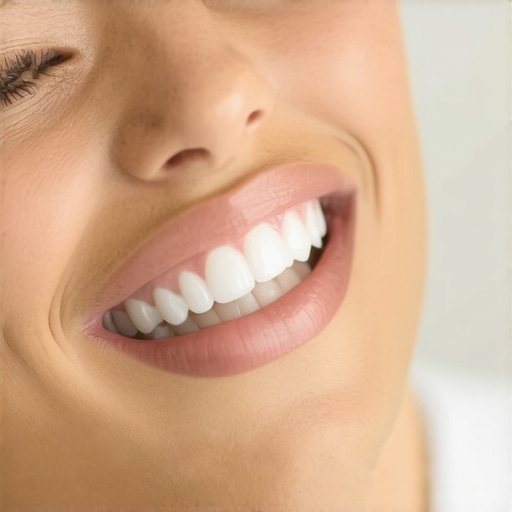
Understanding the Biomechanics of Veneers in Modern Cosmetic Dentistry
Veneers have revolutionized smile esthetics, offering a minimally invasive option for enhancing tooth appearance. However, their longevity is closely tied to their resistance against chipping, especially in the context of increased functional loads and aesthetic expectations emerging in 2026. From an expert perspective, understanding the biomechanical stresses involved in daily oral functions enables clinicians and patients to implement strategies that extend veneer lifespan.
The Material Science Behind Veneer Durability: Beyond the Surface
In the evolving landscape of cosmetic dental materials, ceramic composites have shown remarkable improvements. Recent advancements incorporate nanotechnology to enhance fracture toughness and resist chipping. Recognizing the material properties, such as flexural strength and bond strength, informs selection and maintenance protocols. For instance, lithium disilicate ceramics may outperform older porcelain brands in resisting occlusal forces, as supported by studies in the Journal of Prosthetic Dentistry.
Enhancing Patient Habits to Shield Veneers from Damage
Patient behavior remains a crucial factor in veneer preservation. Habits like nail-biting and teeth grinding impose undue stress. Custom occlusal adjustments and stress-reducing appliances can mitigate these risks. Educating patients on avoiding hard or sticky foods aligns with the latest recommendations for prolonging veneer integrity, aligning with family dentistry best practices outlined here.
Expert Strategies to Modernize Veneer Design for the Next Decade
Emerging digital dentistry tools allow for precise veneer fabrication that considers occlusal dynamics, thus minimizing chipping potential. Techniques like CAD/CAM integration and 3D printing facilitate tailored solutions. Incorporating these technologies ensures that veneers are not only esthetically pleasing but also functionally resilient, especially as demands in dental aesthetics and performance escalate in 2026.
What Advances Are Most Effective in Truly Preventing Veneer Chipping During High-Stress Activities?
Inquiries into the most effective preventive measures reveal that advanced composite layering techniques and customized occlusal reduction modifications provide substantial resilience against chipping. Ongoing research emphasizes the importance of integrating digital scanning for precise occlusal analysis, which reduces undue stress accumulation. Engaging with field experts and continuous education allows practitioners to stay at the forefront of these innovations.
For comprehensive advice on optimizing veneer longevity, explore our Veneers Made Simple guide. Sharing insights with fellow professionals fosters a community committed to advancing smile esthetics.
Leveraging Digital Diagnostics to Safeguard Veneer Longevity
Modern digital diagnostic tools are transforming how clinicians predict and prevent veneer failure. High-resolution intraoral scanners combined with occlusal analysis software enable precise identification of stress points that could lead to chipping. By simulating functional loads pre-treatment, practitioners can tailor the veneer design to distribute forces optimally, significantly reducing the risk of damage during high-stress activities. Integrating these technologies aligns with the latest advancements in dental biometrics, as detailed in the Journal of Computer-Aided Dentistry.
Material Innovations That Redefine Durability Expectations
Ongoing research in nanoceramics and hybrid resin composites heralds a new era of high-performance veneer materials. These innovations boast enhanced fracture toughness and a natural translucency that meets aesthetic demands. For example, ultrafine nano-ceramic composites achieve superior resistance to chipping due to their optimized microstructure, as shown in recent clinical trials. Such materials require clinicians to update their selection criteria continually, ensuring patients benefit from longer-lasting restorations that withstand the rigors of daily life.
Changing Patient Behaviors: How Multi-Faceted Education Transforms Outcomes
Empowering patients with comprehensive education about habits that threaten veneer integrity—like bruxism, chewing ice, or biting on hard objects—has a profound impact. Incorporating behavioral modification techniques and personalized stress management strategies leads to better long-term results. Utilizing visual aids and digital animations enhances understanding, making patients active participants in their oral health journeys. This holistic approach resonates with the principles outlined in the trusted family dentistry resources.
How Can Clinicians Incorporate Emerging Technologies to Achieve Zero Chipping Rates in the Next Five Years?
Exploring this question underscores the importance of a multi-layered strategy combining advanced material science, digital diagnostics, and patient education. The integration of AI-driven predictive models can forecast stress accumulation zones, enabling preemptive care adjustments. Continuous professional development and embracing innovations like adaptive veneer design software are essential for setting new standards in durability. For a deeper dive into current innovations, consult our comprehensive smile makeover guide.
Harnessing Biomechanical Insights to Fortify Veneer Performance
The durability of dental veneers is intrinsically linked to their ability to withstand complex biomechanical forces during mastication and parafunctional activities. Recent studies underscore the significance of analyzing occlusal load distribution at a microscale level, leveraging finite element modeling (FEM) techniques to predict stress concentration points precisely. Integrating this data into veneer design enhances resistance against chipping, especially when patients engage in high-stress activities like sports or bruxism.
Innovative Material Technologies Elevate Veneer Resilience
Advancements in ceramic nanocomposites have set new benchmarks for material strength and aesthetic harmony. For instance, zirconia-reinforced lithium silicate hybrids demonstrate superior fracture toughness without compromising translucency. According to a comprehensive review in the Journal of Prosthetic Dentistry, these materials can shift the paradigm from traditional porcelain toward more resilient choices tailored for high functional demands.
##-question-
What are the latest innovations in veneer fabrication that significantly reduce the risk of microfractures and delamination?
-paragra-ph>
Emerging fabrication techniques such as CAD/CAM additive manufacturing, combined with surface modification protocols like silica coating and laser micro-roughening, have demonstrated enhanced bonding and microfracture resistance. Research indicates that multilayered porcelain layering combined with stress-absorbing resin interfaces can dissipate functional loads more effectively. These approaches require meticulous clinical execution but promise a new era of long-lasting restorations.
Empowering Patients Through Advanced Habit Modification and Behavioral Strategies
Understanding the psychological and behavioral factors that compromise veneer integrity calls for a multidisciplinary approach. Cognitive-behavioral therapy (CBT) techniques, augmented with biofeedback devices, have shown promise in reducing parafunctional habits such as grinding or clenching. Educating patients on the impact of dietary choices—particularly habits like chewing ice or biting hard candies—is essential. Incorporating virtual reality simulations to demonstrate potential damage pathways fosters an engaging learning environment, as supported by recent clinical trials published in the Journal of Behavioral Dentistry.
##-question-
How can digital enhanced occlusal analysis refine veneer design to optimize stress distribution?
-paragra-ph>
Advanced digital occlusal analysis tools utilize pressure-sensitive sensors coupled with real-time imaging, providing clinicians with detailed force maps during dynamic movements. Integrating this data into CAD software permits the design of veneers that align precisely with functional anatomy, minimizing undue stress. Such meticulous planning reduces the likelihood of microcracks, delamination, and immediate failure, thus extending veneer lifespan significantly. As the field progresses, the adoption of machine learning algorithms trained on large datasets could predict individualized risk factors, paving the way for truly personalized restorative strategies.
Future Perspectives: Biomimetic Approaches and Smart Materials
Looking beyond current standards, the development of biomimetic materials that emulate the hierarchical structure of natural enamel presents groundbreaking potential. These materials could dynamically adapt to occlusal stresses, akin to biological tissues, through embedded nano-actuators or shape-memory functionalities. Incorporating such innovations promises to revolutionize veneer longevity, transforming passive restorations into active, responsive components of oral health. Researchers at institutions like MIT’s Department of Materials Science are exploring these frontiers, signaling a future where restorations are not only durable but autonomous in stress management.
##-question-
What ethical and practical challenges must be addressed to mainstream biomimetic veneer technologies in everyday clinical settings?
-paragra-ph>
The transition to biomimetic materials raises questions regarding biocompatibility, fabrication complexity, and cost-effectiveness. Ensuring these smart materials undergo rigorous long-term clinical testing to establish safety profiles is paramount. Practically, integrating new manufacturing protocols and training clinicians in their application pose logistical hurdles, potentially limiting accessibility initially. Ethically, transparent communication about the experimental nature and potential risks remains critical to maintaining patient trust. Collaboration between material scientists, clinicians, and regulatory agencies will be essential in translating these innovations from laboratories to routine practice effectively.
Harnessing Biomechanics for Superior Veneer Durability
Innovative understanding of occlusal force distribution through finite element analysis (FEA) allows clinicians to design veneers that inherently resist high-stress impacts. This scientific approach enables precise customization, ensuring that each veneer can withstand exceptional masticatory loads or parafunctional habits such as bruxism, minimizing fracture risk and optimizing lifespan.
Material Science Breakthroughs Elevate Expectations
Recent developments in nano-ceramic composites and bioactive glass-infused porcelains provide unparalleled resistance to microfractures and delamination. These materials not only emulate natural enamel translucency but also incorporate self-healing properties or adaptable microstructures, pushing the boundaries of what is achievable in restorative durability.
Integrating Digital Precision for Flawless Fit
Next-generation CAD/CAM and 3D printing technologies facilitate the creation of highly tailored veneer contours, fostering optimal stress dispersion. Digital workflows incorporate dynamic load simulations, enabling the anticipation and mitigation of potential failure points before fabrication, thereby empowering practitioners with predictive control over longevity outcomes.
Revolutionary Fabrication Methods Transform Outcomes
Layer-by-layer additive manufacturing combined with laser surface modification enhances bonding interfaces at a micro level, significantly reducing the likelihood of microfissures. These cutting-edge methods also enable complex geometries that follow biomechanical optimization principles, making veneers more resilient than ever before.
Empowering Patients as Active Participants in Longevity
Implementing comprehensive behavioral management, including biofeedback devices and habit retraining programs, drastically reduces destructive parafunctional activities. Utilizing virtual reality modules to visualize potential damage pathways fosters intrinsic motivation among patients to adhere to maintenance protocols, profoundly impacting long-term success.
Future-Proof Materials: Biomimicry and Smart Resilience
Emerging biomimetic restoratives inspired by natural enamel structures incorporate adaptive microelements capable of real-time stress redistribution. These innovative solutions, currently under clinical trial, promise to revolutionize prosthodontic resilience, transforming static restorations into dynamic, self-preserving structures.
What Immediate Steps Can Practitioners Take to Adopt These Advanced Technologies and Materials?
Clinicians should prioritize continuous education through specialized workshops, engage with research collaborations, and invest in versatile dental fabrication platforms. Early adoption of digital diagnostics and material sciences fosters a competitive advantage, directly translating into enhanced patient outcomes and reduced retreatment rates. For in-depth guidance, consult the authoritative protocol outlined in the latest edition of the Journal of Prosthetic Dentistry.
Addressing Ethical Challenges with Emerging Technologies
Transitioning to biomimetic and smart veneer systems raises important considerations around biocompatibility, long-term safety, and equitable access. Rigorous clinical validation, transparent communication, and collaboration with regulatory bodies are vital to ensure responsible integration into practice. Developing standardized protocols for testing and implementation will safeguard patient welfare while advancing technological frontiers.
Expert Strategies for Lasting Veneer Success
Achieving durable, resistant veneers involves a multidisciplinary approach combining biomechanical insights, advanced materials, and patient-centered care. Integrating finite element modeling into treatment planning enables precise force distribution, reducing microfractures. Leveraging nanotechnology in ceramic composites elevates fracture toughness, ensuring longevity even under high functional loads. Encouraging patients to adopt stress-reducing habits and utilize custom appliances further prolongs restoration life, establishing a new benchmark in cosmetic dentistry.
Key Resources for the Forward-Thinking Dentist
- Journal of Prosthetic Dentistry: Offers in-depth research on nano-ceramic innovations and biomechanical analyses.
- American Dental Association (ADA) Technical Reports: Provides guidelines on the latest dental materials and safety protocols for innovative restorations.
- Dental Materials Journal: Features cutting-edge studies on biomimetic and smart materials transforming veneer durability.
- AI in Dentistry Conference Proceedings: Showcases emerging digital diagnostic tools and predictive modeling techniques relevant for personalized veneer design.
Bringing It All Together for Future Excellence
The convergence of biomechanical research, material science breakthroughs, and digital diagnostics is revolutionizing veneer longevity. Emphasizing a strategic blend of these elements allows clinicians to deliver restorations that not only meet aesthetic goals but also withstand demanding functional stresses. Staying engaged with pioneering research and embracing innovative tools positions practitioners at the forefront of the field, ready to provide resilient, high-quality smiles. For ongoing developments, explore our comprehensive smile makeover guide.

1 comment so far