
How to get purple soda stains off your Invisalign attachments
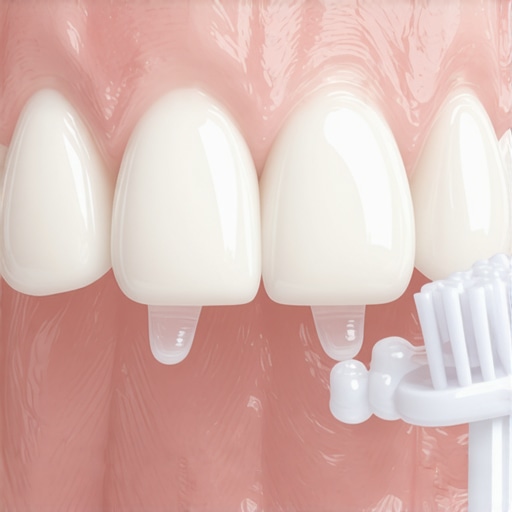
I’ll never forget the sheer panic I felt last October. I was at a Halloween party, sipping on a “Witch’s Brew”—which, as it turns out, was mostly purple grape soda. I had my aligners tucked safely in their case, feeling like a pro. But when I got home and brushed my teeth, my heart dropped. My attachments—those little tooth-colored bumps that are supposed to be invisible—were a vibrant, bruised shade of violet. It looked like I’d been chewing on a fountain pen. I scrubbed until my gums bled, but that purple hue wouldn’t budge. I felt like I had spray-painted my teeth. It wasn’t just a faint tint; it was a neon declaration of my love for sugary drinks. I spent thirty minutes with a manual toothbrush until my wrist ached, but the resin held onto that pigment like a toddler holding a favorite toy. If you’re staring at a “bruised” smile right now, I’ve been in your shoes. Today, I’m going to walk you through the exact steps I used to reclaim my pearly whites without a frantic emergency trip to the orthodontist.
Don’t Panic If Your Attachments Turned Purple
When we start our journey with discreet orthodontic secrets, we expect the trays to be the hard part. Nobody tells you that those composite resin attachments are basically tiny sponges for pigments. I made the classic rookie mistake of thinking that as long as the trays were out, I could drink anything. Wrong. According to the American Association of Orthodontists, the composite material used for attachments can be slightly porous, making them susceptible to staining from dark liquids like soda, coffee, or red wine. This porosity means the stain isn’t just sitting on top; it’s partially embedded in the resin. I learned the hard way that you need to be just as careful with your attachments as you are when you’re trying to keep your clear aligners from turning yellow. This matters because Invisalign is an investment in your confidence, and feeling like you have to cover your mouth when you laugh because of a soda stain is the absolute worst.
Will These Stains Actually Come Off at Home?
You might be skeptical. I certainly was. I thought I’d permanently dyed my teeth purple and would have to hide my smile for the next six months. The good news is that most surface stains on dental resin are treatable if you catch them quickly and use the right approach. We aren’t just talking about brushing harder—that’s how you end up needing to know how to remove aligner attachments safely if they get damaged from over-aggressive scrubbing. We’re talking about a gentle, chemical-meets-mechanical lift. Have you ever had a “dental emergency” like this where a simple drink ruined your look for the day? Drop a comment below; I need to know I’m not the only one who fell for the grape soda trap! Let’s get into the nitty-gritty of the rescue mission.
Why Resin Soaks Up Color Like a Sponge
Those little bumps on your teeth, known as attachments, are made of a dental composite resin. While it’s incredibly strong, it’s also microscopically porous. Think of it like a brand-new white sneaker; if you step in a puddle of grape juice, you can’t just wipe it off with a dry paper towel because the liquid seeps into the material’s fibers. This is exactly why your standard morning brush often fails to lift a deep purple hue. You have to lift the stain out of the resin, not just scrub the surface. This is a common hurdle when maintaining discreet orthodontic secrets. If the pigment has already settled, you aren’t just cleaning a tooth; you’re performing a mini chemistry experiment on your dental work.
The Instant Rinse Rule
The absolute best thing you can do the moment you notice a stain is to rinse aggressively. Don’t wait until you get home. Swishing with water immediately can dilute the pigments before they fully bond with the porous resin. It’s a simple, fast-acting strategy that mirrors the only way to get red wine stains off your enamel without scrubbing. If you’re out at a party, sneak away to the bathroom and swish for 30 seconds. It won’t fix a deep stain, but it prevents the purple from becoming a permanent part of your smile for the next week.
Gentle Whitening Pastes That Actually Work
Not all toothpastes are equal for this task. You need a formula that offers stain-lifting enzymes rather than just heavy abrasives. I once made the mistake of grabbing a gritty charcoal-based paste because I thought the grit would physically sand the purple away. I learned the hard way about the truth about the charcoal whitening trend and your enamel when my attachments actually became more prone to staining because I had roughened their surface. Stick to non-abrasive whitening pastes that use peroxides or papain to chemically break down the pigment.
The Baking Soda Rescue Mission
This was the absolute game-changer for my grape soda disaster. I realized that a gentle alkaline lift was needed to draw the dye out of the composite material. I mixed about a teaspoon of baking soda with just a few drops of water in a small glass until it reached the consistency of thick, wet sand.
Applying the Paste for Maximum Lift
I used a soft-bristled manual brush and gently massaged this paste onto the stained attachments for about two full minutes. I looked like a mad scientist in my bathroom mirror at 2 AM, and the taste was anything but pleasant, but the results were undeniable. After rinsing, the vibrant purple had faded to a barely noticeable shadow. It works because the baking soda acts as a mild, water-soluble abrasive that can penetrate those tiny pores without scratching the resin. It’s a similar logic to how you might manage how to stop your clear aligners from turning yellow over time.
The Best Way to Handle Stubborn Discoloration
If the baking soda trick doesn’t completely clear the hue, do not keep scrubbing until your gums bleed. Excessive force can damage the attachment or the enamel surrounding it. At that point, you might need a professional polish. Dentists use specialized tools that can buff the resin surface back to its original smoothness. It is a much safer alternative than risking the need for how to remove aligner attachments without damaging your enamel because you’ve worn them down to a sharp point. For anyone who wants a more permanent glow, looking into teeth whitening secrets for a sparkling smile in 2025 at 1248 can help you keep the rest of your teeth as bright as your rescued attachments.Let’s dig deeper into the science of why your teeth might be fighting back against your whitening efforts. While we often think of teeth as solid, bone-like structures, they are actually dynamic, living tissues. One of the most common myths is that professional-grade bleach is a ‘reset button’ for any discoloration. In my experience, and as supported by clinical data, this isn’t always the case. A 2022 study published in the Journal of Dentistry highlighted that high concentrations of hydrogen peroxide can temporarily alter the surface morphology of enamel, making it more susceptible to external pigments for up to 24 hours. This means the very act of whitening opens the door for a deeper stain if you aren’t careful.
Your Teeth Are More Vulnerable Right After Whitening
The ‘Oops’ Factor here is what I call the Porous Window. Most people think that once the gel is rinsed off, the job is done. But your enamel stays ‘open’ for nearly two days. If you’re currently navigating Invisalign innovation in 2025, your teeth are already under pressure. Adding a whitening treatment during a week of heavy tray movement can lead to intense sensitivity. I’ve seen people rush into a ‘white-out’ for a wedding, only to end up with teeth so sensitive they couldn’t even drink the champagne. This vulnerability is why that purple grape soda I mentioned earlier was such a disaster—my enamel was likely already sensitized.
Why do my teeth look splotchy after a whitening session?
If you’ve ever finished a treatment and noticed bright, chalky white spots, you might think the product was defective. It’s actually the opposite. Those spots are usually areas of ‘hypocalcification’ or demineralization. The whitening process dehydrates the tooth, making these pre-existing flaws stand out. It’s a common issue seen in pediatric cases where white spots on new adult teeth indicate that the enamel didn’t form perfectly. In adults, these are often the ‘scars’ left behind from old orthodontic work or early-stage cavities that haven’t quite broken the surface yet.#IMAGE_PLACE_HOLDER_C#
The Hidden Trap of Over-Bleaching Your Enamel
If the chemical route isn’t giving you that uniform look, it might be time to stop fighting your natural biology. Some stains—especially those caused by childhood antibiotics or genetics—are ‘intrinsic.’ No amount of peroxide will reach them. This is where you might want to transform your smile with veneers using expert tips. Unlike whitening, veneers provide a physical shield that masks the underlying color without repeatedly stripping the enamel’s protective layer. Before you commit to another round of high-intensity bleach, check out the ultimate guide to teeth whitening options in 2025 to see if your goals are even reachable with chemistry alone. Have you ever fallen into the trap of thinking a stronger gel would solve a deep-set stain? Let me know in the comments.I used to think that a stiff toothbrush and some elbow grease were the gold standard for dental care. I was wrong. If you want to keep your results looking professional—whether it is your Invisalign trays or those porcelain shells—you need to stop treating your mouth like a kitchen floor that needs a hard scrub. I have personally transitioned to using an ultrasonic cleaner for my trays every single morning, and it is a night-and-day difference compared to manual brushing. I’ve found that it is the most effective way to properly clean a night guard to prevent bacterial buildup and keep aligners from smelling. According to Dr. Gordon Christensen of Clinicians Report, a leading authority in restorative dentistry, ultrasonic cleaning using high-frequency sound waves is significantly more effective at removing biofilm than manual scrubbing, which often just pushes bacteria deeper into the material’s pores.
Keep Your Aligners Crystal Clear with Ultrasonic Tech
When I first started, I would spend five minutes every morning with a soft brush and mild soap, only for the trays to look cloudy by noon. Now, I drop them in the ultrasonic pod while I make my coffee. It uses tiny cavitation bubbles to blast away the proteins that cause that ‘cloudy’ look. If you are struggling with the hidden reason your clear aligners have a persistent odor, this tool is the literal solution. It’s also a lifesaver for anyone in the family wearing retainers or partials, making it a staple for ensuring family dental care in 2025. 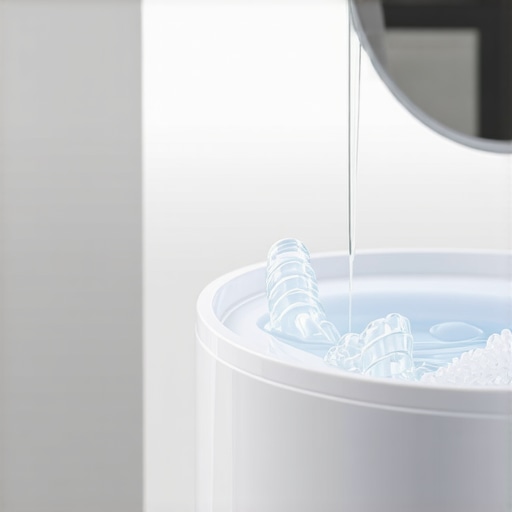
Why Pressure Sensors Save Your Gums from Recession
Another tool I swear by is an electric toothbrush with a visible pressure sensor. After my whitening disaster, I was so paranoid about stains that I started brushing way too hard. My dentist pointed out that I was actually wearing down my gum line. I had to learn how to tell if your gum recession is caused by over brushing before I did permanent damage to my roots. Most high-end brushes now will literally light up red if you press too hard, which is crucial if you are trying to stop brushing your veneers like they are real teeth. Real teeth have a bit of give, but the bond on a veneer or an attachment needs a gentle, consistent vibration, not a heavy-handed shove.
How do I maintain my smile’s brightness over time?
The secret isn’t more bleach; it’s preventing the ‘re-stain.’ I now use a specialized water flosser once a day, especially because it’s the best method for flossing under a permanent lingual retainer without shredding traditional floss. I predict that in the next few years, we will see AI-integrated toothbrushes that scan for early-stage demineralization in real-time, giving us a ‘health score’ on our phones before a cavity even forms. For now, consistency with these tools is your best defense. I challenge you to swap your manual scrubbing for a week of ‘gentle tech’—your gums will thank you, and your attachments will stay white much longer.
Why I Stopped Stressing Over Every Sip of Coffee
After my grape soda incident, I realized that living with attachments requires a bit of strategy rather than constant fear. One major takeaway was the Red Dye #40 rule: if it would leave a permanent mark on a white cotton T-shirt, it is going to settle into your resin. I now keep a small kit in my bag for those unexpected moments. I also learned that whitening isn’t a one-and-done event but a cycle of maintenance. Reviewing the ultimate guide to teeth whitening options in 2025 helped me understand that I was previously over-relying on harsh chemicals. Patience is almost always faster than scrubbing; aggressive brushing creates tiny micro-scratches on the resin that actually trap more pigment over time. Your diet doesn’t have to be boring, you just need to be more strategic about when and how you indulge.
Tools That Actually Earned a Spot in My Cabinet
I have tried dozens of gadgets, but only a few have genuinely changed my daily routine. My first non-negotiable is the Ultrasonic Cleaning Pod. It is the only way I have found to truly eliminate the cloudy residue that builds up on trays. Second, I recommend a Hydroxyapatite-based toothpaste; it helps remineralize the surface of your teeth and attachments without the sensitivity that often comes from peroxide. Third, I always keep a tab open for teeth whitening secrets for a sparkling smile in 2025 at 1248 whenever I feel my brightness is starting to fade. Finally, a high-quality Water Flosser is essential for getting behind those tricky attachments where a regular brush might miss a spot of pigment.
Your Path to a Brighter Future Starts Today
Reclaiming your smile from a deep stain or a yellowing tray feels like a small victory, but it is a significant step in your broader self-care journey. Whether you are currently navigating Invisalign innovation in 2025 or simply trying to reverse a one-time grape juice mistake, remember that your enamel is surprisingly resilient when treated with care. You now have the exact blueprint to keep your teeth whitening results looking fresh, professional, and vibrant without a trip to the emergency clinic. Have you ever had a staining emergency right before a big meeting or date? Let me know how you handled it in the comments below!