
How to stop your gums from bleeding when you haven’t flossed in weeks
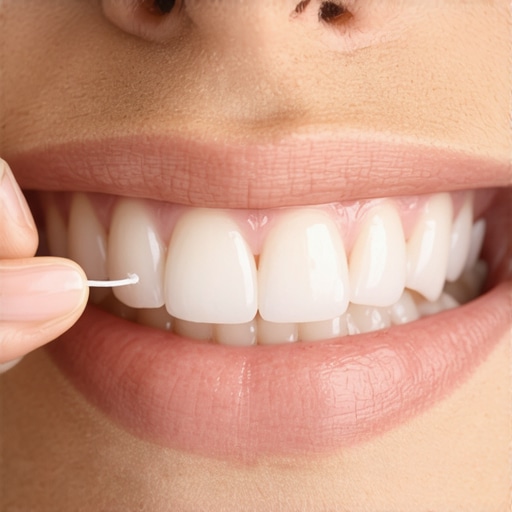
I remember staring down at the bathroom sink about three years ago, and honestly, it looked like a scene from a low-budget horror flick. There was that unmistakable pink swirl in the toothpaste foam, a metallic tang in my mouth, and a sudden, sharp wave of guilt. I had gone nearly three weeks without touching a single piece of floss. Life had been hectic, the kids were keeping me up, and honestly, flossing just felt like an optional chore I could skip ‘just for tonight’—until ‘tonight’ turned into a month. I felt like a failure, especially since I’m usually the one preaching about family dentistry and healthy habits to anyone who will listen.
Your Sink Does Not Have to Look Like a Crime Scene
The first thing I did—and maybe you’ve done this too—was panic. I grabbed the floss and started scrubbing between my teeth with the force of a man trying to power-wash a sidewalk. Big mistake. My gums didn’t just bleed more; they throbbed for hours. I realized then that you can’t bully your mouth back into health after weeks of neglect. Today, I want to show you exactly how to navigate that delicate period when your gums are angry, swollen, and prone to bleeding without causing permanent damage like gum recession. We are going to fix the inflammation, manage the bacteria, and get you back to a point where you aren’t afraid to smile in the morning.
Is my gum tissue permanently ruined after skipping weeks of care?
This is the fear that kept me up that night. You might think that once the bleeding starts, you’ve crossed a point of no return. Thankfully, our mouths are incredibly resilient. One specific mistake I made early on was assuming that because my gums were bleeding, I should stop flossing entirely to ‘let them heal.’ In reality, that just allows the bacterial biofilm to harden into tartar, which you can’t brush away. According to the Centers for Disease Control and Prevention (CDC), nearly half of all adults aged 30 and older have some form of periodontal disease, but the early stage—gingivitis—is almost always reversible with the right approach. It is not about how long you stayed away from the floss; it is about how gently and consistently you reintroduce it now. If you’ve noticed the simple reason your gums bleed only when you floss one specific tooth, you know that localized inflammation is often just a sign of trapped debris that needs careful attention, not a reason to quit. Have you ever looked down at the sink and wondered if you’ve actually caused permanent damage just by being busy?
Start With Salt Water Instead of Scrubbing
Before you even think about aggressive flossing, you need to calm the ‘fire’ in your mouth. When I was in the thick of my own gum-bleeding crisis, I found that jumping straight back into a heavy-duty routine was counterproductive. Your gums are essentially an open wound at this stage. Instead of reaching for the string immediately, start with a warm salt-water rinse. It’s an old-school neighborly trick that actually works by reducing the bacterial load and soothing the swelling. This makes the eventual flossing much less painful and far less bloody. While you’re at it, check your breath; often, that metallic taste is accompanied by an odor. If you’re struggling with that, you might want to look into the real reason your breath smells bad even when you think you’re cleaning well. Once the redness subsides after a day or two of rinsing, then—and only then—should you start a ‘micro-flossing’ routine. We aren’t going for gold here; we’re just trying to break up the party the bacteria have been throwing while we were away.
Switch from Scrubbing to the C-Shape Sweep
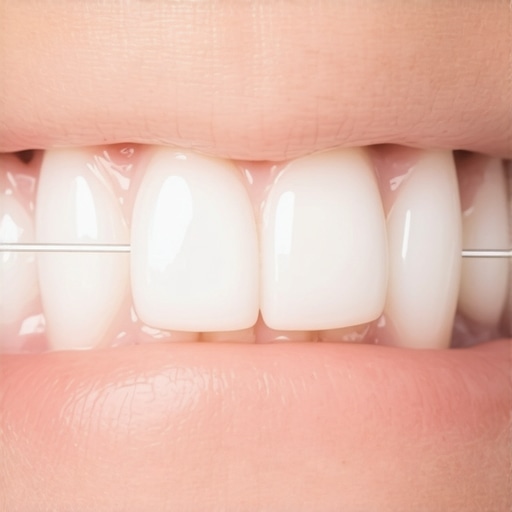
When I finally sat down to fix my ‘sink crime scene,’ my biggest mistake was my grip. I was pulling the floss taut and snapping it down into the gum tissue. It’s a common blunder—we think force equals cleanliness. Instead, think of your floss like a soft polishing cloth. You want to wrap the floss around the side of the tooth in a ‘C’ shape, gently sliding it just beneath the gumline. I remember one specific Tuesday where I spent twenty minutes meticulously ‘sawing’ at my back molars; I ended up with a localized infection because I’d actually sliced the delicate tissue. Don’t do that. By curving the string, you’re hugging the tooth and wiping away the sticky plaque without turning your mouth into a construction site. This is exactly the kind of foundational habit that is covered in family dentistry tips for creating a healthy smile for your kids, because if they learn to be gentle now, they won’t have to deal with the panic we’re currently fixing.
Check for Trapped Debris Before Moving On
Sometimes, the bleeding isn’t just about general inflammation; it’s about a ‘foreign invader.’ I’ve had moments where a tiny fragment of a kernel or a strawberry seed got lodged deep enough to cause a throb that felt like a cavity. If you feel a sharp pinch in one spot, you might need to know how to safely remove a piece of popcorn stuck in your gums rather than just flossing harder. Using a water flosser on a low setting can often flush these particles out without the trauma of physical scraping. If you find that a gap has suddenly formed or changed shape during this process, it might be worth investigating how to fix the small gap that appeared between your front teeth, as shifting teeth can create new ‘food traps’ you aren’t used to cleaning.
Don’t Start Whitening Until the Redness Fades
It is incredibly tempting to want to ‘bleach away’ the evidence of neglect. When your teeth look a bit yellow from plaque buildup, your first instinct might be to reach for a whitening strip. Stop right there. Applying peroxide to inflamed, bleeding gums is like pouring lemon juice on a fresh scrape—it’s going to hurt, and it will likely increase the inflammation. I tried a ‘express’ whitening kit once while my gums were still tender, and the ‘zingers’—those sharp nerve pains—were so intense I couldn’t finish my coffee the next morning. Wait at least seven days until the bleeding has completely stopped before you even think about teeth whitening secrets for a sparkling smile in 2025. Your gums need a solid foundation before they can handle the chemicals required for aesthetic changes.
Why Over-Brushing Is Just as Dangerous as Neglect
In your rush to fix the situation, you might be tempted to brush five times a day with a ‘hard’ bristle brush. This is a fast track to gum recession. I learned the hard way that ‘scrubbing’ doesn’t kill more bacteria; it just wears down your enamel and pushes the gumline back. If you’ve noticed your teeth looking longer or feeling more sensitive to cold, you should check why your gums are receding even though you brush every day. The goal is consistency, not intensity. Use a soft-bristled electric brush and let the vibrations do the work. It takes about two weeks of this gentle, disciplined approach to see the pink swirl in your toothpaste finally disappear for good.
Once you’ve stopped the bleeding and stabilized your gums, it’s natural to want to level up. But here is where I see most people trip over their own feet. We live in an era where everyone wants a ‘filter’ for their face, and they assume dentistry works the same way. The biggest myth? That cosmetic procedures like veneers or aligners are a ‘shortcut’ to dental health. In reality, they are sophisticated tools that require a foundation of healthy bone and tissue. For example, many patients jump into Invisalign innovation thinking it’s purely about closing a gap. But if you move teeth through bone that is still slightly inflamed from that ‘sink crime scene’ we talked about, you risk losing bone density entirely.
Why does my bite feel ‘off’ even though my teeth look perfectly straight?
This is the sophisticated reader’s nightmare. You finish treatment, your teeth are straight, but your jaw aches. This happens because of ‘occlusion’—the way your upper and lower teeth interact. A study published in the Journal of the American Dental Association highlights that improper occlusion can lead to TMD (Temporomandibular Disorder) and even chronic headaches. The trap here is choosing ‘speed’ over ‘stability.’ If your aligners are moving teeth faster than your ligaments can remodel, your brain literally gets confused about where to rest your jaw. It is why the reason your smile looks uneven after orthodontic treatment often has more to do with your bite than the position of individual teeth.
Stop Treating Your Veneers Like Invincible Armor
Another massive ‘oops’ factor is the porcelain pedestal. People get veneers and think, ‘Great, these can’t get cavities, so I’m done with the hard work.’ Wrong. While the porcelain itself is immune to decay, the tooth structure underneath is more vulnerable than ever. You absolutely must stop brushing your veneers like they are real teeth using abrasive pastes. If you use a high-RDA (Relative Dentin Abrasivity) charcoal toothpaste, you will scratch the glaze, leading to a situation where why your porcelain veneers look dull after five years of wear becomes your new reality.
The Over-Whitening Plateau You Need to Avoid
I have seen it a hundred times: someone whitens their teeth until they reach a ‘chalky’ blue-white hue that looks radioactive under office lights. There is a physiological limit to how white your teeth can get before you start damaging the protein matrix of the enamel. If you’ve wondered why your professional whitening didn’t work as well as last time, it might be because you have hit the ‘bleaching plateau.’ Pushing past this does not make them whiter; it just makes them translucent and sensitive. Instead of more bleach, you might actually need to learn how to stop your veneers from looking too white and fake by matching the shade to the whites of your eyes—that’s the pro secret for a natural look. Have you ever fallen into the trap of thinking ‘more is better’ with dental treatments? Let me know in the comments.
I used to think that a standard manual toothbrush and a generic roll of floss were all I needed to keep my post-treatment results intact. But I quickly realized that if you are investing thousands into your smile, you cannot treat it with amateur equipment. My absolute game-changer was an ultrasonic cleaner. If you wear aligners, night guards, or retainers, you know that ‘funky’ smell and cloudy film that develops by midday. That is actually calcified plaque and bacterial biofilm. Dr. Gordon Christensen, a world-renowned dental researcher from the Clinicians Report, has frequently documented that mechanical agitation—specifically the microscopic bubbles created by an ultrasonic bath—removes debris that manual scrubbing simply cannot reach. I now drop my appliances in every morning while I am in the shower, and they stay crystal clear. It is also the most effective secret for knowing how to properly clean a night guard to prevent bacterial buildup without creating microscopic scratches that actually trap more bacteria over time.
Keep Your Smile Hospital-Clean with an Ultrasonic Bath
Stacking your habits is the only way to ensure your maintenance routine survives a busy life. I do not set aside thirty minutes for ‘dental time’ anymore. Instead, I keep a set of high-quality interdental brushes in my car for when I am stuck in traffic, and I keep my whitening maintenance routine synced with my regular haircuts—every six weeks, I do a single 15-minute touch-up to stay bright. If you have a permanent wire behind your teeth, you must learn how to clean plaque off a permanent retainer wire using a bridge threader, or you will eventually face localized gum recession. For those of us who refuse to give up our morning brew, using a pH-balanced rinse immediately after your last sip is the most effective way how to keep your teeth white without giving up black tea or coffee. It neutralizes the acid before it can etch the stain into your enamel.
How do I maintain my results without turning it into a part-time job?
Consistency beats intensity every single time. Most people fail because they try to be perfect for three days and then quit for three weeks. My personal strategy is the ‘Rule of 120’—I aim for 120 seconds of high-quality cleaning twice a day, focusing on the gumline rather than the biting surfaces. If you find yourself forgetting, leave your aligner case on top of your phone at night. It is a physical reminder that ensures you follow the best way to store your clear aligners when you aren’t wearing them. This kind of disciplined simplicity is exactly what we should be teaching the next generation when ensuring family dental care remains a priority at home.
Why the Future of Dentistry Is Sitting on Your Nightstand
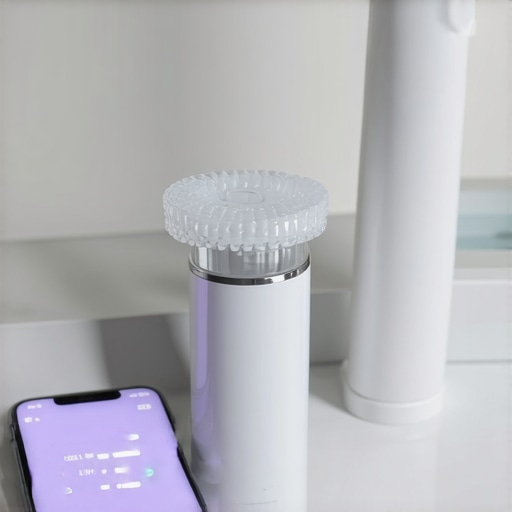
Looking ahead to 2026 and beyond, we are moving away from the ‘wait until it hurts’ model. I am already seeing a surge in home-scanning technology that integrates with your smartphone. Imagine taking a 3D scan of your bite and having an AI analyze if your Invisalign innovation is tracking correctly before you even feel a shift in your teeth. This kind of proactive care will stop minor issues from becoming expensive emergencies. We are also seeing a shift toward bioactive toothpastes containing nanohydroxyapatite, which actually ‘regrows’ mineral layers on your teeth rather than just cleaning them. This is the next frontier for anyone who has struggled with sensitivity or thinning enamel.
The one advanced tip I want you to try this week is the ‘Dry Brush’ technique before your actual cleaning. Spend two full minutes brushing with a completely dry, soft-bristled brush—no water, no paste. You will feel every bit of texture and plaque on your teeth, which forces your brain to be more precise with the bristles. Once your teeth feel glass-smooth to your tongue, then add your fluoride or bioactive paste for the final polish. It is a small habit that ensures you aren’t just letting the minty flavor trick you into thinking the job is done.
What No One Tells You About Living with a High-Maintenance Smile
Reflecting on that sink crime scene from years ago, the biggest lightbulb moment wasn’t about the technique; it was about the mindset. You have to stop viewing dental care as a punishment for eating sugar and start seeing it as a preservation of your investment. Lesson one: Expensive work like veneers or implants doesn’t buy you a ‘get out of jail free’ card—it actually raises the stakes. If you’ve wondered why your teeth look longer as you get older, it’s often because we focus on the shine of the enamel while ignoring the health of the foundation. Consistency is boring, but it’s the only thing that works. You can’t cram for a dental exam like you did for a college mid-term.
#IMAGE_PLACEHOLDER_E#
My Personal Survival Kit for a Lifetime of Healthy Gums
Over the last decade, I’ve tested dozens of gadgets, and most of them are clutter. However, three things have earned a permanent spot in my cabinet. First, a high-quality water flosser is non-negotiable for anyone who finds string flossing tedious. It’s also the safest way to flush out debris if you’re worried about how to tell if you have a hidden cavity between teeth that you can’t quite reach. Second, I highly recommend switching to a nano-hydroxyapatite toothpaste; it feels more like a ‘spa treatment’ than a chore. Finally, keep a stash of interdental brushes in your desk or car. They are far more effective at removing biofilm than a toothpick, especially for those of us prioritizing family dentistry and building healthy smiles for every generation. If you’ve ever been terrified of the chair, knowing the secret to painless dental injections can help you make that first appointment without the cold sweat.
Your Smile Deserves More Than a Quick Fix
It’s easy to feel overwhelmed by the gadgets, the schedules, and the occasional bleeding gums, but don’t be afraid to start small today. Whether you’re recovering from a month of missed flossing or you’re finally looking into teeth whitening secrets for a sparkling smile, the goal is always the same: a healthy, confident you. Your teeth are the only part of your body that doesn’t heal itself, so treat them with the respect they deserve. Have you ever felt that sudden panic when you realize you’ve skipped your routine for too long? Let me know in the comments how you got back on track!