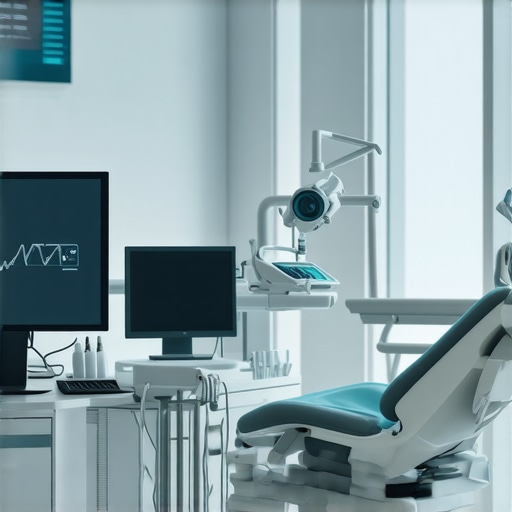
Harnessing Cutting-Edge Innovations in Family Dentistry for Holistic Oral Care
As the landscape of dental medicine rapidly evolves, integrating advanced technological tools into family dentistry practices becomes essential for delivering comprehensive and patient-centric care. The strategic adoption of innovations such as intraoral scanners, AI-driven diagnostics, and minimally invasive procedures elevates clinical outcomes, especially when addressing complex aesthetic and functional concerns like teeth whitening, veneers, and orthodontic interventions.
Beyond Conventional Treatments: The Role of Digital Workflow in Customizing Smile Makeovers
Modern family dentistry emphasizes personalized treatment plans that leverage digital impressions and 3D modeling to craft precise veneers and aligners, thereby expediting treatment timelines and enhancing predictability. Studies, such as those published in the Journal of Dental Research, validate that digital workflows not only improve aesthetic outcomes but also reduce patient discomfort and appointment frequency.
The Paradigm Shift: Minimally Invasive Techniques that Combine Function with Beauty
In the quest for optimal oral health and aesthetics, clinicians are increasingly prioritizing conservative procedures—like direct composite veneers or laser whitening—that preserve natural tooth structure. These techniques are supported by evidence suggesting superior long-term stability and lower risks of sensitivity, aligning with the broader objectives of family dentistry to foster trust and ongoing patient relationships.
Adapting to Future Demands: What Technologies Will Transform Family Dental Practice by 2026?
The integration of artificial intelligence for early disease detection, augmented reality for patient education, and nanotechnology for enhanced restorative materials are poised to redefine the scope and quality of family dental services. These innovations facilitate a proactive approach, enabling dentists to anticipate issues and customize preventative strategies effectively.
How can practitioners effectively implement these technological advancements without compromising patient trust or increasing costs?
Professionals should focus on continuous education, selective investment in proven tools, and transparent communication to ensure seamless integration of emerging technologies into their practice. Emphasizing patient education about the benefits and safety of new procedures reinforces trust and demonstrates commitment to quality care. For insights into optimizing treatment costs, consider reviewing strategies outlined in this resource.
Engaging with expert forums and contributing your experiences with these innovations can foster a collaborative environment that accelerates the positive transformation of family dentistry.
Embracing Digital Smile Design for Better Patient Engagement
One of the most transformative advancements in family dentistry is digital smile design. This technology allows clinicians to create virtual mock-ups of potential results, helping patients visualize their ideal smile and fostering collaborative decision-making. By integrating intraoral scanners and CAD/CAM systems, practitioners can produce highly customized veneers, whitening trays, and aligners faster and with greater precision.
Reimagining Patient Trust Through Transparency and Techassisted Communication
Transparency is vital for building long-term relationships in family dentistry. Leveraging augmented reality (AR) tools can demystify procedures like teeth whitening or veneer placement, providing patients with an immersive understanding of their treatment journey. According to research in the Journal of Dental Practice, patient comprehension correlates strongly with satisfaction and adherence to recommended therapies, especially when technology enhances clarity.
Challenging Assumptions About Cost and Accessibility
Many believe that adopting high-end technology inevitably leads to increased treatment costs or limits accessibility. However, smarter investment in scalable digital tools can actually reduce expenses over time by streamlining workflows and minimizing re-treatments. For example, this guide emphasizes selecting versatile equipment that offers multiple treatment capabilities, ensuring cost-effectiveness and broad accessibility for diverse patient groups.
What are the most effective strategies to integrate advanced technology without alienating traditional patient demographics?
Practitioners must balance innovation with personalized care. Offering flexible options for those less comfortable with digital interfaces, along with ongoing staff training and patient education, can bridge this gap. Emphasizing the safety, reliability, and benefits of new tools, as outlined in this peer-reviewed research, will foster trust and support seamless adoption.
Curious about integrating emerging tools into your practice? Explore consulting with industry experts or attending dedicated dental technology expos to stay ahead of the curve and harness these innovations for exceptional patient outcomes.
Harnessing AI-Powered Diagnostics for Precise Caries Detection
One of the most transformative shifts in advanced family dentistry is the integration of artificial intelligence (AI) algorithms that enhance early detection of dental caries. Unlike traditional visual examinations, AI-driven systems analyze high-resolution images and intraoral scans to identify subtle demineralization patterns often indistinguishable to the human eye. According to a comprehensive review published in the Journal of the American Dental Association, these tools significantly improve diagnostic accuracy, enabling clinicians to initiate minimally invasive treatments before lesions progress, thus saving tooth structure and patient discomfort.
Augmented Reality as a Patient Engagement Catalyst
Augmented reality (AR) is swiftly becoming a game-changer in patient communication within family practices. By overlaying virtual models onto the patient’s real teeth, AR aids in explaining complex procedures such as veneer placements or orthodontic movements. This immersive visualization empowers patients with a clearer understanding of their treatment options and expected outcomes, fostering trust and informed consent. A recent study in the Journal of Dental Research highlights that enhanced comprehension correlates positively with adherence and satisfaction, particularly among younger demographics increasingly familiar with digital interfaces.
How can dental practices seamlessly incorporate AR to elevate patient education without causing technological overwhelm?
Practitioners should start by selecting user-friendly AR platforms that integrate smoothly with existing digital workflows. Training staff to confidently demonstrate procedures and interpret virtual models ensures a smooth experience. Additionally, tailoring presentations to individual patient needs—such as demonstrating the benefits of veneers for a specific smile concern—makes the technology more relatable. Emphasizing the tangible benefits and safety profile of AR tools reassures patients that technology is a means to enhance, not complicate, their care journey. Collaborating with technology providers for customized solutions can further optimize integration, turning AR from a novelty into a core component of patient engagement strategies.
Nanotechnology in Restorative Materials: The Future of Long-Lasting Results
Meanwhile, nanotechnology is poised to redefine the durability and aesthetic qualities of restorative materials. Nanoscale particles incorporated into composite resins and ceramics confer increased hardness, improved wear resistance, and enhanced polishability. Research published in the Journal of Materials Science: Materials in Medicine indicates that nanostructured restorations demonstrate superior marginal integrity and reduced microleakage over traditional formulations. These advancements translate into longer-lasting restorations with fewer replacements, a keen benefit for busy family practices aiming to deliver cost-effective, patient-centered care.
Anticipating the Impact of 3D Printing on Custom Dental Solutions
The advent of chairside 3D printing introduces unprecedented efficiency in producing customized appliances, from crowns and bridges to surgical guides. Employing biocompatible resins and metal alloys, 3D printers enable rapid prototyping and on-demand manufacturing, slashing turnaround times and reducing laboratory costs. A detailed case study in the European Journal of Esthetic Dentistry illustrates how integrating 3D printing accelerates comprehensive smile makeovers, offering patients immediate solutions without multiple appointments.
However, integrating these advanced technologies requires strategic planning—balancing initial investments with long-term benefits. Consulting with industry experts, attending specialized workshops, and participating in peer collaborations can facilitate smooth adoption and maximize the return on technological investments, ultimately elevating the standard of family dental care and strengthening patient trust.
Unveiling the Promise of Bioactive Restorative Materials and Their Role in Preventive Care
Recent advances in bioactive restorative materials, such as ion-releasing composites and glass ionomers, are revolutionizing traditional decay management by actively promoting remineralization and reducing secondary caries incidence. These materials, embedded with calcium, phosphate, and fluoride ions, interact synergistically with saliva to reinforce tooth structure and inhibit microbial colonization, representing a paradigm shift from passive fillings to dynamic, preventive interventions. According to a comprehensive review in the Journal of Dental Research, their integration into routine restorative protocols significantly enhances longevity while maintaining aesthetic and functional outcomes.
The Impact of Laser-Assisted Periodontal Therapy on Pediatric and Geriatric Oral Health
Laser technology, particularly soft-tissue diode lasers, has demonstrated exceptional efficacy in managing periodontal diseases across varied age groups. With benefits including reduced bleeding, minimal postoperative discomfort, and accelerated healing, laser-assisted therapy offers a minimally invasive approach tailored for both pediatric patients with early gingivitis and elderly patients with complex periodontal conditions. An influential study published in the American Dental Association Journal underscores the potential of laser therapy to improve treatment adherence and clinical outcomes in diverse patient populations, emphasizing its adaptability in family-centered practices.
How can clinicians seamlessly integrate laser technology into their existing workflows to optimize periodontal care without escalating treatment complexity?
Practitioners should invest in comprehensive training programs, select versatile laser systems compatible with various procedures, and emphasize patient education regarding safety and benefits. Establishing case selection criteria and establishing collaborative protocols with periodontal specialists can streamline application while maintaining clinical efficiency. Incorporating detailed case documentation and outcome tracking fosters continuous improvement and demonstrates value to patients, thus reinforcing trust and promoting sustained oral health engagement.
Decoding the Science of Enamel Profiling for Precision Preventive Strategies
Advancements in enamel profiling techniques—leveraging quantitative light-induced fluorescence and optical coherence tomography—enable clinicians to detect early demineralization with unprecedented sensitivity. Customized remineralization protocols can then be precisely tailored based on localized enamel health, transcending generic prevention to individualized care. The Journal of Clinical Dentistry highlights that integrating such diagnostic tools results in higher patient compliance and more predictable long-term preservation of natural dentition, especially pertinent in families with varying caries risk profiles.
Integrating Artificial Intelligence for Enhanced Diagnostic Confidence
Artificial intelligence algorithms trained on vast datasets of intraoral images and patient histories are now capable of automating caries risk assessments and prognostic predictions. Beyond early detection, AI enhances diagnostic consistency, reduces clinician fatigue, and optimizes preventive planning. The Journal of the American Dental Association indicates that AI-supported diagnostics are gaining acceptance in mainstream practices, provided they adhere to rigorous validation and ethical standards, thus ensuring credibility and patient safety.
What steps should family dentists take to ensure ethical integration of AI diagnostics while maintaining transparency and patient trust?
Practitioners must prioritize transparency by clearly communicating AI’s role, limitations, and data privacy considerations. Staying informed about regulatory standards and engaging in continuous professional development on AI ethics and validation processes fortifies professional integrity. Additionally, combining AI insights with clinical judgment ensures comprehensive care that respects patient autonomy and fosters confidence in technological adoption. Building a collaborative dialogue about AI capabilities and limits demonstrates ownership and accountability, essential for ethical practice in the digital age.
Enhancing Patient Empowerment via Virtual Reality Immersive Experiences
Virtual reality (VR) technology facilitates immersive simulations that help patients comprehend complex procedures like orthodontic movements or implant placements more vividly than traditional explanations. By experiencing a simulated journey through treatment planning, patients often develop greater confidence and adherence to recommended therapies. The use of VR also opens avenues for customized patient education modules tailored to individual aesthetic concerns and anxieties, transforming consent into an active, collaborative process supported by cutting-edge visualization. An exploration in the Journal of Dental Education affirms VR’s potential to improve communication efficacy and patient satisfaction in family dental settings.
How can practices overcome logistical hurdles to implement VR effectively without alienating less tech-savvy demographics?
Adopting scalable, user-friendly VR platforms and providing staff training ensures smooth integration. Offering stepwise exposure sessions and emphasizing the tangible health benefits helps demystify technology for apprehensive patients, including seniors. Incorporating VR as part of a comprehensive educational strategy that combines traditional explanations with digital illustrations ensures inclusivity. Additionally, soliciting patient feedback on VR experiences informs iterative improvements, fostering a perception of personalized, modern care that bridges generational gaps and builds enduring trust.
Expert Insights & Advanced Considerations
Prioritize Digital Integration for Seamless Care
Implementing digital workflow systems such as 3D imaging and intraoral scanners enhances precision and patient engagement, ensuring your practice stays ahead in delivering personalized, efficient treatments.
Embrace Conservative Techniques to Preserve Natural Structures
Adopting minimally invasive procedures like laser whitening and direct composites not only improve aesthetic outcomes but also build trust through respect for the patient’s natural dentition.
Harness AI and AR to Elevate Diagnostic Confidence
Artificial intelligence enhances early detection accuracy, while augmented reality tools improve patient understanding, leading to higher satisfaction and adherence to treatment plans.
Adopt Bioactive Materials for Long-Term Preventive Success
Utilizing ion-releasing composites and glass ionomers promotes remineralization, providing a dynamic approach that shifts the focus from repair to prevention.
Leverage 3D Printing for Customizable Solutions
Chairside 3D printing accelerates production of crowns, aligners, and surgical guides, reducing turnaround time and enhancing treatment precision—key advantages in family dentistry’s evolving landscape.
Curated Expert Resources
- Journal of Dental Research: Offers groundbreaking studies validating digital workflows and innovative materials, ensuring practitioners stay informed about the latest scientific validations.
- American Dental Association Journal: Provides extensive research on AI and laser applications, guiding evidence-based implementation of emerging technologies.
- European Journal of Esthetic Dentistry: Contains insightful case studies on 3D printing advancements and smile design, inspiring practical applications in clinical settings.
- Journal of Materials Science: Materials in Medicine: Focuses on nanotechnology and bioactive materials, empowering clinicians to select durable and biologically favorable restorative options.
- Journal of Clinical Dentistry: Highlights diagnostic innovations such as optical coherence tomography, enabling early intervention strategies tailored to individual patient risk profiles.
Final Expert Perspective
Mastering emerging innovations in family dentistry, from digital workflows to bioactive materials, is vital for delivering holistic, patient-centered care. Staying informed through authoritative resources ensures clinicians can make evidence-based decisions that enhance outcomes and foster lasting trust. Engaging actively with the evolving technological landscape not only elevates clinical practice but also positions your practice as a leader in innovative oral healthcare. To deepen your understanding and share your insights, connect with industry experts or explore specialized courses that focus on these transformative tools. Your proactive approach today shapes the future of family dentistry tomorrow.
Leave a Reply