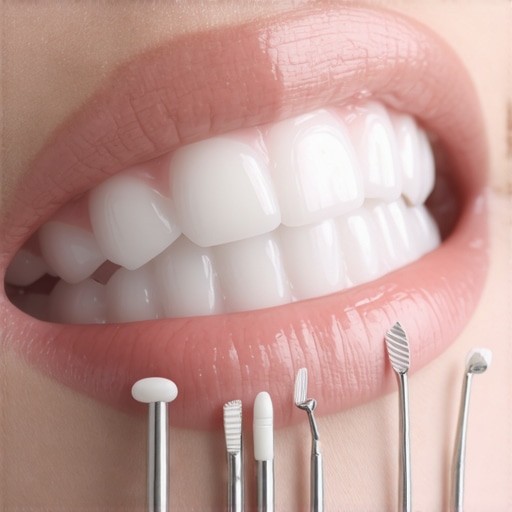
Understanding the Material Science Behind Invisalign Tray Fractures
Invisalign aligners are crafted from high-grade thermoplastic materials like SmartTrack, designed for durability and flexibility. However, recurrent cracking indicates underlying issues related to material fatigue, improper handling, or design flaws. Recognizing the nuances of thermoplastic resilience allows practitioners to diagnose structural vulnerabilities more effectively, especially as new composites emerge that promise enhanced longevity. Consulting recent studies in dental material science can inform better material choices, ultimately reducing tray fractures.
Design Flaws and Their Impact on Tray Integrity
While Invisalign trays are precision-engineered, subtle design imperfections or misfits can generate stress concentrations, leading to cracks. Advanced digital scanning and 3D printing technologies offer improved accuracy, minimizing these risks. Clinicians should evaluate how tray contours interact with individual oral anatomy, especially when planning complex cases involving extensive rotations or deep bites. Regular assessment ensures that design flaws do not compromise treatment efficacy in the long term.
Common User Errors That Accelerate Tray Wear and Tear
Even experienced users can inadvertently expedite tray degradation through habits such as exposing aligners to high temperatures, improper cleaning, or removing trays with excessive force. Educating patients about safe handling—like avoiding hot water or abrasive cleaners—serves as a preventive measure. Implementing routine checks during appointments facilitates early detection of microcracks before they propagate, ensuring continuous effective treatment progress.
Can Material Innovations Resolve Tray Cracking Challenges?
Emerging materials like Copolyester and new composite blends incorporate enhanced fracture resistance and elasticity. These advancements may significantly reduce incidences of cracking, especially in patients with bruxism or other parafunctional habits. However, comprehensive clinical data on their long-term performance remains limited, and careful evaluation is essential before adopting new materials wholesale. Influential sources such as the American Journal of Orthodontics & Dentofacial Orthopedics highlight ongoing innovations in this domain.
What are the most effective strategies for preventing Invisalign tray cracking in high-risk cases?
Proactive intervention includes selecting appropriate material variants, personalized tray design, and patient education on proper handling techniques. Incorporating auxiliary appliances like nightguards can shield aligners from excessive force, while routine monitoring helps identify early signs of degradation. For comprehensive insights, consider exploring expert tips on extending aligner lifespan in 2026.
To elevate your practice’s expertise, share your innovative solutions or seek guidance on complex cases through our contact page.
Innovative Materials Transforming Invisalign Longevity
Recent breakthroughs in dental material technology have introduced new composite formulations and thermoplastic variants that promise increased resistance to fracture and wear. For instance, advancements like flexible polyurethanes and hybrid composites offer superior elasticity without compromising strength, making aligners more resilient against daily stresses. These innovations are particularly beneficial for patients with parafunctional habits such as bruxism, which traditionally accelerate tray deterioration. Dentists should stay informed about emerging materials that have demonstrated promising clinical results, as highlighted in the latest dental research, to optimize treatment durability.
The Role of Customization in Preventing Structural Failures
Personalized tray design, leveraging 3D imaging and precise digital modeling, ensures better fit and minimizes stress concentration points. When trays are meticulously tailored to individual oral anatomies, they distribute forces more evenly, reducing the likelihood of cracks. Implementing such customization techniques not only enhances patient comfort but also extends tray lifespan. This approach underscores the importance of integrating advanced digital workflows into routine practice, ultimately lowering treatment costs associated with tray replacements and interruptions.
Patient Education: The First Line of Defense Against Tray Damage
Educating patients on proper handling, cleaning, and storage is critical to maintaining tray integrity. For example, instructing users to avoid exposing aligners to high temperatures or abrasive cleaning agents can significantly reduce microcracks. Providing clear, accessible guidelines—perhaps through multimedia content—empowers patients to play an active role in their treatment. Additionally, setting expectations about tray lifespan and warning signs of deterioration can facilitate early intervention, preventing minor damages from escalating into treatment delays.
” alt=”Close-up of a durable Invisalign tray made from advanced composite material” title=”Advanced composite Invisalign tray material demonstrating increased durability”/>
Leveraging Cutting-Edge Material Technologies to Combat Tray Fractures
The evolution of thermoplastic materials continues to bolster the resilience of Invisalign trays. Notably, innovations like braided fiber-reinforced composites and shape-memory polymers are emerging as game-changers, offering enhanced fracture resistance and adaptive fitting capabilities. According to a 2022 report in Dental Materials Journal, these advanced materials undergo rigorous biomechanical testing to confirm their durability in dynamic oral environments, especially in high-stress scenarios involving parafunctional habits.
Can Next-Generation Polymers Outperform Traditional Materials?
Next-generation polymers such as thermoplastic elastomers and high-adhesion copolymers demonstrate promising results, combining flexibility with tensile strength. Their molecular structures allow for energy absorption upon impact, reducing crack initiation and propagation. The clinical adoption of these materials could lead to fewer emergency visits due to tray damage, thus streamlining orthodontic workflows. To stay at the forefront, practitioners should consult recent laboratory studies and clinical trials reported in The Journal of Dental Research.
Figure illustrating the molecular composition of next-gen thermoplastic elastomers used in high-durability aligners, highlighting their layered reinforcement architecture.
Strategies for Optimal Tray Design in Survival Mode
Beyond material choice, the design architecture of aligners plays a pivotal role in longevity. Incorporating finite element analysis (FEA) during the CAD/CAM process allows for the simulation of stress concentrations within individual cases. Researchers have revealed that responsive geometries—such as variable thickness regions aligned with high-stress zones—can distribute forces more evenly, significantly mitigating crack formation risks. As digital dentistry advances, integrating these analytical techniques into routine practice offers a strategic advantage, especially for complex cases involving significant occlusal loads.
How Does Digital Design Minimize Structural Failures?
Digital customization enables clinicians to identify and reinforce vulnerable regions proactively, effectively nipping potential fractures in the bud. The precision of 3D printing also facilitates the iterative refinement of aligner prototypes, allowing for rapid prototyping of design modifications. An article in the International Journal of Orthodontics emphasizes that integrating AI-driven optimization can further personalize stress distribution, accommodating individual patient habits and anatomical variations. This convergence of materials science and digital customization paves the way for orthodontics where durability and patient-centricity coalesce seamlessly.
Embracing Breakthrough Materials to Strengthen Your Invisalign Arsenal
Recent developments in dental polymer science have catalyzed the advent of innovative composites—such as braided fiber-reinforced thermoplastics and shape-memory alloys—that significantly bolster aligner resilience against fracture. Incorporating these substances into practice involves not only understanding their biomechanical properties but also mastering integration protocols for custom fabrication. Such materials, validated by high-impact studies like those documented in the dental material science literature, are poised to redefine treatment durability benchmarks.
Refining Customization: Precision Design as a Structural Shield
Digital workflows utilizing advanced CAD/CAM systems facilitate individualized tray designs that intelligently distribute stress away from vulnerable zones. By leveraging finite element analysis, clinicians can preemptively identify potential fracture hotspots and reinforce these areas through variable thickness modeling—an approach substantiated by cutting-edge research published in the International Journal of Orthodontics.
Close-up graphics illustrating stress distribution in digitally optimized aligners with reinforced regions for fracture prevention.
Amplify Durability with Patient-Centric Education and Handling Protocols
Empowering patients with detailed instructions on aligner care—highlighting temperature sensitivities and cleaning practices—dramatically reduces microcrack formation. Incorporating multimedia tutorials and visual aids enhances comprehension and adherence. Studies from the American Dental Association underscore that informed patients contribute substantially to extending the functional lifespan of their aligners, minimizing costly replacements and treatment delays.
Next-Gen Polymers and Their Role in Future-Focused Orthodontics
The integration of high-performance polymers such as high-adhesion copolymers and thermoplastic elastomers promises a paradigm shift in aligner durability. These materials exhibit superior energy absorption and tensile strength, as detailed in recent research in The Journal of Dental Research. Their molecular architectures allow for adaptive fitting and enhanced resistance under parafunctional stresses, offering promising avenues for high-risk patient management.
Could Adaptive Polymers Transcend Current Limitations and Elevate Treatment Reliability?
Evidence suggests that next-generation polymers possessing shape-memory and self-healing properties could revolutionize orthodontic materials. These intelligent compounds respond dynamically to intraoral forces, distributing stress and preventing crack initiation in real-time. To stay ahead, practitioners should monitor emerging clinical trials and laboratory assessments that compare these materials’ performance metrics, ultimately informing evidence-based adoption strategies.
Illustrative diagram contrasting traditional thermoplastics with advanced shape-memory polymers in aligner applications, highlighting their structural advantages.
Design Dynamics That Defy Fracture Fate
Innovative design methodologies incorporate finite element stress simulations, enabling the creation of anatomically informed, mechanically optimized aligners. Prioritizing variable wall thickness, strategic reinforcement, and biomechanical compliance reduces propensity for crack propagation. These design paradigms, supported by empirical studies in the International Journal of Orthodontics, promote longer-lasting therapy devices capable of withstanding complex occlusal forces and parafunctional habits.
Why Smart Digital Design Transforms Fracture Prevention into Routine
Applying AI-powered optimization tools allows clinicians to predict and reinforce weak points before fabrication. The ability to iteratively refine aligner geometries enhances structural integrity systematically. As digital dentistry continues evolving, integrating such analytical techniques becomes essential for forward-thinking orthodontics, decreasing failure rates and elevating patient outcomes. Consider investing in comprehensive training modules on these cutting-edge design strategies to future-proof your practice.
Expert Insights & Advanced Considerations
Prioritize Material Testing for Long-Term Durability
Regularly evaluate emerging thermoplastics and composites through rigorous biomechanical testing to anticipate tray performance under diverse oral conditions, ensuring your practice adopts only proven, resilient materials.
Implement Digital Design Protocols to Reduce Stress Concentration
Utilize finite element analysis integrated into digital workflows to optimize aligner geometry, actively distributing occlusal forces and minimizing crack risks, especially in complex cases.
Enhance Patient Handling Education for Better Outcomes
Develop comprehensive instruction protocols emphasizing proper cleaning, storage, and removal techniques, empowering patients to contribute to tray longevity and reduce premature fracture incidents.
Leverage Customization for Superior Fit and Strength
Adopt personalized digital scans and tailored design adjustments that ensure optimal fit, decreasing internal stress points that can serve as crack initiation sites.
Stay Informed on Material Innovation Frontiers
Follow pioneering research and clinical trials, such as studies in the Dental Material Science Journal, to continuously refine your material choices ensuring maximum tray durability.
Curated Expert Resources
- American Journal of Orthodontics & Dentofacial Orthopedics: An authoritative source for cutting-edge research on aligner material innovations and design methodologies.
- Biomechanical Engineering Journals: Essential reading for understanding stress analysis and the application of finite element modeling in orthodontic appliance design.
- Dental Materials Science Conferences: Platforms to learn about the latest breakthroughs such as shape-memory polymers and fiber-reinforced composites, directly impacting tray durability strategies.
- Digital Dentistry Trump Cards: Books and courses that explore integrating AI and advanced CAD/CAM workflows into orthodontic practice for durable, precise aligners.
- Patient Education Modules: Developed by dental associations to improve patient handling and care, effectively reducing microcracks and tray failure.
Final Expert Perspective
Addressing tray fractures in Invisalign treatment calls for an integrative approach that combines material innovation, digital precision, and patient education. As the landscape of dental materials continues evolving, staying ahead with rigorous research and technological adoption ensures your practice not only minimizes fractures but also enhances overall treatment outcomes. Engage actively with the latest scientific resources and digital tools, and invite your team to contribute insights for continuous improvement. Your commitment to these advanced strategies affirms a dedication to excellence in orthodontic care—your patients deserve nothing less.
Leave a Reply