
Why your teeth feel sensitive to sugar but not to cold
I remember sitting on my back porch last summer, nursing a massive slice of birthday cake. One bite of that sugary frosting and—BAM. It felt like a tiny electric shock shot directly into my jawbone. I froze, waiting for the inevitable follow-up throb when I took a sip of my ice-cold lemonade. But here is the kicker: nothing happened. The ice-cold drink felt perfectly fine. It made absolutely no sense to me. I had always assumed that ‘sensitive teeth’ meant you were cursed to avoid popsicles forever, but nobody told me that sugar could be its own specific brand of torture. For a long time, I just ignored it, thinking I was overreacting. That was my first big mistake. I actually spent weeks trying every over-the-counter trick in the book, even trying to whiten my way out of the problem, thinking maybe the ‘yellow’ spots were the issue. Instead, I was just irritating my nerves even further because I didn’t understand the ‘why’ behind the zing. Today, I want to help you skip that frustration and figure out exactly why your mouth is playing these weird games with you.
Sugar Hits Your Teeth in a Way Cold Can’t Touch
Most of us are taught that sensitivity is all about temperature, but sugar sensitivity is a whole different beast driven by something called osmotic pressure. When you eat something high in sugar, that sugar pulls the fluid out of the microscopic tubes in your dentin. This sudden movement of fluid triggers the nerves inside your tooth. It’s a physical reaction to the concentration of sugar, not the temperature of the food. I learned the hard way that ignoring this can lead to bigger issues within family dentistry needs, as sugar sensitivity is often the first warning sign of a microscopic crack or a thinning of the enamel that cold hasn’t reached yet. According to the American Dental Association, this ‘sweet’ pain is frequently linked to dentin hypersensitivity or early stage decay that hasn’t yet breached the deeper pulp. This explains why you might be fine with a milkshake but miserable with a gummy bear. Have you ever felt that sudden, sharp sting only when eating sweets? Drop a comment and let me know—it’s more common than you think.
Is this just a scare tactic to get me into the dentist chair?
It is easy to be skeptical and think this is just ‘one of those things’ that will go away if you brush harder. Trust me, I was the king of that mindset. I figured if I just used more mouthwash, I could keep enjoying my donuts in peace. But the reality is that sugar sensitivity is like a ‘check engine’ light for your mouth. It doesn’t always mean you need a root canal tomorrow, but it does mean your protective barrier is compromised. Whether it’s a sign you need to check if a white spot is a cavity or simply a result of over-zealous brushing, understanding the source is the only way to stop the pain. We are going to look at how to tell the difference between a passing fluke and a real problem that needs professional eyes.
Stop the Sharp Zing with Potassium Nitrate Shields
Your first line of defense isn’t actually at the dentist—it is in your bathroom cabinet. I used to think desensitizing toothpaste was just a marketing gimmick for people who didn’t brush well enough. I was wrong. These pastes usually contain potassium nitrate or stannous fluoride, which act like a physical barrier for those exposed nerve endings. I remember one specific Tuesday where I had three back-to-back client meetings and a bag of gummy worms I couldn’t resist. By the second meeting, every word I spoke felt like a needle in my molar. I actually excused myself to the restroom to rub a pea-sized amount of desensitizing paste directly onto the tooth. It is not an instant cure, but it calms the ‘osmotic storm’ by soothing the nerves inside the dentin tubes. If you are already using these pastes but still feeling the burn, you might be trying to whiten your way into more pain without realizing it.
Ease Up on the Scrubbing to Protect Your Roots
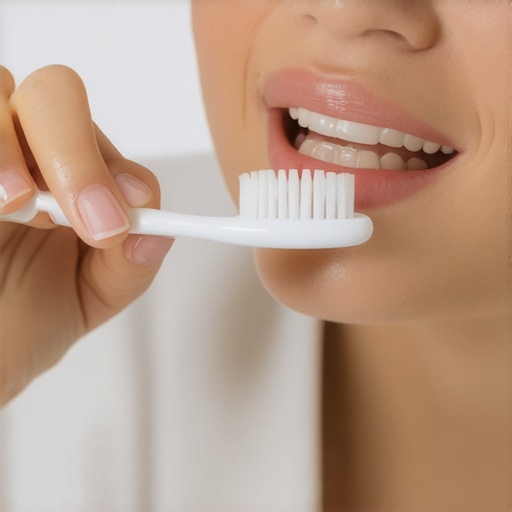
I am a reformed ‘aggressive brusher.’ I used to believe that if my gums weren’t slightly sore, I hadn’t done a good job. This is the fastest way to wear down your enamel and expose the sensitive dentin underneath. When your gums recede, they reveal the root of the tooth, which doesn’t have that hard enamel armor. I once brushed so vigorously before a big date that I actually caused my gums to bleed and stay inflamed for days, making even a sip of soda unbearable. You have to switch to a soft-bristled brush and use a circular motion rather than a horizontal ‘sawing’ motion. This is a key part of family dentistry education that often gets skipped. You need to learn how to tell if your gum recession is caused by over-brushing so you can stop the damage before it requires surgical intervention. If you have aesthetic work done, remember to stop brushing your veneers like they are real teeth; they require a gentler touch to maintain their seal and prevent edge sensitivity.
Bypass Your Enamel with the Strategic Straw Method
It sounds simple, almost too simple, but the mechanics of how you consume sugar matter. When you take a big swig of sweet tea, you are essentially bathing every tooth in an acid-sugar bath. By using a straw and positioning it toward the back of your mouth, you bypass the front teeth entirely. This drastically reduces the contact time between the sugar and your enamel. I started doing this religiously after a particularly painful summer of iced lattes. However, hygiene is key here too. If you switch to eco-friendly options, make sure you know how to clean a reusable straw to protect your enamel from bacteria buildup that can lead to further decay and sensitivity triggers.
Check for Failing Dental Work if the Pain Persists
Sometimes the sensitivity isn’t about your natural teeth at all. If you have older fillings, crowns, or bridges, a ‘sweet’ pain can indicate that the seal has broken. When a seal fails, sugar and bacteria get trapped underneath, creating a pocket of decay right next to the nerve. I once ignored a slight twinge under an old crown for six months, assuming it was just a ‘sensitive spot.’ It turned out the margin had leaked, and I was weeks away from a major infection. If you have a specific spot that screams every time you eat chocolate, it is time to learn how to tell if your dental crown needs to be replaced before it becomes an emergency. This proactive check-up is the backbone of long-term oral health and prevents the need for more invasive procedures later on.
I used to think getting veneers was the ultimate ‘reset button’ for my teeth. I figured once they were on, I could forget about sensitivity forever. But here is the nuance most people miss: veneers are a masterpiece of engineering, but they are not invulnerable. In fact, if the prep work isn’t perfect, you might find yourself wondering why your new veneers feel like they are pushing against your other teeth. It’s often not the porcelain itself, but the way your bite has been recalibrated. If you are considering this path, you need transform your smile with veneers expert tips to ensure you aren’t just swapping one type of discomfort for another. When the fit is even slightly off, it creates ‘heavy spots’ that can mimic the exact same sharp pain as a cavity.
The Hidden Cost of Chasing a Refrigerator-White Smile
The common wisdom says that more whitening equals a better smile. I once believed that if a 30-minute session was good, an hour must be better. This is a dangerous trap. I’ve seen people chase a ‘refrigerator white’ shade only to end up with translucent, graying edges that look completely unnatural. This happens because peroxide doesn’t just lift stains; it temporarily increases the porosity of your enamel. According to a study published in the Journal of Dentistry, excessive bleaching without proper recovery time can lead to significant mineral loss and ‘rebound’ staining, where the tooth actually absorbs colors faster than before. That is why timing is everything. Finding the best time of day to whiten your teeth for maximum results isn’t just about your schedule; it’s about giving your saliva enough time to remineralize your teeth before your next meal. If you don’t, you’re essentially leaving your ‘front door’ wide open for the next cup of coffee to move right in.
Does professional whitening actually weaken your enamel over time?
This is the question that keeps people up at night. The short answer is: not if it’s done correctly, but the ‘DIY’ mindset is where the damage happens. If you are already dealing with sensitivity, jumping into a high-concentration bleach cycle is like running a marathon on a broken ankle. You have to prep the field. I always recommend using a desensitizing agent for two weeks before you even think about whitening your way to a sparkling smile. Have you ever fallen into this trap where you fixed the look of your teeth but ignored the underlying health? Let me know in the comments.
Why Your New Smile Might Feel Too Big for Your Mouth
One of the biggest ‘oops’ moments in family dentistry happens when patients start Invisalign without addressing their existing sensitivity or bite issues first. If your ‘sweet pain’ is already a 6 out of 10, those plastic trays can occasionally act like a greenhouse for any sugar trapped underneath if your hygiene isn’t perfect. You need to know the invisalign secrets for achieving a perfect smile discreetly, which includes a strict ‘no sugar while wearing’ rule. I’ve seen patients who thought a ‘tiny bit’ of soda wouldn’t hurt because the tray was covering the tooth, only to find they had developed white spot lesions—the precursors to cavities—within months. The tray actually holds the acid against your enamel, accelerating the very decay we’re trying to avoid. It’s about more than just straight teeth; it’s about ensuring the foundation is solid before you start moving the walls.
Since those trays can become a breeding ground for bacteria if you aren’t careful, let’s talk about the specific kit I use to keep things clinical-grade clean. I’ve realized that the tools you use between dental visits are actually more important than the visit itself. Whether you are managing sensitivity or protecting a cosmetic investment, your daily routine needs an upgrade from the standard ‘brush and hope’ method.
Keep Your Investment Shiny Without Damaging the Glue
I spent a lot of money on my smile, so the last thing I wanted was to see why your porcelain veneers look dull after five years of wear because I used the wrong paste. I eventually switched to a non-abrasive toothpaste. Most ‘whitening’ pastes contain high levels of silica, which is essentially sandpaper for your teeth. Over time, it creates micro-scratches on both natural enamel and porcelain, giving stains a perfect place to settle. If you want to brighten your life with top teeth whitening strategies today, you have to start with a foundation that doesn’t erode your protective layers. I personally look for products with a low RDA (Relative Dentin Abrasivity) score to ensure I am cleaning, not scouring.
The One Gadget That Actually Saves My Trays From Turning Yellow
If you are wearing aligners or a night guard, you know the ‘funk’ that develops after just a few days. I stopped scrubbing mine with a toothbrush because it creates tiny scratches that trap bacteria. Instead, I invested in a dedicated ultrasonic cleaner. It uses high-frequency sound waves to create microscopic bubbles that implode against the plastic, literally blasting away the biofilm. This is the same secret I use when learning how to clean the stubborn gunk out of your night guard without damaging the fit. According to a technical report in the Journal of Clinical Dentistry, oscillating-rotating power technology combined with ultrasonic baths can reduce plaque-induced gingivitis significantly more than manual methods alone. It’s about working smarter, not harder, to keep your hardware crystal clear.
How do I maintain my professional smile results over the long haul?
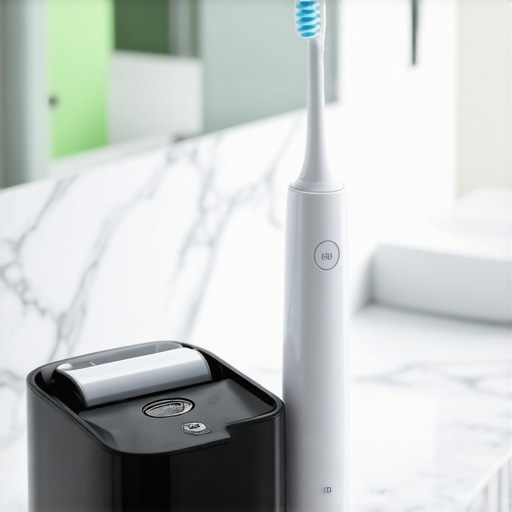
The key is viewing your mouth as an ecosystem that needs constant pH balancing. I now carry a small travel-sized bottle of alkaline mouthwash for whenever I can’t brush immediately after a meal. This neutralizes the acids that lead to sensitivity and decay before they can start their work. This proactive approach is a cornerstone of ensuring family dental care stays ahead of the curve. If you are still browsing the ultimate guide to teeth whitening options in 2025, keep in mind that the best whitening ‘tool’ is actually a high-quality electric toothbrush with a pressure sensor. It prevents the aggressive scrubbing that leads to the very yellowing you are trying to fix.
Your Future Smile Will Have Its Own Digital Twin
I predict that within the next few years, we will see a massive shift toward AI-integrated oral health monitoring. We are already seeing toothbrushes that map your mouth in 3D, but the next step is real-time saliva analysis to detect inflammation markers before you even feel a twinge. This will change the way we approach family dentistry, moving us from a world of ‘fixing problems’ to a world of ‘preventing existence’ of issues. As veneers become more accessible in 2025, these digital tools will be vital for ensuring the natural teeth underneath stay healthy for decades. My advice? Start using an ultrasonic cleaner for your removable dental appliances this week—it is the single best way to maintain transparency and hygiene without the hassle.
The Realizations That Saved My Smile from the Sweet Sting
Looking back on my journey from hiding from the dessert tray to enjoying a slice of cake without fear, I’ve picked up a few insights that you won’t always find in a textbook. First, I realized that sugar sensitivity is actually a gift—it is an early warning system that tells you exactly where your enamel is thinning before a full-blown cavity forms. I also learned that the zing is often a sign of a failed seal on old work, which is why it is vital to know how to tell if your dental crown needs to be replaced. Finally, I stopped viewing my teeth as static objects and started seeing them as a living ecosystem that needs a neutral pH to thrive. When I finally embraced family dentistry as a proactive partnership rather than a reactive repair shop, the anxiety disappeared.
My Personal Daily Defense Kit for a Bulletproof Bite
If you want to stop the pain and protect your investment, these are the specific tools I never skip. I swear by my pressure-sensing electric toothbrush; it is the only thing that actually forced me to stop the aggressive scrubbing that caused my gum recession in the first place. I also highly recommend an ultrasonic cleaner for anyone with removable hardware. It is the gold standard for learning how to properly clean a night guard to prevent bacterial buildup that can irritate your gums and cause sensitivity. Lastly, I keep a bottle of alkaline mouthwash in my car. If I can not brush immediately after a sugary snack, a quick rinse neutralizes the osmotic storm before it even starts. These simple tools are the backbone of ensuring family dental care remains stress-free and effective for the long haul.
Take the First Step Toward a Pain-Free Dessert
You do not have to live in fear of that sharp, sugary zing. Whether you are currently dealing with natural sensitivity or you are just trying to figure out the best whitening options for 2025 without the associated burn, the power is in your daily habits. By making these small shifts—using a straw, switching your paste, and actually listening to the signals your teeth are sending—you can get back to enjoying the things you love. Remember, a healthy smile is not just about the look; it is about the freedom to eat, drink, and laugh without hesitation. Have you ever experienced that weird sugar shock where cold does not hurt but a single piece of fruit does? Let me know in the comments below.