
Why your gums bleed only when you use an electric toothbrush
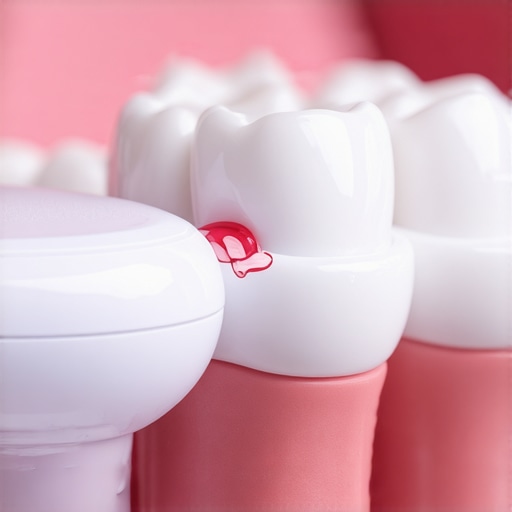
I remember the first morning I unboxed my shiny new sonic toothbrush. I felt like I was finally taking my oral health seriously—like I’d graduated to the big leagues of family dentistry self-care. I applied my favorite paste, pressed the button, and let the motor hum. Two minutes later, I spat into the sink and nearly jumped back. It looked like a scene from a horror movie. Vibrant, alarming red swirled down the drain. I was baffled because my old manual brush never did this. Was the technology too much for me? I felt betrayed by my own investment. If you’ve experienced this specific, localized “leakage” only when the vibration starts, I promise you aren’t alone, and your mouth isn’t necessarily falling apart. Today, we’re going to bridge that gap between high-tech tools and a healthy, blood-free smile.
Your Electric Toothbrush is Exposing Your Hidden Habits
I’ll be the first to admit that for years, I was a “scrubber.” I thought that to get teeth clean, you had to use some serious elbow grease. When I moved to an electric model, I brought that same aggressive energy with me, and my gums paid the price. [IMAGE_PLACEHOLDER] I was essentially sandblasting my delicate gum tissue with every pulse. A landmark study in the Journal of Clinical Periodontology highlights that long-term electric brush users actually have 22% less gum recession and plaque than manual brushers, but that statistic only works if you use the tool correctly. Most of us don’t. We press too hard, or we move the head back and forth like we’re scrubbing a kitchen floor. The electric brush is designed to do the work for you; your job is just to be the chauffeur, guiding it gently along the gum line. If you’ve been considering veneers or recently finished a round of teeth whitening, you might be even more sensitive to these changes. The bleeding is often a sign of “silent” inflammation that your old manual brush simply wasn’t efficient enough to find. The electric brush isn’t causing the problem; it’s finally blowing the whistle on it. Have you ever felt that sharp sting and immediately blamed the gadget? It’s a common gut reaction, but it’s rarely the brush’s fault.
Can a toothbrush actually be ‘too powerful’ for your mouth?
It’s a valid fear. When those bristles are moving at 30,000 strokes per minute, it feels like a lot of force against your jaw. I spent weeks being skeptical, wondering if I was just one of those people with “naturally weak” gums. But the reality is that unless you have a specific medical condition, the brush itself isn’t too strong—your technique is likely just too old-school. The skepticism usually comes from the fact that we don’t realize how to stop your gums from bleeding involves relearning the basics. Early in my journey, I almost threw my $150 investment in the trash. It took a very blunt conversation with my dental hygienist to realize I was holding the brush at a 45-degree angle instead of a perpendicular 90-degree angle. That one tiny tweak changed everything. We’re going to look at why this happens and how you can transition to high-tech brushing without the “horror movie” sink, even if you’re managing other concerns like invisalign invisible braces or sensitive gums.I used to think that the louder the brush buzzed, the more pressure I needed to apply to get results. I actually took a brand-new electric brush once and tried it on a ripe tomato—I ended up with tomato juice all over my bathroom mirror. That was my wake-up call. If you’re wondering why your gums are receding despite brushing twice a day, you might be failing the ‘tomato test’ too. The bristles should barely bend against the surface of your teeth.
Stop Scrubbing and Start Chauffeur Mode
Think of your electric toothbrush like a high-end self-driving car. You aren’t the engine; you’re just the person keeping it on the road. When I first made the switch, I was still moving my hand in those frantic, aggressive circles we all learned as kids. My dentist finally pulled me aside and explained that the vibration is doing the cleaning for me. If you’ve just invested in veneers made simple, this shift in mindset is even more critical because you don’t want to wear down the delicate margins where the porcelain meets your natural tooth.
How to Tell if You’re Brushing with Too Much Muscle
One night, out of pure frustration with my bleeding gums, I decided to hold the brush with only my thumb and index finger. It felt flimsy and wrong, like I wasn’t really cleaning anything. But when I rinsed, my teeth felt like polished glass. That’s the goal. If you find why your gums feel sore after switching to a harder toothbrush or a more powerful electric model, try the ‘two-finger’ grip for a week. It forces you to let the motor do the heavy lifting. This is especially helpful if you’re also trying to figure out how to stop your gums from bleeding when you haven’t flossed in weeks, as it prevents further trauma to already sensitive tissue. 
The 45-Degree Rule That Saves Your Gums
The most common mistake isn’t just the force, but the angle of attack. Most people point the bristles straight at the teeth like a spotlight. Instead, tilt the brush head at a 45-degree angle toward the gum line. This allows the sonic pulses to reach just underneath the gum margin where plaque loves to hide and cause inflammation. It’s a bit like tucking a blanket in—you want the bristles to gently slip into that small gap. If you’re currently wearing invisalign secrets achieving a perfect smile discreetly, this angle is vital for cleaning around the tiny attachments that hold your trays in place.
Gentle Care for Your Brightest Smile
If you’ve recently gone through a session of teeth whitening secrets for a sparkling smile in 2025, your gums might be temporarily more reactive to vibration. I remember having a particularly cold glass of water right after brushing and feeling like my teeth were vibrating on their own. To avoid this discomfort, use a ‘sensitive’ mode if your brush has one. It lowers the frequency but keeps the efficiency high. Learning how to manage the zingers after a professional whitening session often starts with simply slowing down your brushing routine. Don’t rush the two minutes; let the internal timer be your guide while you focus on that precise 45-degree tilt instead of raw speed.Once you’ve mastered the 45-degree angle and stopped scrubbing your gums into oblivion, you’ve entered the intermediate phase of oral care. But there is a ceiling most people hit where they assume more of a good thing—like whitening gel or aligner wear—always equals better results. This is where the nuances of high-end cosmetic dentistry come into play. If you’ve been investing in your smile, you need to understand that maintenance isn’t just about repetition; it’s about chemistry and physics.
The Whitening Wall You Will Eventually Hit
Everyone tells you that whitening is the key to a youthful smile, but here is a contrarian truth: you can actually whiten your teeth too much. There is a physiological saturation point. If you keep pushing past it, your teeth won’t get whiter; they will start to look translucent or even blue-gray because you are thinning the enamel and allowing the dark interior of the mouth to show through. I’ve seen patients fall into the mistake of using whitening strips on dental bonding or existing porcelain work, hoping to brighten everything up. Porcelain is non-porous. It doesn’t budge. All you end up doing is making your natural teeth a different shade than your dental work, creating a patchy, mismatched look. If you are struggling with why your teeth look gray instead of yellow and how to fix it, the answer is often to stop bleaching and start focusing on remineralization.
Can you over-whiten your teeth until they become permanently sensitive?
According to research from the American Academy of Cosmetic Dentistry (AACD), excessive use of carbamide peroxide can lead to temporary pulpitis—inflammation of the tooth’s nerve. If you feel those sharp ‘zingers,’ your body is telling you the peroxide has reached the dentin. This is the ultimate ‘oops’ factor in home care. You aren’t just cleaning; you’re altering your tooth’s structure. If you’ve had professional work, such as transforming your smile with veneers, you must be even more cautious. [IMAGE_PLACEHOLDER_C]
Why Your New Veneers Might Feel Like They Are Catching
A common complaint after a cosmetic upgrade is the sensation that things aren’t quite smooth. You might find why your veneers feel like they are catching on your tongue involves the ‘margin’—the tiny area where the porcelain meets your natural tooth. If you use a heavy-handed brushing technique here, you can cause the gum to recede, exposing that margin and creating a shelf for bacteria. This is why veneers made simple really depends on your ability to maintain a soft, precise touch at the gum line.
The Secret to Making Invisalign Move Faster
When it comes to aligners, the ‘oops’ factor is often a lack of ‘seating.’ Most people think that simply having the trays in their mouth for 22 hours is enough. But if the tray isn’t fully snapped onto the attachments, the tooth isn’t actually moving; it’s just sitting in a plastic box. This is why the problem with wearing your aligners for only 18 hours a day is compounded by not using ‘chewies’ to seat the trays properly. If you see a small air gap between the edge of your tooth and the bottom of the tray, your ‘tracking’ is off. Have you ever fallen into this trap of thinking ‘close enough’ was good enough for your dental work? Let me know in the comments below. Whether you are navigating invisalign secrets for a perfect smile or trying to figure out how to tell if that shadow on your tooth is a cavity or a stain, the nuance is always in the details of your daily routine.To really move past the ‘oops’ phase and into the ‘expert’ phase of home care, I had to stop looking at my bathroom cabinet as a collection of soaps and start seeing it as a toolkit. After years of testing products that promised the world but delivered sensitivity, I finally discovered Hydroxyapatite (HAp) toothpaste. Unlike fluoride, which creates a protective layer over your enamel, HAp is what your teeth are actually made of. It’s a biomimetic approach that literally fills in the microscopic ‘potholes’ in your teeth. This is a game-changer if you are worried about the truth about charcoal toothpaste and your tooth enamel, which often does more damage than good. By using a paste with a 10% HAp concentration, I noticed that my post-whitening sensitivity vanished within weeks.
The One Tool That Actually Replaces Floss Guilt
For those of us who struggle with the manual dexterity of traditional floss, the Waterpik or a high-end air flosser isn’t just a luxury; it’s a necessity for family dentistry success. I personally use the cordless version because I can take it into the shower—eliminating the mess and the excuse that I don’t have time. If you’ve invested in invisalign innovation invisible braces, a water flosser is the only way to effectively clear out the debris that gets trapped between your teeth and those plastic aligners. Dr. David Alleman, a pioneer in biomimetic dentistry, often emphasizes that preserving the natural tooth structure is the ultimate goal, and these high-tech irrigation tools do exactly that by removing biofilm without the abrasive trauma of ‘scrubbing’ that we discussed earlier.
How do I maintain my dental work over the long haul?
Maintenance isn’t a one-size-fits-all job. If you have porcelain work, you need to be aware of how to keep your coffee habit without ruining your new veneers. I recommend using a straw for your morning brew and a specific non-abrasive cleanser for your nightly routine. For those with removable appliances, you must learn how to clean the stubborn gunk out of your night guard or retainer using ultrasonic cleaners rather than just a toothbrush. Brushing plastic actually creates micro-scratches where bacteria can hide, leading to that persistent ‘old retainer’ smell. 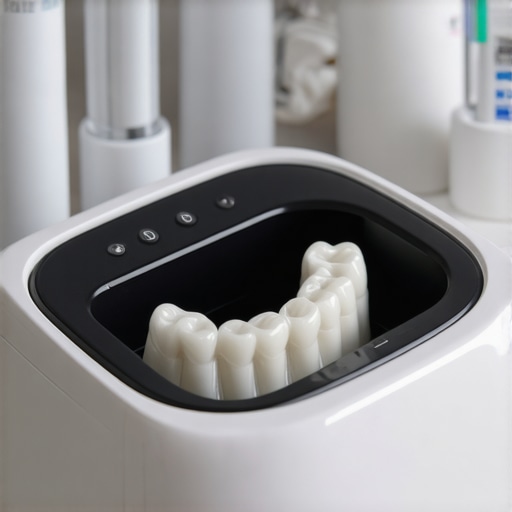
Where Your Smile is Heading in 2026 and Beyond
Looking ahead, I predict we are going to see a massive shift toward AI-integrated oral health monitoring. We are already seeing smart brushes that map your mouth in 3D, but soon, these tools will be able to detect the chemical composition of your saliva to alert you to early signs of gum disease or even systemic health issues before a single drop of blood hits the sink. This is the new frontier of ensuring family dental care stays ahead of the curve. My advice? Start by swapping your standard abrasive paste for a remineralizing HAp formula tonight. It’s the easiest upgrade you can make to protect the investment you’ve made in your smile. If you have questions about which specific tools fit your unique dental history, don’t hesitate to reach out on our contact us page.
What My Dentist Finally Admitted About High-Tech Brushing
After years of trial and error, the biggest lightbulb moment came when I realized that dental health isn’t a battle to be won with force. Consistency beats intensity every single time. I used to think that if my gums didn’t feel slightly raw, I hadn’t cleaned them properly. Now I know that a healthy mouth feels calm, not ‘scrubbed.’ I also learned that why your teeth look gray instead of yellow and how to fix it often has more to do with over-bleaching than actual stains. If you are noticing why your veneers feel like they are catching on your tongue, it might be time to ease up on the pressure and focus on the health of your gum line instead of just the sparkle of the porcelain.
The Survival Kit for a Modern Smile
If you want to move beyond the ‘oops’ phase, these are the tools I swear by for maintaining a family dentistry standard of care at home. First, swap your standard paste for one containing 10% Hydroxyapatite to actually rebuild enamel from the inside out. Second, invest in a cordless water flosser; it’s the only way to navigate the complexities of invisalign innovation invisible braces without the frustration of traditional string. [IMAGE_PLACE_HOLDER_E] Lastly, if you are unsure about a change in your mouth, learn how to tell if that shadow on your tooth is a cavity or a stain before you start an aggressive whitening treatment at home. I trust these methods because they focus on preservation rather than just surface-level aesthetics.
The Path to a Pain-Free Radiant Smile
The transition from a manual brush to a high-tech routine is a journey of refinement, not just a purchase. By embracing a ‘chauffeur’ mindset and mastering the 45-degree angle, you protect the investment you’ve made in your long-term health. Whether you are maintaining veneers made simple or just starting your journey with teeth whitening secrets for a sparkling smile in 2025, remember that your gums are the foundation of everything. Be patient with yourself, trust the technology, and don’t be afraid to ask for professional help if things don’t feel right. Have you ever felt like your electric toothbrush was working against you instead of for you? Let me know in the comments below.