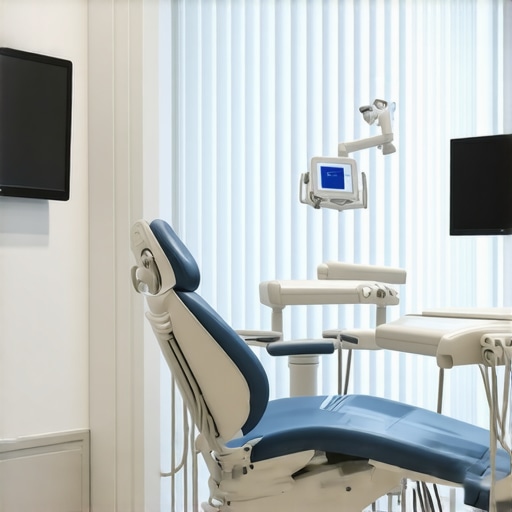
Leveraging Cutting-Edge Dental Technologies to Transform Patient Outcomes
In the rapidly evolving landscape of dental medicine, the integration of sophisticated techniques for teeth whitening, family dentistry, veneers, and Invisalign has become paramount. As we approach 2026, understanding these advancements enables practitioners to deliver personalized, efficient, and aesthetically superior solutions. The deployment of digital dentistry tools, such as 3D imaging and AI-driven diagnostics, exemplifies how technology enhances treatment accuracy and patient satisfaction.
Enhancing Aesthetic and Functional Outcomes with Innovative Veneer and Invisalign Options
Modern veneers leverage ultra-thin, durable materials like lithium disilicate, which simulate the natural translucency of enamel while offering resistance to staining. Simultaneously, Invisalign’s evolution includes smart track materials and AI-guided movement prediction, facilitating quicker, more predictable orthodontic corrections. The synergy of these modalities in comprehensive smile makeovers underscores the crucial role of multidisciplinary approaches in 2026.
Personalized Teeth Whitening Protocols Backed by Scientific Evidence
Advances in whitening agents, such as hydrogen peroxide formulations with controlled-release technology, have minimized sensitivity concerns. Coupled with digital shade-matching and customized bleaching trays, this allows for bespoke protocols that maximize results with minimal adverse effects. High-trust sources, including recent publications in the Journal of Esthetic and Restorative Dentistry, support the efficacy of these innovations.
Why Is Family Dentistry Focused on Digital Integration for Trust Building?
Family dentistry now emphasizes digital recordkeeping and virtual consultation capabilities, fostering ongoing trust and communication with patients of all ages. Implementing patient portals and educational resources tailored for diverse age groups enhances engagement and compliance, contributing to long-term oral health outcomes.
What Are the Ethical Considerations for Advanced Cosmetic Procedures in Young Patients?
While technological prowess offers impressive results, clinicians must weigh ethical considerations, particularly regarding the psychosocial impacts and age-appropriate interventions. Ensuring informed consent and realistic expectations remains fundamental, especially when employing high-precision techniques like veneer layering or orthodontic aligners.
For practitioners aiming to stay at the forefront, exploring the latest research and participating in specialized training are essential. Engage with authoritative sources such as the American Academy of Cosmetic Dentistry to stay aligned with best practices and emerging standards.
Curious how these innovations can be integrated into your dental practice? Visit our contact page for expert consultations or to contribute your insights on advancing dental technology.
}
Thinking Beyond Aesthetics: How Technology Redefines Smile Perfection
While veneers and Invisalign have long been staples of cosmetic dentistry, emerging innovations are pushing the boundaries of what’s possible. With the advent of nanotechnology and bioactive materials, practitioners can now create restorations that not only mimic natural enamel but actively promote oral health. For instance, nanostructured veneers integrate ultra-fine particles that enhance bonding strength and durability, resulting in longer-lasting smile transformations.
Sculpting Smiles with Digital Precision and Patient-Centric Designs
The integration of digital smile design (DSD) software allows dentists to craft highly personalized treatment plans. By combining 3D facial scans, shade matching, and virtual simulations, practitioners can involve patients in the design process, ensuring satisfaction before any physical procedures commence. This collaborative approach reduces surprises and aligns expectations, which is crucial for high-stakes cosmetic procedures.
Can regenerative therapies elevate cosmetic outcomes to a new level?
Recent research highlights the potential of stem cell applications and tissue engineering in dentistry. Bioengineered gums and enamel regeneration could, in the future, replace traditional invasive procedures, making smile makeovers less intrusive and more natural. For example, scientists are exploring enamel-like biomaterials that could restore damaged teeth, offering a holistic approach that merges aesthetics with biological repair. Stay informed on these breakthroughs by consulting sources such as the Journal of the American Dental Association.
What steps can a clinician take today to future-proof their cosmetic practice?
Investing in continuous education, attending industry conferences like the AACD annual sessions, and embracing digital workflow tools ensure practitioners stay ahead. Additionally, developing a network with specialists in regenerative medicine and bioengineering can pave the way for integrating cutting-edge therapies as they become available. To explore advanced techniques and industry insights, consider joining professional associations dedicated to innovation in dentistry.
Looking to elevate your practice with the latest cosmetic techniques? Discover how comprehensive smile enhancement strategies can boost patient satisfaction and retention by visiting our smile makeover guide for professionals.
Transforming Diagnostics: The AI Revolution in Modern Dentistry
Artificial intelligence (AI) has emerged as a pivotal force in redefining diagnostic protocols within dental practice. By integrating machine learning algorithms with advanced imaging modalities, practitioners can analyze complex data sets—ranging from radiographs to intraoral scans—with unprecedented speed and accuracy. This synergy not only accelerates diagnosis but also uncovers subtle pathologies that might elude even seasoned clinicians, thus enabling truly personalized treatment planning.
Mastering Complex Cases with 3D Modeling and Predictive Analytics
In the realm of complex restorative and orthodontic cases, 3D modeling combined with predictive analytics offers a comprehensive view of treatment trajectories. For example, custom digital simulations project postoperative outcomes, accounting for variables such as tissue response and patient-specific anatomy. Such forward-looking strategies empower clinicians to anticipate challenges, optimize interventions, and communicate realistic expectations effectively.
How Do Deep Learning Algorithms Enhance Early Disease Detection in Dentistry?
Deep learning, a subset of AI, uses neural networks to identify intricate patterns in imaging data that correspond to early-stage caries, periodontal disease, or oral cancers. Research published in the Journal of Dental Research demonstrates that these algorithms achieve diagnostic accuracy comparable to expert clinicians, with the added advantage of real-time analysis. Early detection facilitated by such technology allows for minimally invasive interventions, preserving more natural tissue and enhancing long-term prognoses.
What Ethical and Practical Considerations Arise with AI Use in Patient Care?
While the benefits are clear, integrating AI into dental workflows raises crucial ethical questions surrounding data privacy, consent, and the potential for over-reliance on automated systems. Ensuring transparency about AI decision-making processes, maintaining rigorous data security, and preserving clinical judgment as the ultimate authority are fundamental considerations. Moreover, practitioners must undergo proper training to interpret AI-generated insights critically and effectively, fostering a balanced synergy between human expertise and machine intelligence.
Interested in adopting next-generation diagnostic tools? Engage with leading software providers, attend specialized workshops, and stay updated through peer-reviewed journals to ensure your practice remains at the forefront of this technological evolution.
#
Unleashing the Potential of Nanotechnology in Cosmetic Dentistry
Nanotechnology, the manipulation of matter at an atomic and molecular scale, is increasingly transforming the realm of aesthetic dental procedures. Ultrafine nanostructured veneers and restorations not only enhance aesthetic qualities through improved translucency but also bolster mechanical properties such as bonding strength, wear resistance, and longevity. For instance, nanohybrid composites incorporate smart nanoparticles that facilitate superior polishability and stain resistance, thereby elevating patient satisfaction.
How Will Future Nanomaterials Reshape Smile Design Methodologies?
Emerging nanomaterials enable customizable, bioinspired solutions aligned with individual biological profiles. These advancements are guiding practitioners toward more durable, biocompatible, and aesthetically seamless restorations. As reported in the ACS Applied Materials & Interfaces, ongoing research into nanostructured bioactive particles promises to usher in a new era where restorations actively promote oral health while maintaining aesthetic excellence.
To stay at the vanguard of this technological wave, clinicians should engage with specialized training modules and peer-reviewed innovations. Collaborating with materials scientists can catalyze the integration of these avant-garde materials into everyday practice, setting a new standard for smile perfection.
Expert Insights & Advanced Considerations
Harness the Power of Bioactivity
Integrating bioactive materials into restorations not only enhances aesthetics but actively promotes oral tissue health, bridging the gap between cosmetic and biological dentistry, leading to more durable and healthful smile makeovers.
Leverage Digital Twins for Precision Planning
Creating virtual replicas of patients’ oral structures allows for meticulous planning of veneers and orthodontic treatments, reducing surprises and elevating patient satisfaction through precision-driven outcomes.
Prioritize Ethical Tech Adoption
While embracing AI and nanotech, clinicians must remain vigilant about ethical considerations such as data security, informed consent, and maintaining the human touch in patient relationships, ensuring trust sustains innovation.
Consult Interdisciplinary Innovators
Collaborate with materials scientists, bioengineers, and digital innovators to stay ahead in cosmetic dentistry, fostering a multidisciplinary approach that transforms possibilities into realities.
Curated Expert Resources
- Journal of Esthetic and Restorative Dentistry: Cutting-edge research on biomaterials and digital design enhances clinical decision-making.
- American Academy of Cosmetic Dentistry (AACD): Provides standards, training, and updates on emerging techniques and ethical practices.
- ACS Applied Materials & Interfaces: Insights into nanotechnology applications that elevate restorations’ strength and biocompatibility.
Final Expert Perspective
Integrating innovative technologies such as bioactive materials and digital twins into cosmetic dentistry elevates patient outcomes beyond appearance, aligning biological health with aesthetic excellence. For forward-thinking practitioners, continually engaging with these advancements through trusted sources will define their leadership in the evolving landscape of dental aesthetics. Share your insights or explore specialized resources today through our contact page and stay at the forefront of this exciting evolution.
Leave a Reply