
The Real Reason Your New Veneers Feel Bulky Against Your Lips
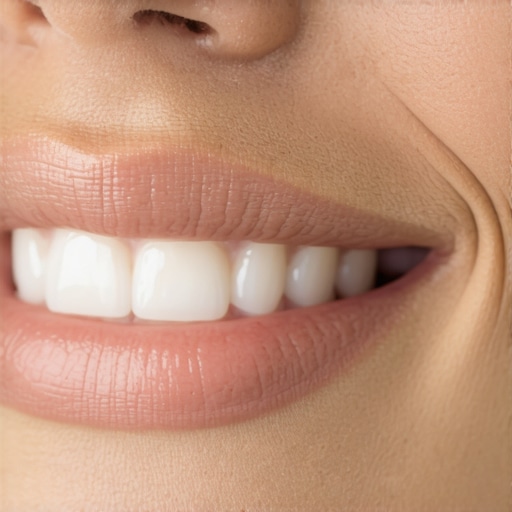
I remember the first time I tried to take a sip of coffee after my permanent veneers were finally bonded. It was supposed to be the start of my ‘new life’ with a perfect smile. Instead, I felt like I was wearing a bulky plastic mouthguard from a middle school football game. My upper lip kept catching on the porcelain, refusing to slide down naturally over my teeth. I sat there, trying to smile for a photo, feeling like a ventriloquist’s dummy with a shelf for a mouth. If you have just spent a significant amount of money on a smile makeover and now feel like you are constantly pouting or that your speech has developed a weird new lisp, you are not crazy. It is a specific, frustrating sensation that most people do not talk about until it is already happening.
The Moment I Realized My New Smile Felt Like a Mouthguard
The reality of veneers made simple is that they should not actually feel like a massive foreign object. When I went through this, I made a classic rookie mistake: I was so focused on the bright white color during the wax-up phase that I did not pay enough attention to the incisal edge or how much my dentist was trimming back my natural enamel. I thought my lips would just adjust over time. Spoiler alert: they did not, at least not without some professional help. Today, I am going to pull back the curtain on why this happens—from over-contoured porcelain to the literal physics of your bite—and what you can actually do to get that natural feel back. We will look at how to stop your veneers from looking too white and fake while making sure they do not feel like they are taking up every square inch of space in your mouth.
Are these things actually supposed to feel this huge?
It is the question that keeps you up at night, right? You wonder if you made a massive, expensive mistake. The short answer is no—well-placed porcelain should not feel like a shelf for your lip. According to the American Academy of Cosmetic Dentistry, a properly designed veneer is often as thin as a contact lens, sometimes only 0.3mm to 0.5mm, but if the prep work was not deep enough, that tiny addition feels like a mountain to your sensitive lip nerves. Have you ever felt like your lips are literally sticking to your dental work or your new restorations? It is a similar, jarring sensation that affects your confidence. If you are currently checking your reflection every five minutes and wondering why your face looks slightly ‘off,’ I want to hear from you. Have you noticed your ‘s’ sounds sounding a bit whistly, or does it just feel like there is a piece of gum stuck to the front of your teeth? We are going to dive into the technical reasons—like the emergence profile—next, so you can walk back into your dentist’s office with the right vocabulary to get this fixed. You might even find that your porcelain veneers feel bulky simply because of how light is hitting that extra thickness. Let us get into the specific reasons your anatomy is fighting the porcelain.
How the Wrong Angle Makes Your Lips Pop Out
The core of that ‘bulky’ sensation usually boils down to something called the emergence profile. Think of it like a highway on-ramp. If the ramp is a smooth, gradual slope, the cars merge perfectly. If the ramp is a steep, 90-degree ledge, everything crashes. When a dentist places porcelain without enough ‘reduction’ or prep on your natural tooth, the veneer sits on top like a cap rather than fitting into the tooth’s structure. This creates a shelf where the porcelain meets the gum line. I remember my own lateral incisor felt like a literal speed bump. Every time I spoke, my lip would hitch on that ledge. If you feel this, it is likely because the technician over-contoured the porcelain. You can find more transform your smile with veneers expert tips to understand how a master ceramist avoids this by tapering the edges to a razor-thin finish. Unlike invisalign innovation which moves your natural teeth, veneers add material, so the physics of space is everything.
Say Fifty-Five to See if They Are Too Long
Speech is the ultimate diagnostic tool for a bulky smile. When I first got my temporaries, I sounded like I had a mouthful of marbles. Try this: stand in front of a mirror and say words starting with ‘F’ and ‘V,’ like ‘fifty-five’ or ‘victory.’ Your lower lip should lightly touch the bottom edge (the incisal edge) of your upper teeth. If your lip is hitting the middle of the tooth or if you have to exert effort to make the sound, your veneers are likely too long or too thick toward the front. This is also why many people complain that their veneers feel like they are catching on your tongue during normal conversation. The thickness disrupts the ‘airway’ your mouth creates for certain consonants.
Ask Your Dentist for a Micro-Reduction
You do not have to live with the mouthguard feel forever. In many cases, a cosmetic dentist can perform a ‘micro-reduction’ using a specialized fine-grit diamond bur. I finally had to do this two weeks after my procedure. My dentist spent thirty minutes carefully thinning the incisal edges and smoothing the emergence profile so my lip could glide. It felt like a weight had been lifted off my face. However, be aware that thinning the porcelain can change how light passes through it, potentially leading to the reason your veneers look gray in certain lighting if the porcelain becomes too translucent. If you are also dealing with sensitivity after these adjustments, knowing how to manage the zingers after a professional whitening session can help, as the sensations are often similar. Whether you are visiting family dentistry for a check-up or a specialist for a revision, use the term ‘incisal edge thickness’ to describe your discomfort. This tells them exactly where the physical interference is happening.
A common misconception that many people buy into—myself included, initially—is that porcelain veneers are a permanent armor that renders your natural teeth invincible. We tend to think that because the ceramic cannot decay, our days of worrying about cavities are over. This is a dangerous trap. While the porcelain itself is immune to bacteria, the interface where the veneer meets your tooth is the new front line in the battle for your oral health. If you slack on your hygiene because you have a ‘perfect’ smile, you are actually inviting disaster at the margins. This is often the real cost of skipping your six month cleaning; without a professional eye, tiny gaps can become breeding grounds for decay that hides behind that beautiful facade.
Why do your gums stay red even if you floss every single day?
If you have noticed persistent redness or swelling around your new restorations, you might be dealing with a violation of the ‘biological width.’ This is a sophisticated way of saying your dentist placed the edge of the veneer too deep under the gum line. According to research published in the Journal of Esthetic and Restorative Dentistry, when a restoration interferes with the 2mm of soft tissue attachment above the bone, the body responds with chronic inflammation. No amount of flossing will fix a physical structural intrusion. This is a nuance many patients overlook, assuming they are just ‘bad at flossing,’ when in reality, the hardware is the problem. This is why why your gums are receding despite brushing twice a day in some cases; the tissue is literally trying to move away from the irritating edge of the porcelain.
Another major ‘oops’ factor involves the products you use at home. I have seen so many people try to brighten their smile further by using abrasive DIY methods. Let me be clear: the truth about using charcoal toothpaste on porcelain surfaces is that it won’t whiten the ceramic, but it will absolutely destroy the polished glaze. Once that glaze is gone, the porcelain becomes porous and starts to pick up stains from coffee and wine much faster than your natural teeth ever did. This leads to the reason your porcelain veneers feel gritty to your tongue. You must treat these like fine crystal, not industrial tile.
Furthermore, if you are also using clear aligners as part of a total smile reconstruction, do not underestimate the discipline required. Falling into the problem with wearing your aligners for only 18 hours a day can cause your teeth to ‘bounce,’ creating micro-movements that put immense stress on the bond of your veneers. If you have a grinding habit, you must be even more vigilant. Learning how to keep your veneers from chipping if you grind your teeth usually involves a custom night guard, which is non-negotiable for protecting your investment. Have you ever fallen into this ‘set it and forget it’ trap? Let me know in the comments. We need to talk more about the long-term reality of cosmetic dentistry, not just the ‘after’ photo.
Get a Water Flosser if You Want Your Veneers to Last
I used to be a traditional floss purist, thinking that the wax string was the only way to truly clean between my teeth. But after my veneer procedure, I noticed that traditional floss occasionally snagged on the margins—those tiny microscopic ledges where the porcelain meets the natural tooth. This is why I switched to a high-powered water flosser. It is not just about convenience; it is about using hydro-kinetic energy to flush out biofilm without risking physical trauma to the bond. If you are serious about longevity, you need a tool that can reach the gingival sulcus without tugging. This is especially true if you are trying to learn how to keep your coffee habit without ruining your new veneers; that water stream clears away tannins before they can settle into the margins.
Digital Scans are the Future of Smile Care
I predict that within the next three years, we will see a massive shift toward home-based intraoral scanning. Instead of waiting for a yearly check-up at a family dentistry practice, you will likely use a smartphone attachment to send weekly 3D maps of your teeth to your dentist. This will revolutionize how we catch micro-fractures in porcelain or subtle shifts in tooth position after finishing treatment. We are already seeing this with Invisalign secrets for remote monitoring, and it is only a matter of time before it becomes the standard for veneer maintenance. By tracking the exact wear patterns of your ceramic work in real-time, your dentist can intercept a failing bond months before you even feel a ‘catch’ with your tongue.
How do I keep my porcelain looking brand new for a decade?
The secret is not a specific toothpaste, but a specific habit: the night guard. A study published in the Journal of Oral Rehabilitation highlights that the survival rate of lithium disilicate veneers—the gold standard for modern smiles—increases dramatically when patients use an occlusal splint to manage nocturnal grinding. Even if you think you do not grind, the stress of modern life often manifests in micro-clenching that can cause ‘craze lines’ in your expensive porcelain. You must also be diligent about how to clean the stubborn gunk out of your night guard to ensure you aren’t introducing harmful bacteria back onto your restorations every night. If you want to maintain that professional glow, combine this protection with occasional teeth whitening secrets for your bottom teeth to keep the overall look cohesive. My best advice? Stop using your teeth as tools—no opening packages or biting nails. Treat your veneers like the high-end medical prosthetics they are. If you haven’t yet, go buy a high-quality water flosser today and see how much lighter your gums feel after just one week.
Three Hard Lessons About Wearing Porcelain Every Day
Reflecting on my own journey, there are a few things I wish I had known before that first cup of coffee with my new smile. First, your brain is incredibly good at detecting even a 0.1mm difference in thickness. If it feels ‘off’ after a week, it probably is. Second, the color of your veneers can actually influence your perception of their size; overly white teeth often look larger and more ‘projected’ than those with natural translucency. Lastly, don’t ignore your lower teeth. If you only focus on the top, you might miss top teeth whitening strategies today that help balance the overall volume of your smile. I learned the hard way that a beautiful smile is about harmony and proportion, not just adding as much porcelain as possible.
My Survival Kit for Maintaining That Natural Look
To keep your restorations feeling like a part of you rather than an accessory, you need the right tools. I personally swear by a pH-neutral mouthwash to protect the margins where the porcelain meets the natural tooth. If you are a parent, staying informed via ensuring family dental care can help you teach your kids about the importance of enamel health before they ever need cosmetic intervention. For those debating their next move, I highly recommend reading up on veneers vs crowns which is right for your smile to ensure you’ve chosen the least invasive option for your anatomy. Proper education is the best tool in your kit for preventing that ‘mouthguard’ sensation from the start.
#IMAGE_PLACEHOLDER_E#
Don’t Let a Bulky Smile Hold You Back
You deserve a smile that doesn’t just look good in a static photo but feels effortless when you laugh, speak, and eat. If you are currently struggling with the physical sensation of your veneers, remember that you have the right to ask for adjustments. A skilled cosmetic dentist can often refine the porcelain to better suit your facial structure and lip mobility. Don’t be afraid to seek a second opinion or contact us if you feel your concerns aren’t being heard. Your confidence is the goal, and a bulky, uncomfortable restoration is just a hurdle you can overcome with the right professional help. Your perfect, natural-feeling smile is still within reach.
Have you felt that weird ‘shelf’ under your lip after getting dental work, or did yours feel natural from day one? Let me know in the comments below!