
Why Your Dental Implant Feels Hot or Cold When You Drink Liquids
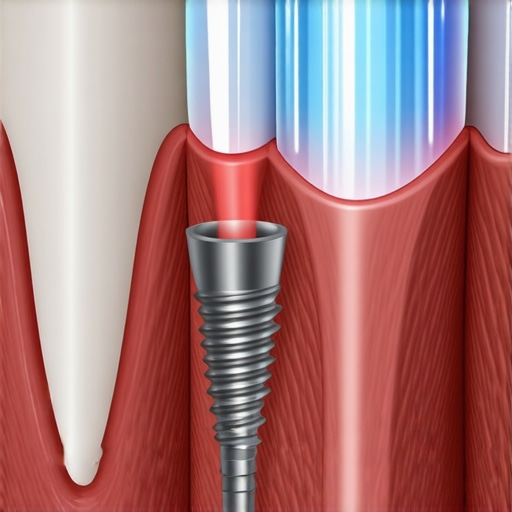
I remember the exact morning it happened to me. I had just sat down with a piping hot mug of dark roast, expecting that familiar morning comfort. Instead, as the liquid hit the back left of my mouth, I nearly jumped out of my chair. A sharp, localized sensation flared right where my dental implant sits. My heart sank. Wait, I thought, implants are titanium and porcelain. They don’t have nerves. How on earth can I feel temperature? It felt like I was breaking the laws of biology. If you are sitting there right now, clutching a cold glass of water and wondering if your expensive new tooth is possessed, I have been in your shoes. Getting to the bottom of why a ‘dead’ piece of metal feels alive is exactly what we are going to tackle today.
That Weird Jolt in Your Titanium Tooth
When I first got my implant, I assumed it would be like a tiny suit of armor in my jaw—completely indestructible and totally numb. But the truth is a bit more nuanced. One of the biggest mistakes I made early on was ignoring the subtle ‘zingers’ I felt when drinking iced tea. I convinced myself it was just phantom pain. In reality, while the implant itself doesn’t have a nerve, the bone and gum tissue surrounding it are very much alive. If you’ve been searching for how to tell if your dental implant is actually healing or failing, you know that the integration process is delicate. Sometimes, that temperature sensitivity isn’t the implant at all, but rather the natural tooth next door that has slightly recessed gums, or perhaps a dental implant crown that feels slightly wiggly and is allowing liquid to seep near the sensitive gum line. According to a study published in the Journal of Oral Implantology, the bone-to-implant interface—while lacking a traditional pulp nerve—is surrounded by a rich network of sensory receptors that can occasionally pick up on thermal conductivity through the metal post itself.
Is this the first sign of my body rejecting the metal?
I know that’s the scary question keeping you up at night. I asked my dentist the same thing while gripping the armrests of the chair. It is a common fear, but the sensation is often more about the ‘environment’ of the implant than the hardware itself. For instance, you might be wondering how to tell if your tooth sensitivity is a cavity or just whitening side effects, especially if you have been trying to keep your new smile bright. Have you ever felt that weird, localized pressure or temperature flash and immediately assumed the worst? You aren’t alone. Today, we are going to break down the physical reasons why heat and cold can travel through your restoration and when it is actually time to call your surgeon. We will look at everything from the conductivity of titanium to the sneaky way a loose crown can mimic a real toothache.
Why Titanium Acts Like a Tiny Heat Sink
Think of your dental implant as a high-tech metal rod in a thermos. While the porcelain crown is a great insulator, the titanium post underneath is a master conductor. Metal naturally transfers heat and cold much faster than biological tissue. When you gulp down an iced latte, that cold energy travels down the post and reaches the living bone and nerve-rich gum tissue. It is similar to how veneers can sometimes feel different against your lips because they change the thickness of the tooth. If your implant is placed in an area with thin bone or receding gums, that thermal ‘expressway’ is even shorter. I remember sitting in my car after a quick lunch, sipping an iced coffee when a lightning bolt of cold hit my ‘fake’ tooth. I was convinced the implant was failing, but it was actually just the metal doing its job too well because my gum line had dipped slightly. 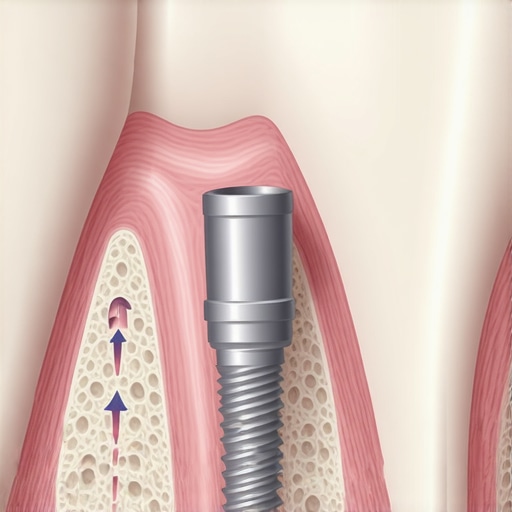
Check the Neighbors Before Blaming the Implant
The most common culprit for ‘implant sensitivity’ isn’t the implant at all—it is the tooth right next to it. Since your implant is fused to the bone, it lacks the shock-absorbing ligament that natural teeth have. This means that if you have a neighboring tooth with a cavity or gum recession, the sensation can ‘radiate’ and make it feel like the implant is the source of the pain. If you have recently undergone other treatments, you might even be experiencing zingers after a professional whitening session that are bouncing around your mouth. To test this at home, take a Q-tip dipped in cold water and touch only the porcelain crown of the implant. If you feel nothing, but then touch the gum line or the natural tooth next to it and jump, you have found your real target. Managing this often involves treating the recession or ensuring you aren’t dealing with gums that are receding despite your best brushing efforts.
Tighten the Hardware to Block the Liquid
Sometimes the ‘zing’ is caused by a tiny gap between the crown and the abutment. If your dental implant crown feels slightly wiggly, even by a fraction of a millimeter, it can act like a straw, pulling cold liquids down toward the sensitive gum tissue. This is a mechanical issue, not a biological one. Just like Invisalign trays require a precise fit to work without irritation, your implant components must be perfectly seated. If you feel a sharp jolt followed by a dull ache, it is worth having your dentist check the torque on the internal screw. A loose crown allows bacteria and temperature to bypass the ‘seal’ of your gums, which can lead to a more serious discussion on how to tell if your dental implant is actually failing if left unaddressed. If you also have other restorations, you might notice the porcelain veneers feel gritty or different during this phase, which is often a sign of localized inflammation affecting your whole bite.Just as we can misinterpret the signals from a titanium implant, we often fall into similar traps when designing the rest of our smile. We assume that ‘more’—more whitening, more porcelain, or more aggressive treatment—is always better. But the hidden nuance is where the real beauty and long-term health actually reside. When it comes to cosmetic upgrades, the most common mistake is ignoring the interplay between the artificial material and your biological tissue.
Stop Chasing the Brightest White for Your Veneers
Many patients walk into a clinic demanding the whitest shade on the guide, believing that extreme brightness equals health. However, the most expensive-looking, high-end restorations are actually ‘darker’ than you might think. If you choose an ultra-bright, opaque porcelain, you lose the natural translucency that allows light to pass through the tooth and reflect off the underlying dentin. This is exactly why your veneers look fake and how to avoid it. Without that depth, your teeth can look like flat, monochromatic blocks—often called the ‘Chiclet effect’—especially in flash photography. When deciding between veneers vs crowns, you have to prioritize the ‘value’ or brightness level that matches the whites of your eyes rather than a bleach bottle. 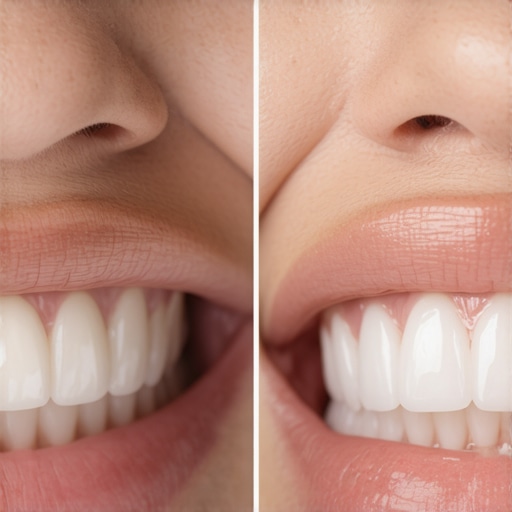
Why Your Enamel Turns Gray Under Too Much Bleach
The biggest ‘oops’ factor I see with DIY enthusiasts is the obsession with chronic whitening. While a professional whitening session is carefully timed, home-kit addicts often reach a point of diminishing returns. According to a study published in the Journal of Evidence-Based Dental Practice, over-bleaching can lead to significant enamel demineralization. This doesn’t make your teeth whiter; it makes them more porous and translucent. This is the real reason your teeth look gray instead of yellow; you have essentially stripped away the opaque enamel, allowing the dark shadows of the inside of your mouth to show through. If you have noticed your teeth looking ‘see-through’ at the edges, you have likely overdone the peroxide.
How do you distinguish between a temporary ‘zing’ and permanent enamel damage?
If you feel a sharp jolt that lingers for more than a few seconds after a whitening treatment, you are likely dealing with pulpal inflammation rather than simple dehydration. The ‘trap’ is thinking you can push through the pain. In reality, persistent sensitivity is your body’s way of telling you that the chemical barrier has been breached. If you are struggling with this, looking into the ultimate guide to teeth whitening options in 2025 can help you find desensitizing protocols that protect your nerves.
Choose Community Roots Over Corporate Dentistry
When managing a household’s health, it is easy to assume that any clinic with a big sign will provide the same care. However, the subtle difference between a corporate clinic and local Culpeper family dentistry is often found in the continuity of the diagnostic eye. In a local setting, your dentist tracks the subtle shifts in your child’s jaw development over a decade, which is vital for timing Invisalign secrets or other orthodontic interventions. When it comes to family dentistry and building healthy smiles, having a doctor who knows your history prevents the ‘over-treatment’ trap often found in high-volume clinics. Have you ever fallen into the trap of thinking ‘whiter is always better,’ only to end up with sensitive teeth? Let me know in the comments.Maintaining the work you’ve put into your smile isn’t just about showing up for your six-month checkup; it is about the tech you use in the dark of your own bathroom at 11:00 PM. After years of testing gadgets, I’ve realized that the ‘secret’ to longevity isn’t more scrubbing—it’s smarter tools.
Stop Scrubbing Like You’re Sanding a Deck
I used to be a ‘vigorous’ brusher, thinking I was really getting those veneers clean. All I was actually doing was wearing down my gum line and causing unnecessary irritation. If you have noticed that your gums bleed only when you use an electric toothbrush, it is often a sign that you are pressing too hard rather than the brush being the problem. I personally switched to a sonic brush with a built-in pressure sensor. It literally stops vibrating if I push too hard. This is vital for anyone with restorations because it protects the delicate margin where the porcelain meets your natural tooth.
The One Gadget That Saved My Invisalign Trays
If you are in the middle of your orthodontic journey, you know the struggle of keeping those trays from looking like they’ve been soaked in swamp water. I spent months scrubbing them with a manual toothbrush, only to create micro-scratches that actually trapped more bacteria. Then I discovered ultrasonic cleaners. These small pods use high-frequency sound waves to blast away plaque without abrasive contact. It is the only way to stop your clear aligners from smelling like old saliva and is far more effective than just soaking them in tablets. I even used mine to learn how to remove turmeric stains from clear aligners without scratching them, which is a lifesaver if you love curry as much as I do. 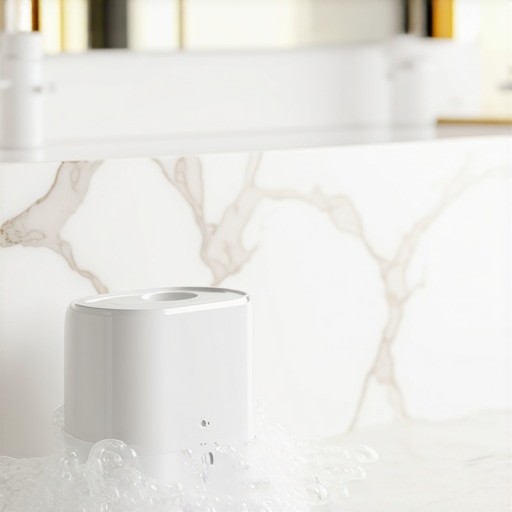
How can I keep these results for the next decade?
Long-term success is a game of defense. For my veneers, that meant getting a custom-fitted night guard. I didn’t think I ground my teeth until I saw the wear facets on my natural molars. Learning how to keep your veneers from chipping if you grind your teeth is mostly about wearing that guard every single night without fail. And because I’m a bit of a hygiene fanatic, I’ve found that knowing the best way to clean your night guard so it doesn’t smell is the only way to actually stay consistent with wearing it. For those focusing on family health, ensuring family dental care and what parents need to know in 2025 involves shifting toward bioactive materials. I’ve recently started using toothpastes containing nano-hydroxyapatite. According to a 2024 review in the Journal of Dentistry, biomimetic hydroxyapatite is proving just as effective as fluoride for remineralization while being entirely non-toxic and biocompatible. I predict that in the next few years, we will see this material become the gold standard for every household. If you are a coffee lover, you don’t have to give up your caffeine to keep your smile bright; you just need to know how to keep your coffee habit without ruining your new veneers. Go grab a bottle of pH-balanced aligner foam today; it’s the single biggest game-changer for keeping your trays clear and your breath fresh.I remember the exact morning it happened to me. I had just sat down with a piping hot mug of dark roast, expecting that familiar morning comfort. Instead, as the liquid hit the back left of my mouth, I nearly jumped out of my chair. A sharp, localized sensation flared right where my dental implant sits. My heart sank. Wait, I thought, implants are titanium and porcelain. They don’t have nerves. How on earth can I feel temperature? It felt like I was breaking the laws of biology. If you are sitting there right now, clutching a cold glass of water and wondering if your expensive new tooth is possessed, I have been in your shoes. Getting to the bottom of why a ‘dead’ piece of metal feels alive is exactly what we are going to tackle today.
That Weird Jolt in Your Titanium Tooth
When I first got my implant, I assumed it would be like a tiny suit of armor in my jaw—completely indestructible and totally numb. But the truth is a bit more nuanced. One of the biggest mistakes I made early on was ignoring the subtle ‘zingers’ I felt when drinking iced tea. In reality, while the implant itself doesn’t have a nerve, the bone and gum tissue surrounding it are very much alive. If you’ve been searching for how to tell if your dental implant is actually healing or failing, you know that the integration process is delicate. Sometimes, that temperature sensitivity isn’t the implant at all, but rather the natural tooth next door that has slightly recessed gums, or perhaps a dental implant crown that feels slightly wiggly and is allowing liquid to seep near the sensitive gum line. The bone-to-implant interface is surrounded by a rich network of sensory receptors that can occasionally pick up on thermal conductivity through the metal post itself.
Is this the first sign of my body rejecting the metal?
I know that’s the scary question keeping you up at night. It is a common fear, but the sensation is often more about the ‘environment’ of the implant than the hardware itself. For instance, you might be wondering how to tell if your tooth sensitivity is a cavity or just whitening side effects, especially if you have been trying to keep your new smile bright. Have you ever felt that weird, localized pressure or temperature flash and immediately assumed the worst? You aren’t alone. Today, we are going to break down the physical reasons why heat and cold can travel through your restoration and when it is actually time to call your surgeon. We will look at everything from the conductivity of titanium to the sneaky way a loose crown can mimic a real toothache.
Why Titanium Acts Like a Tiny Heat Sink
Think of your dental implant as a high-tech metal rod in a thermos. While the porcelain crown is a great insulator, the titanium post underneath is a master conductor. Metal naturally transfers heat and cold much faster than biological tissue. When you gulp down an iced latte, that cold energy travels down the post and reaches the living bone and nerve-rich gum tissue. It is similar to how veneers can sometimes feel different against your lips because they change the thickness of the tooth. If your implant is placed in an area with thin bone or receding gums, that thermal ‘expressway’ is even shorter. I remember sitting in my car after a quick lunch, sipping an iced coffee when a lightning bolt of cold hit my ‘fake’ tooth. I was convinced the implant was failing, but it was actually just the metal doing its job too well because my gum line had dipped slightly.
Check the Neighbors Before Blaming the Implant
The most common culprit for ‘implant sensitivity’ isn’t the implant at all—it is the tooth right next to it. Since your implant is fused to the bone, it lacks the shock-absorbing ligament that natural teeth have. This means that if you have a neighboring tooth with a cavity or gum recession, the sensation can ‘radiate’ and make it feel like the implant is the source of the pain. If you have recently undergone other treatments, you might even be experiencing zingers after a professional whitening session that are bouncing around your mouth. To test this at home, take a Q-tip dipped in cold water and touch only the porcelain crown of the implant. If you feel nothing, but then touch the gum line or the natural tooth next to it and jump, you have found your real target. Managing this often involves treating the recession or ensuring you aren’t dealing with gums that are receding despite your best brushing efforts.
Tighten the Hardware to Block the Liquid
Sometimes the ‘zing’ is caused by a tiny gap between the crown and the abutment. If your dental implant crown feels slightly wiggly, even by a fraction of a millimeter, it can act like a straw, pulling cold liquids down toward the sensitive gum tissue. This is a mechanical issue, not a biological one. Just like Invisalign trays require a precise fit to work without irritation, your implant components must be perfectly seated. If you feel a sharp jolt followed by a dull ache, it is worth having your dentist check the torque on the internal screw. A loose crown allows bacteria and temperature to bypass the ‘seal’ of your gums, which can lead to a more serious discussion on how to tell if your dental implant is actually failing if left unaddressed. If you also have other restorations, you might notice the porcelain veneers feel gritty or different during this phase, which is often a sign of localized inflammation affecting your whole bite.Just as we can misinterpret the signals from a titanium implant, we often fall into similar traps when designing the rest of our smile. We assume that ‘more’—more whitening, more porcelain, or more aggressive treatment—is always better. But the hidden nuance is where the real beauty and long-term health actually reside. When it comes to cosmetic upgrades, the most common mistake is ignoring the interplay between the artificial material and your biological tissue.
Stop Chasing the Brightest White for Your Veneers
Many patients walk into a clinic demanding the whitest shade on the guide, believing that extreme brightness equals health. However, the most expensive-looking, high-end restorations are actually ‘darker’ than you might think. If you choose an ultra-bright, opaque porcelain, you lose the natural translucency that allows light to pass through the tooth and reflect off the underlying dentin. This is exactly why your veneers look fake and how to avoid it. Without that depth, your teeth can look like flat, monochromatic blocks—often called the ‘Chiclet effect’—especially in flash photography. When deciding between veneers vs crowns, you have to prioritize the ‘value’ or brightness level that matches the whites of your eyes rather than a bleach bottle.
Why Your Enamel Turns Gray Under Too Much Bleach
The biggest ‘oops’ factor I see with DIY enthusiasts is the obsession with chronic whitening. While a professional whitening session is carefully timed, home-kit addicts often reach a point of diminishing returns. Over-bleaching can lead to significant enamel demineralization. This doesn’t make your teeth whiter; it makes them more porous and translucent. This is the real reason your teeth look gray instead of yellow; you have essentially stripped away the opaque enamel, allowing the dark shadows of the inside of your mouth to show through. If you have noticed your teeth looking ‘see-through’ at the edges, you have likely overdone the peroxide.
How do you distinguish between a temporary ‘zing’ and permanent enamel damage?
If you feel a sharp jolt that lingers for more than a few seconds after a whitening treatment, you are likely dealing with pulpal inflammation rather than simple dehydration. The ‘trap’ is thinking you can push through the pain. In reality, persistent sensitivity is your body’s way of telling you that the chemical barrier has been breached. If you are struggling with this, looking into the ultimate guide to teeth whitening options in 2025 can help you find desensitizing protocols that protect your nerves.
Choose Community Roots Over Corporate Dentistry
When managing a household’s health, it is easy to assume that any clinic with a big sign will provide the same care. However, the subtle difference between a corporate clinic and local Culpeper family dentistry is often found in the continuity of the diagnostic eye. In a local setting, your dentist tracks the subtle shifts in your child’s jaw development over a decade, which is vital for timing Invisalign secrets or other orthodontic interventions. When it comes to family dentistry and building healthy smiles, having a doctor who knows your history prevents the ‘over-treatment’ trap often found in high-volume clinics. Have you ever fallen into the trap of thinking ‘whiter is always better,’ only to end up with sensitive teeth? Let me know in the comments.Maintaining the work you’ve put into your smile isn’t just about showing up for your six-month checkup; it is about the tech you use in the dark of your own bathroom at 11:00 PM. After years of testing gadgets, I’ve realized that the ‘secret’ to longevity isn’t more scrubbing—it’s smarter tools.
Stop Scrubbing Like You’re Sanding a Deck
I used to be a ‘vigorous’ brusher, thinking I was really getting those veneers clean. All I was actually doing was wearing down my gum line and causing unnecessary irritation. If you have noticed that your gums bleed only when you use an electric toothbrush, it is often a sign that you are pressing too hard rather than the brush being the problem. I personally switched to a sonic brush with a built-in pressure sensor. It literally stops vibrating if I push too hard. This is vital for anyone with restorations because it protects the delicate margin where the porcelain meets your natural tooth.
The One Gadget That Saved My Invisalign Trays
If you are in the middle of your orthodontic journey, you know the struggle of keeping those trays from looking like they’ve been soaked in swamp water. I spent months scrubbing them with a manual toothbrush, only to create micro-scratches that actually trapped more bacteria. Then I discovered ultrasonic cleaners. These small pods use high-frequency sound waves to blast away plaque without abrasive contact. It is the only way to stop your clear aligners from smelling like old saliva and is far more effective than just soaking them in tablets. I even used mine to learn how to remove turmeric stains from clear aligners without scratching them, which is a lifesaver if you love curry as much as I do.
How can I keep these results for the next decade?
Long-term success is a game of defense. For my veneers, that meant getting a custom-fitted night guard. I didn’t think I ground my teeth until I saw the wear facets on my natural molars. Learning how to keep your veneers from chipping if you grind your teeth is mostly about wearing that guard every single night without fail. And because I’m a bit of a hygiene fanatic, I’ve found that knowing the best way to clean your night guard so it doesn’t smell is the only way to actually stay consistent with wearing it. For those focusing on family health, ensuring family dental care and what parents need to know in 2025 involves shifting toward bioactive materials. I’ve recently started using toothpastes containing nano-hydroxyapatite. According to a 2024 review in the Journal of Dentistry, biomimetic hydroxyapatite is proving just as effective as fluoride for remineralization while being entirely non-toxic and biocompatible. If you are a coffee lover, you don’t have to give up your caffeine to keep your smile bright; you just need to know how to keep your coffee habit without ruining your new veneers. Go grab a bottle of pH-balanced aligner foam today; it’s the single biggest game-changer for keeping your trays clear and your breath fresh.
What No One Mentions About Living with a ‘Bio-Digital’ Smile
After years of navigating the ups and downs of restorative work, I’ve realized that sensitivity isn’t just a physical symptom; it’s a communication from your body. Here are the lightbulb moments that changed my perspective:
- Metal is a messenger: That cold ‘zing’ in your implant is often just thermal conductivity. It took me months to realize that if I wasn’t seeing how to tell if your dental implant is actually healing or failing signs like redness or swelling, the sensation was just a harmless physics lesson.
- Perfect is the enemy of natural: The biggest regret I hear is from people who pushed for bleach-white teeth. Real beauty has depth, and avoiding the trap of why your veneers look opaque and fake in flash photography starts with accepting a bit of character in the porcelain.
- Consistency beats intensity: You don’t need to scrub harder; you just need to be more strategic. A local partner who understands the subtle difference between a corporate clinic and local Culpeper family dentistry can help you spot issues long before they become painful emergencies.
My Daily Survival Kit for High-End Restorations
If you want your investment to last a lifetime, these are the three tools I swear by:
1. Nano-Hydroxyapatite Toothpaste: This is the future of ensuring family dental care. It remineralizes your natural teeth without the harshness of old-school abrasives. 2. Ultrasonic Cleaners: Don’t let your night guard become a petri dish. Knowing the best way to clean your night guard so it doesn’t smell is half the battle for hygiene. 3. pH-Balanced Aligner Foam: This is a game-changer for anyone with veneers or Invisalign; it neutralizes acids on the go and keeps your breath fresh.
Ready to Own Your Confidence?
Dental work can feel intimidating, especially when your body starts sending weird signals like temperature sensitivity. But remember, a dental implant is designed to give you your life back, not to keep you in a state of worry. By choosing the right tools and the right local expertise, you can enjoy that iced coffee without a second thought. Your smile is a journey, not a destination—take it one comfortable sip at a time. Have you ever felt a weird ‘zing’ in a tooth that was supposed to be numb? Let me know your experience in the comments below!