
Why your teeth feel sticky even after using mouthwash
I used to be a mouthwash fanatic. I’m talking three times a day, stinging-blue-liquid-in-the-bottle kind of guy. One night, after a full routine of flossing, brushing, and a vigorous rinse, I ran my tongue across my front teeth and froze. They felt… tacky. Not smooth, not clean, but like they were covered in a thin layer of invisible syrup. I panicked. Was I developing instant cavities? Was my enamel melting? It was a total lightbulb moment of failure—I was doing too much and getting the wrong results. I’ve since learned that this “sticky” sensation is a common frustration, and today, I’m going to show you exactly why it happens and how to fix your routine so you can finally get that smooth, glass-like finish you’re after.
That Velvety Texture Is Often a Chemical Reaction
It sounds counterintuitive, doesn’t it? You spend five minutes in front of the mirror, yet your mouth feels dirtier than before you started. I made the mistake early on of thinking that the more a mouthwash burned, the better it worked. I was wrong. When you use certain rinses, especially those high in alcohol or specific antiseptic ingredients, they can interact with your saliva and the proteins in your mouth. This can create a film known as a pellicle, which sometimes feels much thicker than it should. It is similar to why your teeth feel furry only a few hours after brushing if your oral microbiome is out of balance. Another culprit is dry mouth. Alcohol-based mouthwashes are notorious for stripping away the moisture your mouth needs. When your mouth dries out, your saliva becomes viscous and concentrated, leading to that sticky, glue-like sensation. I spent years thinking I had some rare dental issue when, in reality, I was just dehydrating my own gums. It’s a bit like why your teeth feel gritty after a professional cleaning session; sometimes the very treatments meant to help us leave behind a texture we didn’t expect.
Is my mouthwash actually doing more harm than good?
It is a valid fear. If you are seeing strange textures or feeling tackiness, you might wonder if you should just toss the bottle in the trash. According to the American Dental Association, mouthwashes with high alcohol content can significantly reduce salivary flow, which is your mouth’s natural defense against plaque and acid. If you’ve ever noticed why your breath smells like vinegar after wearing aligners all night, you know how much a lack of saliva can change the environment of your mouth. In my case, I was creating a desert in my mouth every night, and the stickiness was just the aftermath. Have you ever finished your morning routine only to feel like you need to brush all over again ten minutes later? If so, you aren’t alone, and it usually isn’t a sign that your teeth are rotting—it’s a sign that your products are clashing with your chemistry. We need to look at the ingredients you’re swishing and how they interact with your unique dental needs, from family dentistry basics to advanced cosmetic care.
Flip the Bottle and Ditch the Alcohol
The first thing you need to do is check the label for ethanol or alcohol. I used to think that the sharp burn was the ultimate sign of cleaning power, but alcohol is essentially a desiccant for your oral tissues. When you strip away the essential moisture, your remaining saliva turns into a thick, tacky sludge that coats your teeth. I finally made the switch to a pH-balanced, alcohol-free rinse after a week of waking up with what felt like a layer of dry glue on my molars. Within two days of switching, that suffocating stickiness vanished. If you’re worried about bacteria but want to avoid the harsh chemical dry-out, you might even consider the truth about oil pulling for whiter teeth and healthy gums as a gentler alternative that respects your natural microbiome. 
Don’t Let Your Toothpaste and Mouthwash Fight
Most of us brush and then immediately reach for the mouthwash. This is actually a major tactical error that leads to that weird film. Many toothpastes contain Sodium Lauryl Sulfate (SLS), the ingredient that creates that satisfying foam. When SLS meets certain ingredients in mouthwash—especially fluoride or chlorhexidine—they can neutralize each other and leave behind a gritty or sticky precipitate. It is a lot like trying to wash your hair with bar soap in hard water; the chemical clash leaves a residue that’s hard to shake. I started waiting at least 30 minutes between brushing and rinsing. The first time I tried this, the tacky feeling disappeared entirely because the toothpaste had time to fully absorb and be cleared by my natural saliva. This film is effectively a barrier that prevents your saliva from doing its job of remineralizing your teeth. This small change in timing is as fundamental as knowing how to tell if your gum recession is caused by over brushing.
Watch Out for the Whitening Trap
If you are using a rinse specifically marketed for whitening, the stickiness is often caused by the hydrogen peroxide or carbamide peroxide. These agents are effective, but they are also slightly acidic. This acidity can temporarily soften the pellicle—the thin layer of proteins on your teeth—making it feel gummy or velvety. I once overdid it with a high-intensity whitening regimen before a wedding, and my teeth felt like they were coated in rubber cement. It wasn’t just uncomfortable; I started getting those sharp, electric pains known as zingers. Learning how to manage the zingers after a professional whitening session helped me realize that less is often more. If you find your teeth feel tacky after whitening, try rinsing with plain water afterward to neutralize the pH. If you are struggling with deeper discoloration, you might need to look beyond the drugstore bottle at the best way to whiten teeth that have been stained by tetracycline to avoid the surface-level film issues. Also, if you’ve been skipping the basics, knowing how to stop your gums from bleeding when you haven’t flossed in weeks will do more for your oral texture than any fancy rinse ever could.
Stop Chasing the Instant Chalky Look
I’ve seen people spend hundreds on professional treatments only to be crushed a week later when their smile seems to ‘fade.’ They assume the dentist used a weak gel, but the reality is often simpler: they were blinded by dehydration. Everyone thinks the blindingly white shade they see in the mirror immediately after a session is the final result. In my experience, that’s almost never true. When you apply high-concentration peroxide, your teeth lose water. This dehydration creates a temporary, chalky-white appearance that hides the underlying dentin. According to a study published in the Journal of the American Dental Association (JADA), the ‘rebound effect’ occurs as teeth rehydrate, causing the shade to settle into its true, slightly darker color within 48 to 72 hours. If you judge your results in the first ten minutes, you are setting yourself up for a letdown. 
The Bonding Trap That Leaves Your Smile Two-Toned
One of the most common ‘oops’ moments I see involves patients forgetting about their previous dental work. If you have ever had a chipped tooth repaired with resin, you need to be incredibly careful. I once watched a friend go through three rounds of intensive strips, only to realize her front tooth now had a permanent, yellow-brown patch in the middle. The enamel around it was sparkling, but the resin stayed the same. It’s the classic mistake of using whitening strips on dental bonding that can lead to an expensive trip back to the chair. Modern whitening is powerful, but it isn’t magic—it only works on natural tooth structure. If you are aiming for a total overhaul, you might need to consider veneers made simple to ensure every tooth matches perfectly.
Why does my smile look darker a week after professional whitening?
This is the advanced nuance most people miss: intrinsic versus extrinsic staining. Most over-the-counter products only tackle the surface (extrinsic). If your teeth have deep, internal (intrinsic) stains from childhood medications, you might find the best way to whiten teeth that have been stained by tetracycline is a different protocol entirely. Standard peroxide might temporarily lighten the surface, but the dark core will ‘shadow’ through once the tooth rehydrates. This is also why some people complain that why your professional whitening didnt work as well as last time—it’s often a shift in your tooth’s internal chemistry rather than the product itself.
Maintenance Is the Real Secret to Long-Term Glow
We treat whitening like a sprint, but it’s a marathon. If you’ve invested in high-end porcelain, you cannot treat it like natural enamel. You need to stop brushing your veneers like they are real teeth using abrasive charcoals or ‘whitening’ pastes that actually scratch the glaze. These micro-scratches are exactly what catch coffee and wine stains, leading to why your porcelain veneers look dull after five years of wear. Even with natural teeth, the goal shouldn’t be ‘fluorescent’ white. I always suggest patients look at how to tell if your veneers are too-white for your complexion before committing to a shade. A natural, healthy translucency will always look better than a flat, monochromatic white. Have you ever fallen into this trap of chasing the ‘brightest’ shade only to regret it? Let me know in the comments.I eventually stopped guessing and started investing in tools that do the heavy lifting for me. My absolute non-negotiable is a pressure-sensing electric toothbrush. I used to be a ‘scrubber,’ thinking more force meant more clean, but that’s a fast track to knowing how to tell if your gum recession is caused by over brushing. My brush vibrates red if I push too hard, which was a humbling reality check. It’s about precision, not power. If you’re serious about transforming your smile with expert veneer tips, you have to treat the supporting gums like silk.
How do I maintain my dental investment over the long haul?
The secret isn’t just what you do to your teeth, but what you do to your appliances. If you’re using Invisalign secrets for achieving a perfect smile discreetly, you probably know the struggle of keeping trays clear. I switched to an ultrasonic cleaner—a little pod that uses sound waves to blast off bacteria. A study in the Journal of Dentistry (Vol. 104) confirmed that ultrasonic waves are significantly more effective at removing stubborn biofilm than manual brushing, which often just scratches the plastic and creates more hiding spots for odors.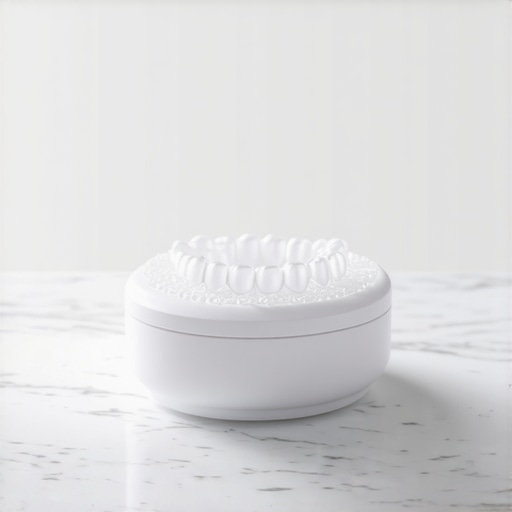
Ultrasonic baths aren’t just for jewelry anymore
I use my ultrasonic cleaner every single morning for my night guard. It’s the only way I’ve found to avoid that ‘cloudy’ look that makes trays look gross. Learning how to properly clean a night guard to prevent bacterial buildup changed my morning breath game entirely. But maintenance isn’t just about cleaning; it’s about prevention. I’m a coffee addict, but I refuse to let it ruin my progress with the ultimate guide to teeth whitening options in 2025. My ‘pro tip’ is the ‘Sip and Swish.’ Every three sips of coffee, I take a sip of water and swish it around. It sounds simple, but it stops the tannins from settling into the enamel pores. This is key because the real reason your coffee stains keep coming back after a cleaning is usually that we let the acid and pigment sit on our teeth for hours.
What the future of dental maintenance looks like
We are moving toward a world where you won’t even have to guess if your routine is working. I predict that within five years, we’ll see ‘smart’ aligners and veneers with embedded sensors that alert your phone when your oral pH drops too low. We’re already seeing this shift as the real reason Culpeper dentists are swapping traditional x-rays for 3d scans becomes the standard—it’s all about high-resolution data and preventative monitoring. For now, my challenge to you is this: tomorrow morning, try the ‘Sip and Swish’ with your first cup of coffee or tea. It’s the easiest, free way to protect your whitening investment without giving up your favorite morning ritual.
What I Learned the Hard Way About My Mouths Microbiome
After years of trial and error, I have realized that the squeaky clean feeling we often chase is actually a sign of over-stripping our natural defenses. Here are a few lightbulb moments that changed how I approach my daily routine: First, saliva is your best friend, not an enemy to be dried out with alcohol-heavy rinses. Second, the order of operations matters more than the price of the products; rinsing immediately after brushing is a primary cause of that chemical film. Finally, if you are looking for long-term success for your whole household, ensuring family dental care starts with teaching everyone that the burn of a mouthwash isnt a badge of honor. It is about biological balance, not scorched-earth cleaning.
Tools That Actually Made a Difference for My Routine
If you are tired of guessing why your teeth feel tacky, I highly recommend looking into a few specific resources that helped me transition from a scrubber to a strategist. I now exclusively use pH-balancing oral rinses that utilize xylitol instead of ethanol—they keep the moisture in while keeping the harmful bacteria out. For those interested in the latest tech, I recommend staying updated on top teeth whitening strategies today that prioritize enamel hydration over instant, chalky results. I also suggest looking into the subtle difference between a corporate clinic and local Culpeper family dentistry, as personalized advice from a consistent provider who knows your history is worth more than any generic drugstore advice.
Take Control of Your Dental Health Today
You do not have to settle for a mouth that feels tacky or uncomfortable. By making small, intentional pivots—like waiting 30 minutes after brushing to rinse or switching to alcohol-free formulas—you are setting yourself up for a lifetime of comfort and confidence. It is all about applying teeth whitening secrets for a sparkling smile that actually respect your natural oral chemistry. Your journey to a truly smooth, glass-like finish is a marathon, and you now have the insider knowledge to reach the finish line. Have you ever felt that weird sticky film after a rinse, and what was the first change you made to fix it? Let me know in the comments below!