
Why your top teeth are white but the bottom ones stay yellow
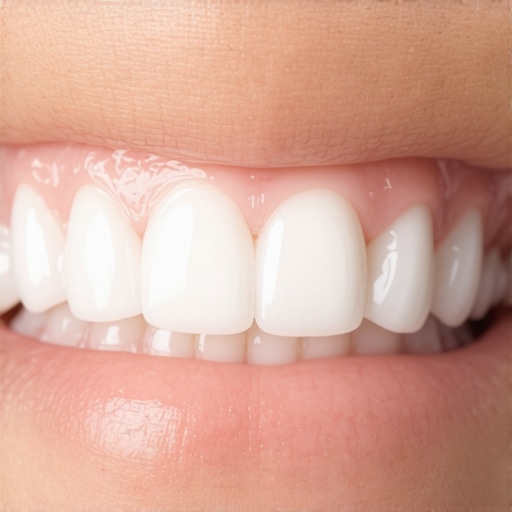
I’ll never forget the first time I really looked—I mean really looked—at my smile in the rearview mirror on a bright Tuesday afternoon. My top teeth were glowing, a testament to the [teeth whitening secrets for a sparkling smile in 2025](https://smilegumcare.com/teeth-whitening-secrets-for-a-sparkling-smile-in-2025-at-1248) I had been religiously following. But the bottom ones? They looked like they belonged to a completely different person. It was jarring. I felt like a two-toned experiment gone wrong. If you have ever felt that sting of frustration while comparing your upper and lower arches, I want you to know you aren’t alone, and it isn’t just your imagination playing tricks on you. Today, we are going to pull back the curtain on why this happens and how you can finally achieve that uniform, Hollywood-level brightness across your entire mouth.
Why Gravity and Biology Fight Your Lower Smile
When I first started obsessing over my dental aesthetics, I made a classic amateur mistake: I treated my top and bottom teeth exactly the same. I assumed that if a whitening strip worked for the top, it would behave the same way on the bottom. I was wrong. I ended up with incredible sensitivity and had to learn [how to manage the zingers after a professional whitening session](https://smilegumcare.com/how-to-manage-the-zingers-after-a-professional-whitening-session) before I even saw a change in shade on my lower jaw. The reality is that your mouth is a complex environment where gravity is constantly working against you.
Do whitening kits actually work on the bottom row?
Many people wonder if they should even bother, or if their lower enamel is just ‘broken.’ The truth is, your lower teeth are constantly bathed in saliva. Sublingual glands sit right under your tongue, pumping out moisture that dilutes whitening gels the second you apply them. According to the American Academy of Cosmetic Dentistry, saliva is one of the biggest hurdles in chemical whitening because it neutralizes the peroxide needed to lift stains. Furthermore, the enamel on your lower teeth is naturally thinner than on the uppers. This means the yellow-hued dentin underneath shows through much more easily, making them look darker regardless of how much you scrub. You might even notice that [your teeth look yellow in certain bathroom lighting](https://smilegumcare.com/why-your-teeth-look-yellow-in-certain-bathroom-lighting) because of how these different thicknesses reflect light. Have you noticed a significant ‘shade gap’ between your top and bottom teeth, or have you found a trick that actually keeps the gel in place? I’d love to hear if you’re struggling with this right now. Understanding this biological tilt is the first step toward fixing it, and next, we are going to look at the specific mechanical reasons your toothbrush might be failing your bottom teeth.
Stop the Saliva Sabotage for Brighter Lower Teeth
To get your bottom teeth to catch up to the top, you have to think like a contractor working on a leaky basement. You cannot paint a wall while water is seeping through the drywall, and you cannot whiten teeth while the sublingual glands are flooding the zone. The most effective method I’ve found involves a ‘dry-prep’ phase that most people skip. I remember a Tuesday night when I was so fed up with my slipping whitening strips that I stuffed three cotton rolls under my tongue and used a handheld fan to desiccate my lower enamel. It was messy, I looked ridiculous, and I definitely drooled on my shirt, but for the first time, the peroxide actually stayed put. By creating a temporary ‘dam’ with dental gauze or even rolled-up paper towels, you prevent the saliva from neutralizing the whitening agent. Pair this with [the best time of day to whiten your teeth for maximum results](https://smilegumcare.com/the-best-time-of-day-to-whiten-your-teeth-for-maximum-results)—usually right before bed when saliva production naturally slows down—to give the chemicals a fighting chance. 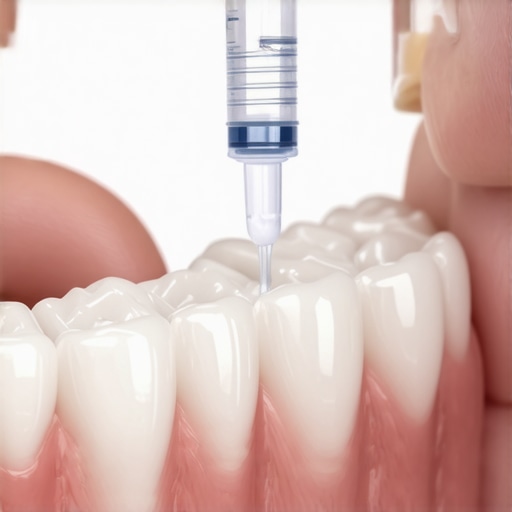
Why Custom Trays Beat Strips for the Bottom Row
If you are using generic strips, you are fighting an uphill battle. Strips are flat, but your lower teeth are often crowded or smaller, creating gaps where the strip just ‘tents’ over the tooth surface. This is why [the ultimate guide to teeth whitening options in 2025](https://smilegumcare.com/the-ultimate-guide-to-teeth-whitening-options-in-2025) almost always points toward custom-fitted trays for difficult cases. A custom tray acts like a gasket, sealing the gel against the enamel and keeping the mouth’s natural moisture out. When I switched from strips to a molded tray, the ‘shade gap’ between my top and bottom teeth closed by three levels in just one week. If you are serious about uniformity, you need a delivery system that contours to the jagged edges of the lower arch.
Protect Your Gums from Peroxide Overspill
Because the lower teeth are smaller, it is incredibly easy to overload a tray and end up with chemical burns on your delicate gum tissue. I learned this the hard way when I applied too much gel and spent the next three days learning [how to treat a burn on your gums from whitening gel](https://smilegumcare.com/how-to-treat-a-burn-on-your-gums-from-whitening-gel). The trick is to use a tiny ‘bead’ of gel—no larger than a grain of rice—placed specifically on the facial (front) side of the tray for each tooth. Don’t just line the bottom of the tray; aim for the center of each tooth’s imprint. This targeted approach ensures the peroxide stays on the enamel and doesn’t squish up into the soft tissue when you bite down.
Balance the Shade Without Increasing Sensitivity
Since lower enamel is naturally thinner, these teeth are prone to ‘the zingers’ much faster than the uppers. To fix this, I recommend a ‘staggered’ whitening schedule. Instead of whitening both rows every night, focus exclusively on the bottom teeth for three nights, then do both on the fourth. This allows the lower teeth to receive more ‘contact time’ without reaching the point of unbearable sensitivity. If you do feel that sharp flash of pain, you’ll need to know [brighten your life top teeth whitening strategies today](https://smilegumcare.com/brighten-your-life-top-teeth-whitening-strategies-today) to recalibrate your approach. By focusing on mechanical precision and moisture control, you can finally force your lower teeth to match the brilliance of your upper smile.While mastering the mechanics of the lower arch is essential, the real expertise comes from knowing when to stop. One of the biggest myths I encounter in the world of cosmetic dentistry is the ‘clean slate’ fallacy. Many people assume that if they pay for the ultimate guide to teeth whitening options in 2025, they will automatically hit that ‘paper-white’ shade. But here is the nuance: whitening doesn’t change the base color of your teeth; it removes the stains from the enamel. If your natural dentin is grayish or yellow-toned, no amount of peroxide will turn them into neon-white. In fact, if you push too hard, you might find yourself wondering why your professional whitening didn’t work as well as last time or, worse, you’ll cross the line into translucency.
The Hidden Danger of Over-Bleaching Your Enamel
When you over-bleach, you are essentially stripping away the light-reflecting properties of your teeth. A study published in the Journal of Dentistry highlights that excessive peroxide exposure can lead to a significant decrease in enamel micro-hardness, making the tooth appear ‘glassy’ or gray rather than bright white. This is the ‘Oops’ factor most influencers ignore. If your teeth start looking like they’re becoming transparent at the edges, you have over-bleached, and the only fix is remineralization therapy, not more gel.
Can Charcoal Toothpaste Actually Save Your Porcelain?
The short answer is a resounding no. There’s a persistent trend suggesting charcoal is a ‘natural’ alternative for maintaining expensive dental work. However, the truth about charcoal toothpaste and your tooth enamel is that it is far too abrasive. On the Mohs scale of mineral hardness, charcoal particles can act like sandpaper on both natural teeth and veneers made simple transform your tooth aesthetics in 2025 at 1822. Using it on porcelain is a recipe for losing that glossy factory finish, leaving your smile looking dull and aged within months. 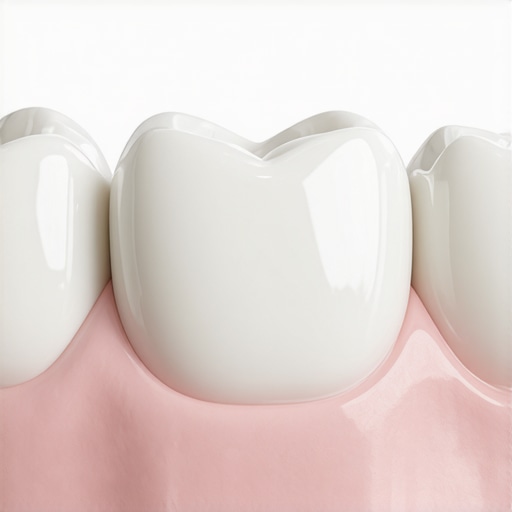
Escape the Perfection Paradox in Modern Aligners
Another trap is the ‘perfection’ paradox. I see patients opting for invisalign secrets achieving a perfect smile discreetly who get frustrated when their teeth aren’t perfectly symmetrical like a 3D-printed model. But biological beauty often lies in subtle imperfections. This is especially true with porcelain; if you don’t learn how to stop your veneers from looking too white and fake, they end up looking like a row of identical chiclets rather than a human smile. The best results always mimic the natural gradient—slightly warmer at the gumline and more translucent at the biting edge. Have you ever fallen into the ‘too white’ trap, or felt like your whitening results hit a plateau? Let me know in the comments.I’ve spent years testing different gadgets to see what actually preserves the work of a good cosmetic dentist. For me, the game-changer wasn’t the fanciest blue-light whitening kit; it was a high-quality electric toothbrush with a built-in pressure sensor. When you have veneers made simple transform your tooth aesthetics in 2025 at 1822, you have to stop brushing your veneers like they are real teeth. I personally use the Philips Sonicare 6100 series because it alerts me the second I press too hard—preventing that microscopic scratching that eventually leads to why your porcelain veneers look dull after five years of wear. If you’re wearing aligners, don’t just toss them in a basic case. You need to know the best way to store your clear aligners when you arent wearing them to avoid bacteria colonies. I swear by an ultrasonic cleaner—a small tub that uses high-frequency sound waves to shake the biofilm off. It’s the only way I’ve found to avoid the hidden reason your clear aligners have a persistent odor.
How do I maintain my results over time?
Maintenance isn’t about doing more; it’s about being smarter with what you consume. I’m a heavy tea drinker, but I learned how to keep your teeth white without giving up black tea by switching to glass straws for every beverage. It keeps the staining agents away from the facial surfaces of your teeth, making a $500 session of brighten your life top teeth whitening strategies today last significantly longer. One technical detail I always check is the Relative Dentin Abrasivity (RDA) value of my toothpaste. According to the ISO 11609 standard, a toothpaste should ideally stay below a certain threshold to avoid permanent enamel wear. I stick to specialized teeth whitening secrets for a sparkling smile in 2025 formulations that stay under the 70 mark on the RDA scale. If you have kids, this is even more critical for ensuring family dental care what parents need to know in 2025. 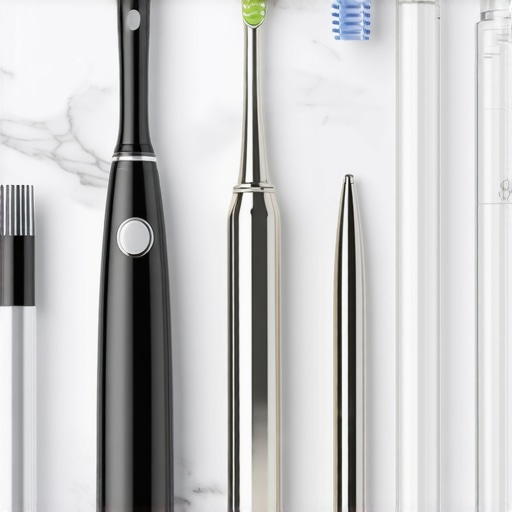
Predicting the High-Tech Future of Home Care
Looking ahead, I predict we are moving away from the guesswork of manual home care. We’re already seeing the real reason culpeper dentists are swapping traditional x-rays for 3d scans, and soon, smart toothbrushes will likely sync with your local clinic to flag early signs of why your gums are receding even though you brush every day. If you want to take your smile to the next level today, here is my advanced tip: stop using plain tap water in your water flosser. Instead, use a 50/50 mix of lukewarm water and an alcohol-free antiseptic mouthwash. It targets the bacteria hidden deep in the periodontal pockets in a way that standard flossing simply can’t touch.
Why I Finally Stopped Chasing the Neon Glow
After years of experimenting with every gel and strip on the market, I had a few ‘lightbulb moments’ that changed my approach to dental care forever. First, I realized that my bottom teeth weren’t ‘failing’ because they stayed slightly warmer in tone; they were simply thicker in dentin and thinner in enamel, which is a biological reality for almost everyone. Second, I learned the hard way that chasing a ‘refrigerator white’ look often results in permanent sensitivity that makes enjoying a simple ice cream cone impossible. Third, I discovered that consistency beats intensity every single time. It’s easy to mistake a structural issue for a stain, so make sure you know how to tell if a white spot on your tooth is a cavity or just a mark before you reach for the bleach. Finally, I accepted that my smile looks its best when it reflects light naturally, rather than looking like a matte-finish porcelain tile. If you find yourself over-cleaning, remember that you need to learn the best method for flossing under a permanent lingual retainer instead of just scrubbing harder.
The Only Tools Worth Your Counter Space
If you want to maintain your results without turning your bathroom into a laboratory, I recommend keeping your toolkit lean and effective. I personally vouch for a high-quality water flosser; it’s the only way to reach the areas where bottom-row stains love to hide. I also suggest keeping a dedicated ‘whitening journal’ or taking a photo in the same lighting once a month to track your progress objectively—this prevents ‘bleachorexia,’ where you lose sight of how far you’ve actually come. For those looking for professional-grade guidance at home, the ultimate guide to teeth whitening options in 2025 remains my top resource for vetting new products. For those with kids, building these habits early is the foundation of family dentistry building healthy smiles for every generation. I trust these tools because they focus on the long-term integrity of the enamel rather than just a quick, abrasive fix.
Your Smile is Your Living Signature
At the end of the day, your smile is one of the few things you wear every single day of your life. It shouldn’t be a source of stress or a ‘work in progress’ that never feels finished. By mastering the teeth whitening secrets for a sparkling smile in 2025 that we’ve discussed—like controlling saliva flow and using custom delivery systems—you can achieve a look that is both healthy and high-impact. Don’t be afraid to consult a professional if you hit a plateau; sometimes a quick office visit is all you need to recalibrate your home routine. If you are ready to take the next step toward a more confident version of yourself, feel free to contact us for personalized advice. Have you ever felt like your bottom teeth were just ‘stubborn’ compared to the top? Drop a comment below and let’s troubleshoot your routine together!