
The reason your smile looks uneven after orthodontic treatment
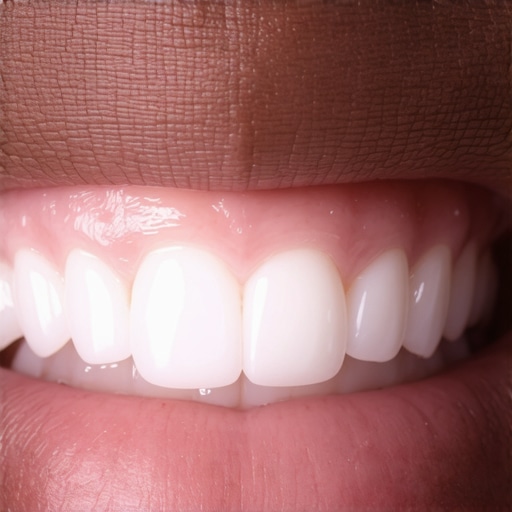
I remember the day clearly. I stood in front of my bathroom mirror, clutching the ‘Congratulations’ gift bag from my orthodontist. My teeth were straight—technically. The gaps were gone. But when I laughed, I didn’t see the Hollywood smile I’d paid thousands for. One side of my mouth looked noticeably higher than the other. I felt like a lopsided cartoon character. I’d spent two years meticulously cleaning plaque off a permanent retainer wire and wearing my rubber bands like a soldier, only to end up with a smile that felt completely unbalanced. I made a huge mistake early on: I thought moving the teeth into a straight line was the only thing that mattered. I didn’t realize that tooth length, gum height, and even the way my jaw muscles had adapted played just as big a role. If you’re looking in the mirror right now wondering why your front tooth looks shorter after wearing Invisalign, you aren’t losing your mind. You’re just seeing the parts of the puzzle that braces alone can’t always solve. Today, we’re going to look at why this happens and, more importantly, how we can fix it. Whether it’s uneven wear from years of grinding or gum tissue that didn’t get the memo about your new alignment, there’s a way to get that balance back.
Did Your Orthodontic Treatment Actually Fail You?
It’s the question that keeps you up at night. You start wondering if you need to start all over again or if your doctor missed something. Usually, the treatment didn’t ‘fail.’ Instead, the straightness of your teeth has simply highlighted aesthetic issues that were hidden by the previous crowding. According to the American Association of Orthodontists, skeletal discrepancies and gum morphology can significantly affect the visual symmetry of a smile even after the teeth are perfectly aligned. This means your teeth might be ‘level’ according to the bone, but your lips and gums are telling a different story.
Your Teeth Are Straight but the Canvas Is Crooked
One of the biggest reasons for that lopsided look is something called gingival margins. Basically, your gums. Sometimes, after moving teeth, one gum line sits lower than the others. You might even notice why your gums are receding more on one side due to the way the tooth was positioned before. Then there’s the issue of tooth shape. If you had a crooked smile for ten years, you likely wore down certain teeth more than others because they weren’t hitting correctly. Now that they are straight, those uneven edges are glaringly obvious. I didn’t account for this at all, and it’s why I ended up looking at veneers vs crowns to finally level out my edges. Have you ever finished a long dental treatment only to feel like something was still ‘off’ when you looked in the mirror? I want to know if you’ve felt that post-braces frustration too. We are about to dive into the specific ways your jaw, your gums, and your tooth shape contribute to this unevenness.
Fix the Frame Before You Blame the Teeth
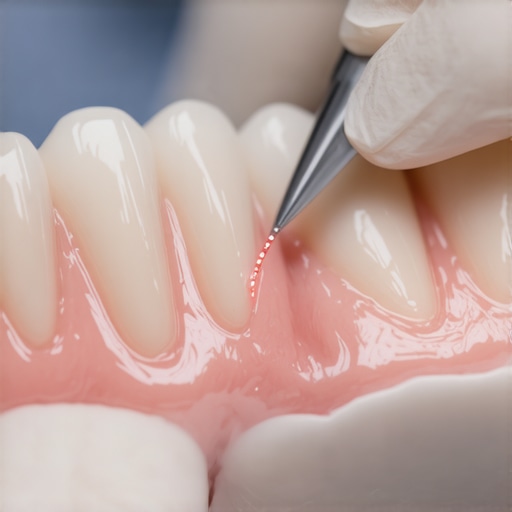
If you think of your teeth as a portrait, your gums are the frame. You can have a perfect painting, but if the frame is tilted, the whole thing looks like a mess. This was my first big realization. Often, the reason one side of your mouth looks higher is that your gum tissue didn’t move in perfect sync with your teeth during your Invisalign innovation journey. To fix this, dentists use a process called gingival contouring. They essentially use a laser to ‘trim’ the excess gum tissue on the low side, making the teeth appear longer and matching the other side perfectly. It sounds intense, but it’s actually a quick, bloodless procedure that makes a massive difference in how level your smile appears. If you ignore the gum-to-tooth ratio, you’ll always feel like your teeth are ‘climbing’ up one side of your face. 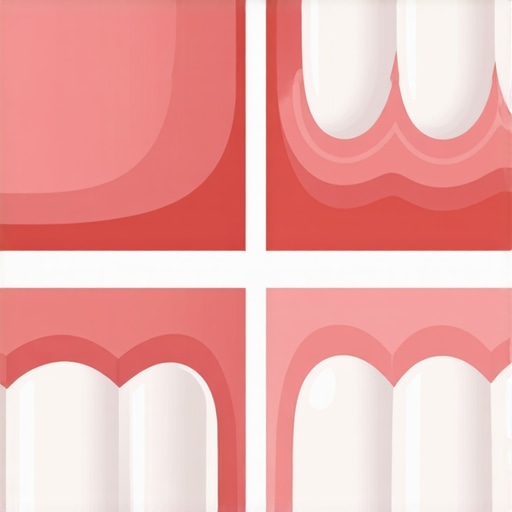
Sand Down the Jagged Edges from Years of Grinding
For years, while my teeth were crowded, I was subconsciously grinding them in a way that wore down the edges of my left incisors more than the right ones. When the orthodontist finally straightened them, those uneven edges became the stars of the show. Your dentist can perform ‘enameloplasty,’ which is just a fancy way of saying they gently sand down the high spots to create a straight horizontal line. If the wear is too significant, you might need to look at expert tips for veneers to add length back to the teeth that were shortened by years of friction. I remember trying to figure out how to fix a sharp edge on your tooth myself with a nail file—don’t do that. Let the professional use the proper burs to ensure the enamel stays healthy while they level out the aesthetics.
Balance the Colors to Create Visual Symmetry
Sometimes the ‘lopsided’ feeling isn’t about the shape at all; it’s about the light. If one tooth is slightly pushed back or tilted, it catches shadows differently, making it look darker and ‘further away’ than its neighbor. Once you’ve used invisalign secrets to get them into position, you might find that certain teeth are more stained than others because they were tucked away behind other teeth for years. Using teeth whitening secrets for a sparkling smile can help unify the color across the entire arch. When the shade is consistent, the eye isn’t drawn to specific ‘dark spots,’ which creates a much more balanced visual appearance.
Fine Tune Your Bite to Prevent Shifting
The final step in fixing an uneven look is ensuring the bite is actually functional. If your back teeth aren’t hitting evenly, your jaw will naturally shift to one side to find a comfortable resting place. This can make your chin look slightly off-center and your smile look slanted. I had to learn how to fix the small gap that opened up after my treatment because my bite was forcing one tooth forward. A quick occlusal adjustment—where the dentist grinds down tiny ‘high points’ on the biting surfaces of your molars—can settle your jaw into its natural, centered position, making the entire face look more symmetrical.
The biggest mistake I see patients make is assuming that the day the braces come off is the day the work is done. It’s a dangerous trap. We often think of orthodontic treatment as the final destination, but in reality, it’s just the architectural framing of the house. You’ve moved the walls, but the paint is peeling and the windows are still crooked. Most people assume that Invisalign innovation is purely about tooth position, but the secret to a high-end aesthetic result lies in the ‘biological width’ and the soft tissue architecture. Have you ever fallen into the trap of thinking straight teeth were the only goal? Let me know in the comments if you were surprised by the extra steps needed after your treatment. I want to dig deeper into the nuance that even some general dentists overlook: the ‘Golden Proportion’ and gum symmetry.
The Finishing Line Most People Ignore
Everyone tells you that straight teeth are the key to a great smile, but I’m going to challenge that. I’ve seen perfectly straight teeth that look completely ‘off’ because the gingival zeniths—the highest point of the gum line on each tooth—are at different heights. A study published in the Journal of Esthetic and Restorative Dentistry suggests that people perceive smile symmetry based more on the gum-to-lip relationship than the actual edges of the teeth. If your gums aren’t level, your smile will look slanted no matter how much you spent on clear aligners. This is where family dentistry becomes so important; a doctor who tracks your growth from childhood can often predict these issues before they become permanent aesthetic ‘fails.’ If you are noticing grey shadows, you might want to investigate why your gums look grey around your old porcelain crowns, as this often indicates that the gum tissue thickness wasn’t respected during the initial restorative phase.
Stop Chasing the Hollywood White Mirage
Here is the ‘oops’ factor most people encounter: they over-whiten. There is a common belief that the whiter the teeth, the better the smile looks. However, the most sophisticated smiles actually have a natural gradient. Your canines are naturally denser and yellower than your incisors. When you try to bleach everything to a uniform ‘bathroom tile’ white, you lose the depth and translucency that makes a smile look real. This is particularly problematic when people choose top teeth whitening strategies without professional supervision. They end up with a flat, monochromatic look that screams ‘fake.’ If you’re going the restorative route, you need to be extremely careful to learn how to tell if your veneers are too white for your complexion. A master aesthetician knows that the whites of your eyes should be the benchmark for your tooth shade—not a piece of printer paper.
Can Your Gum Line Actually Sabotage Your Braces Progress?
The hidden nuance that rarely gets discussed is how the underlying bone reacts to movement. Sometimes, as teeth shift into a straight line, the bone doesn’t remodel perfectly, leading to ‘black triangles’ between the teeth. This isn’t a failure of the braces; it’s a result of the tooth shape and the bone height. In these cases, simply straightening isn’t enough. You might need ‘IPR’ (Interproximal Reduction) to slightly change the shape of the teeth so they sit closer together. Many patients panic when they see a small gap opening up, but it’s often a necessary part of the process to create a more stable, balanced result. Remember, you must also stop brushing your veneers like they are real teeth if you have already had cosmetic work done, as abrasive pastes can wear down the very glaze that provides that natural light reflection. Balancing a smile is a multi-disciplinary game of millimeters, and the best results come from looking at the ‘frame’ just as much as the ‘portrait.’
Keeping your smile level is a lifelong commitment, not a one-and-done deal. I’ve learned the hard way that if you slack on the maintenance phase, your teeth will try to return to their ‘happy place’—which is usually crooked. To prevent this, I use a medical-grade ultrasonic cleaner every single night. It sounds like overkill, but it’s the only way to truly remove plaque buildup from your retainer without creating microscopic scratches where bacteria love to breed. If you use a coarse toothbrush on your retainers or veneers, you’re basically sanding away the polish. Instead, a 5-minute cycle in an ultrasonic bath keeps everything as smooth as the day it was fitted. Even if you think you know how to clean your aligner case without a dishwasher, nothing beats the precision of sonic waves for maintaining that clear look you expect from invisalign secrets.
My Secret Weapon for Retainer Hygiene
The biggest threat to a balanced smile isn’t usually a major trauma; it’s the slow, steady build-up of calculus on your maintenance tools. When your retainer gets ‘crusty,’ it stops fitting perfectly. Even a fraction of a millimeter of error can allow a tooth to rotate slightly. I also keep a stash of professional-grade cleaning tablets that are pH-neutral. Avoiding acidic cleaners is vital because, as noted by the Clinicians Report founded by Dr. Gordon Christensen, certain over-the-counter cleaners can actually degrade the resin in clear retainers and the bonding agents in veneers vs crowns over long-term exposure. 
How do I keep my teeth from shifting back after treatment?
The answer is simple but annoying: you never stop wearing your protection. Your teeth are suspended in a ligament that has ‘memory.’ To fight this, you need a high-quality night guard that serves a double purpose. Not only does it keep your alignment in check, but it also protects your investment from the wear and tear of nocturnal grinding. This is especially true if you have cosmetic work, as you need to how to prevent coffee stains on your new veneers while also ensuring they don’t chip. I recommend getting a dual-laminate guard—hard on the outside for durability and soft on the inside for comfort.
Future-Proof Your Smile with AI Monitoring
We are moving toward a world where you won’t need to guess if your teeth are shifting. I predict that within the next three years, AI-driven smartphone scanning will be standard for everyone who finishes orthodontic treatment. Systems like DentalMonitoring are already showing how Invisalign innovation is moving toward constant remote oversight. Instead of waiting for your next 6-month check-up to realize a gap has opened, an app will alert you and your dentist the moment a tooth moves out of its 3D-mapped ‘safe zone.’ This prevents the lopsided look from returning before it even becomes visible to the naked eye. This proactive approach is the ultimate evolution of family dentistry.
Don’t Let Your Gums Negate Your Results
One thing I’ve noticed as the years go by is that gum health is the true hero of a symmetrical face. If you don’t take care of the tissue, you’ll eventually see why your teeth look longer as you get older and how to stop it. Recession is the enemy of balance. If you have a permanent wire, you must master the best method for flossing under a permanent lingual retainer. Leaving that area alone leads to localized inflammation that can cause the bone to drop. My final tip for today: go buy an ultrasonic cleaner this week and commit to a 5-minute cleaning ritual. It is the single best way to ensure the work you did to level your smile actually stays level for decades.
Lessons from My Own Mirror Struggles
The journey to a perfect smile taught me that ‘straight’ is just the beginning. First, I realized that the way your teeth hit each other determines where they stay; if your bite is off, those expensive aligners were just a temporary fix. Second, I learned that gum symmetry is often more important than tooth length for that ‘balanced’ look. Third, I discovered that micro-wear on your enamel from years of crowding can be easily fixed with simple bonding, yet many people skip this step and remain unhappy. Finally, I stopped viewing my retainer as a chore and started seeing it as a stabilizer for my entire facial structure.
Tools I Use to Maintain This Investment
I don’t leave my smile to chance anymore. I rely on an ultrasonic cleaner to remove plaque buildup from your retainer because manual brushing just doesn’t cut it for long-term clarity. I also swear by pH-neutral cleaning tablets to learn how to stop your clear aligners from turning yellow over time, which keeps the plastic from becoming brittle. For those looking for that extra glow, exploring the ultimate guide to teeth whitening options in 2025 is the best way to find a solution that respects your enamel health. I also recommend checking the best time of day to whiten your teeth to minimize sensitivity while maximizing the brightening effect. #IMAGE_PLACEHOLDER_E#
Your Smile is a Work of Art in Progress
It’s easy to feel frustrated when the braces come off and things don’t look exactly like a magazine cover. But remember, a smile is a living part of you, not a static object. By focusing on the health of your gums and the precision of your bite through consistent family dentistry, you ensure that your results last a lifetime. Don’t be afraid to ask for that final 5% of aesthetic work—it’s often the part that makes you truly love what you see in the mirror. Did your orthodontist mention gum contouring or edge bonding when your treatment finished, or was it a ‘see you later’ moment? Let me know your experience in the comments below!