
Why your professional whitening didn’t work as well as last time
I stared into my bathroom mirror, tilting my head under the harsh vanity lights, trying to find that “wow” factor that just wasn’t there. This was my second professional whitening in eighteen months, and honestly? I felt cheated. The first time I did this, my teeth looked like they belonged in a high-budget toothpaste commercial. This time, they were brighter, sure, but the results felt muted. I had paid the same price, sat in the same chair, and followed the same post-op instructions. So why was I left wondering if I’d just thrown a few hundred dollars down the drain? [image] I know I’m not alone in this frustration. Today, I want to pull back the curtain on why that second or third trip to the dentist doesn’t always pack the same punch as the first. We’re going to fix your strategy so you stop wasting money on “okay” results.
The Frustrating Truth About Why Your Teeth Aren’t Getting Whiter
It’s a common trap to think that whitening is a linear journey where every session adds another layer of brightness. In reality, your teeth have a saturation point. I learned this the hard way during my early days of dental obsession. I once made the mistake of overloading my home trays with extra gel, thinking “more is better,” only to find that my teeth felt cold for weeks without getting a single shade lighter. I was literally bleaching a brick wall. Research in the Journal of the American Dental Association points out that much of the immediate brightness we see right after a session is actually due to tooth dehydration, which naturally fades as your teeth rehydrate over the next 24 hours. This means if your teeth were already fairly white, you won’t see that massive “jump” in shade you saw the first time. Have you ever walked out of the clinic feeling like your smile didn’t quite get the upgrade you expected? I’d love to hear your story in the comments.
Is it possible my enamel has reached its limit?
There is a physical limit to how much pigment can actually be removed from your teeth. Once those internal organic compounds are fully oxidized, further bleaching does nothing but cause unnecessary sensitivity. If you are already close to your natural “brightest” shade, the change will seem subtle compared to that first dramatic shift you experienced years ago. To get past this plateau, you need to be strategic about the best time of day to whiten your teeth and realize that maintenance is a completely different game than a total overhaul. You should also be incredibly mindful of the best foods to eat after a professional whitening to ensure you aren’t immediately undoing the work. You might even need to look at teeth whitening secrets for a sparkling smile to understand how things like the “acquired pellicle” layer on your teeth affect your final results. If your goal is a level of white that natural enamel just can’t reach, it might be time to transform your smile with veneers instead of chasing the impossible with bleach. We need to look at your lifestyle, your age, and your enamel health to see what’s really blocking your progress.If you’re stuck at a certain shade, you’ve likely reached the ‘saturation point.’ Think of your tooth enamel like a high-end sponge. Eventually, that sponge can’t hold another drop of water, no matter how much you pour on it. I remember prepping for my sister’s wedding years ago; I was so desperate for a Hollywood glow that I used whitening strips twice a day for a week. By day six, my teeth didn’t look whiter—they looked ‘chalky’ and translucent, and my gums were screaming. I had bypassed the ‘bright’ phase and went straight into damaging my enamel. I had to learn that the path forward isn’t more chemicals, but better preparation.
Stop Over-Bleaching and Focus on the Foundation
To break a plateau, you have to start with a surface that can actually reflect light. If your teeth are covered in a microscopic layer of biofilm, the whitening gel is fighting a war on the wrong front. You need a professional ‘reset’ before you even think about another round of bleach. This is why why your teeth feel gritty after a professional cleaning session—that grit is actually the feeling of a completely clean surface that is finally ready to absorb treatment properly. Once that plaque and tartar are gone, the peroxide can reach the actual pores of the enamel rather than just sitting on top of the junk. 
Swap the Scrubbing for Smarter Protection
Many people try to ‘scrub’ the yellow away with abrasive pastes, but this is a disaster for your long-term brightness. I’ve seen people destroy their luster by following TikTok hacks. You must understand the truth about the charcoal whitening trend and your enamel; those tiny particles might remove surface stains, but they also thin your enamel, which makes the yellow dentin underneath show through even more. Instead of scrubbing, focus on how you consume staining agents. I used to be a three-cup-a-day coffee drinker, and it ruined my results. Now, I’ve mastered the truth about using straws to prevent tooth stains. It sounds small, but bypassing the front teeth with your morning brew is the only way to stop the constant ‘re-staining’ cycle that makes it feel like your whitening isn’t working.
Manage the Zing Before You Go Brighter
If sensitivity is what’s stopping your progress, you aren’t stuck; you just need a better barrier. You can still see progress if you use the best way to whiten teeth with sensitive enamel, which usually involves a potassium nitrate pre-treatment. When I finally slowed down and started treating my sensitivity first, I found I could leave the gel on longer without pain, which actually led to a deeper, more permanent shade change. You also need to be wary of over-the-counter shortcuts that promise the world. I once tried a ‘natural’ remedy involving fruit acids, only to realize the truth about whitening your teeth with strawberries and sea salt—it was literally melting my teeth. The acid in the berries was softening my enamel while the salt acted like sandpaper. If you want a consistent result, stick to clinical-grade carbamide peroxide and couple it with how to keep your teeth white without giving up black tea. It’s about the long game, not the quick fix.
When Natural Enamel Simply Won’t Cooperate
Sometimes the plateau isn’t a lack of effort—it’s genetics. If your teeth have internal gray tones or antibiotic staining from childhood, bleach will never give you that ‘refrigerator white’ look. In these cases, you have to stop wasting money on peroxide and start looking at permanent options. It’s worth investigating veneers vs crowns which is right for your smile to see which provides the aesthetic you’re chasing. If you do go the cosmetic route, remember that maintenance is still key; you’ll need to know how to prevent coffee stains on your new veneers to keep that investment looking fresh. You might even find that simply knowing how to tell if your veneers are too white for your complexion helps you choose a more natural, sophisticated look that actually suits your face better than a neon glow.We’ve talked about the ceiling of chemical whitening, but there’s an even bigger trap: focusing so much on the paint that you forget about the foundation. I see it every week—people who have spent thousands on bleaching but haven’t addressed the structural shifts that make their smile look “tired.” Most people assume that if their teeth are straight and white, they are healthy. This is a massive misconception. You can have a “Hollywood” shade of white while your enamel is actually dangerously thin and your bite is causing micro-fractures in your molars. If you are looking for long-term success, you need to understand the invisalign innovation that focuses on the biomechanics of the jaw, not just the front six teeth. I’ve noticed a trend where patients focus solely on closing a gap without realizing that those small movements change how every other tooth meets its partner. If you aren’t careful, you might end up wondering why your front tooth looks shorter after wearing invisalign. It’s usually not that the tooth shrunk; it’s that the intrusion of the tooth into the bone was poorly managed during the shifting phase. 
The Secret Nuance of the Family Dental Gap
When it comes to the kids, the “Oops” factor is even more prevalent. Parents often panic when they see discoloration, but they don’t always realize that why your child has white spots on their new adult teeth often has more to do with high fevers during early childhood than it does with sugar or juice. It’s called enamel hypoplasia, and scrubbing it with whitening toothpaste will only make those spots more visible by thinning the surrounding enamel. You need to know what parents need to know in 2025 to avoid permanent damage to a child’s developing smile.
Why does my smile still look uneven even though my teeth are perfectly straight?
The nuance often lies in the “buccal corridor”—the dark space between the corners of your mouth and your teeth when you smile. Many practitioners focus only on the teeth themselves, but a truly expert result involves widening the arch to fill that space properly. Research published in the European Journal of Orthodontics emphasizes that arch-width discrepancies often dictate the long-term stability and aesthetic fullness of a smile far more than the simple alignment of individual teeth. If you ignore this, you’ll find yourself looking for invisalign secrets to fix a look that feels collapsed despite the teeth being technically straight. For those of you who have already moved on to restorative work, please stop brushing your veneers like they are real teeth. Abrasive charcoal or whitening pastes will create microscopic scratches in the porcelain, leading to a dull finish that can’t be polished back to its original luster. You also need a plan for the inevitable maintenance: do you know how to stop your bottom teeth from shifting after your retainer breaks? Because even the most expensive veneers can’t withstand the constant pressure of shifting lower teeth. Have you ever fallen into the trap of prioritizing color over the actual structure of your bite? Let me know in the comments—I’d love to hear your experiences with the perfect smile plateau.Maintaining a high-end smile isn’t about the hour you spend in the dentist’s chair once every six months; it is about the 4,380 hours in between. I’ve realized that the tools we use at home are the real gatekeepers of whether those veneers or that whitening session actually lasts. If you’re still using a manual brush and generic paste after spending thousands on your teeth, you’re basically washing a Ferrari with a kitchen sponge. I personally swear by the Philips Sonicare with a sensitive head because the pressure sensor is the only thing stopping me from scrubbing my gums into recession. Research in Clinical Oral Investigations highlights that sonic technology is significantly more effective at preserving the integrity of orthodontic adhesives and ceramic margins compared to manual brushing. If you’ve gone the restorative route, you need to follow the best routine for keeping your dental implants clean to avoid the silent creep of peri-implantitis. 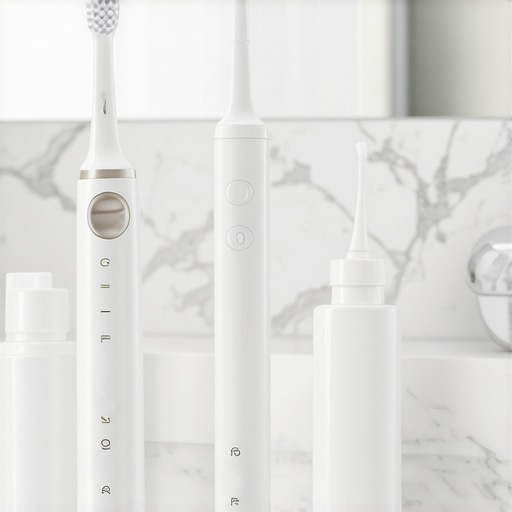
Why your tech stack matters more than your toothpaste
Beyond the brush, the real ‘secret weapon’ in my kit is an overlooked tool: the high-volume water flosser. It’s the only way to effectively flush out the bacteria hiding under the bridge or around Invisalign attachments without causing trauma. I also recommend a dedicated cleaner for any oral appliance. I learned the hard way that using regular toothpaste on a retainer scratches the plastic, making it a breeding ground for plaque. You have to learn how to properly clean a night guard to prevent bacterial buildup if you want to avoid chronic bad breath and enamel erosion from trapped acids. We are also seeing a massive shift in the industry toward precision diagnostics; the real reason culpeper dentists are swapping traditional x-rays for 3d-scans is because these scans can detect structural failures in veneers or crowns long before they become visible to the naked eye. Looking toward the future, I predict we’ll all be using AI-powered cameras on our phones to track our enamel density weekly, catching stains before they set.
How do I keep this whole investment from falling apart in five years?
Long-term success is a game of pH management. If your mouth stays acidic, your dental work will fail, period. I’ve started using pH-neutralizing oral mists after my morning coffee to protect my bondings. You also need a solid post-care strategy, specifically the secret to keeping your smile white after a professional treatment, which usually involves a 48-hour ‘white diet’ and a slow reintroduction of chromogens. My top tip? Switch to a professional-grade fluoride gel once a week before bed to remineralize the edges where your veneers meet your natural teeth. Try swapping your abrasive whitening toothpaste for a high-quality nano-hydroxyapatite paste for thirty days—you’ll be shocked at how much ‘glossier’ and less sensitive your teeth feel.
What Your Dentist Won’t Say About That Second Whitening
After years of experimenting on my own teeth, I’ve realized that the biggest secret is that whitening isn’t a destination—it’s a dynamic state of your enamel. You can’t just bleach your way to a Hollywood smile if your enamel is already thin; in fact, the more you try, the more the yellowish dentin underneath shows through. I wish I had known earlier that saturation is real. If you’ve reached it, your money is better spent on structural fixes or high-end maintenance than on another round of gel. Another lightbulb moment? The brightness you see isn’t just about color; it’s about reflectivity. A smooth, hydrated tooth surface reflects more light than a dehydrated, bleached-out one. If you’re feeling stuck, check out the ultimate guide to teeth whitening options in 2025 to see if you’re actually using the right method for your specific enamel type.
Tools That Keep My Enamel Looking Glassy
I’ve swapped my obsession with peroxide for an obsession with surface health. Here is what I actually use to keep my smile from fading: first, a high-quality sonic toothbrush to prevent the pellicle layer from staining. Second, I rely on pH-balanced mouth rinses to stop acid erosion in its tracks. If you are looking for a more permanent shift because you’ve hit the bleaching ceiling, you might want to see how veneers made simple can bypass the need for chemicals altogether. I also keep a stash of top teeth whitening strategies handy for those weeks when I’ve indulged in a little too much red wine. Remember, the goal is a smile that looks healthy, not one that glows in the dark.
Don’t Chase Neon When You Can Have Health
Your smile is the first thing people notice, but it should look like you, not a piece of porcelain. Whether you decide to push through a plateau with better home care or opt for a complete transformation, make sure you’re doing it for the right reasons. A healthy, functional bite is always more attractive than a bright but fragile one. Focus on the foundation, manage the staining, and your confidence will follow the results. Have you ever felt like your teeth just stopped getting whiter no matter what you tried? Let me know in the comments below!