
The best way to whiten teeth that have been stained by tetracycline
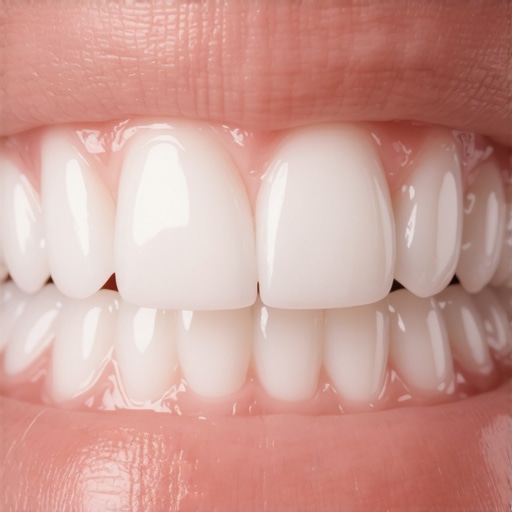
I remember looking at my wedding photos and all I could see was that stubborn, muddy-gray band across my front teeth. It felt like no matter how much I brushed, I was wearing a permanent shadow. For years, I believed I was just stuck with “tetracycline teeth”—a souvenir from a round of antibiotics I took as a toddler. I felt so self-conscious that I would cover my mouth when I laughed. If you have spent a fortune on those supermarket whitening kits only to see zero results, I know exactly how frustrating that is. Today, I want to show you that those gray tones are not a life sentence; we just have to stop treating them like a simple coffee stain.
Standard Whitening Strips Won’t Touch This
When I first started my journey to a brighter smile, I made a massive mistake: I assumed all stains were created equal. I spent months on high-strength peroxide strips, and my teeth got so sensitive I could not even drink lukewarm water, yet the gray remained. The hard truth is that tetracycline stains are intrinsic, meaning the discoloration is deep inside the dentin, not just on the enamel surface. Because of how these antibiotics bond with calcium, they create a permanent part of the tooth structure during development. According to the American Academy of Cosmetic Dentistry, these deep-set stains are among the hardest to treat because traditional bleaching often cannot reach the necessary depth to break down the pigment. Have you ever felt like you were throwing money down the drain on whitening products that work for everyone else but you?
Does any of this actually work on gray stains?
The short answer is yes, but the strategy is different. While a standard teeth whitening treatment might work for surface yellowing, tetracycline requires a more aggressive, prolonged approach or a complete surface reset. Sometimes, understanding why your teeth look gray instead of yellow is the first step toward choosing the right path. I eventually learned that to see real change, I had to look into options like deep bleaching or even comparing veneers vs crowns to physically cover the discoloration. We are going to break down the heavy hitters that actually work for our specific situation so you can stop hiding your smile.
Give Your Teeth a Marathon Soak with Deep Bleaching
When you deal with internal discoloration, think of your tooth like a frosted window. Standard surface stains are just dirt on the glass that you can wipe away, but tetracycline is like the glass itself being tinted gray. To fix this, you cannot just “wipe” the surface. You need what dentists call deep bleaching or refrigerated whitening. This isn’t a quick 30-minute session; it is a commitment that usually involves wearing custom-fitted trays every night for several weeks. I remember sitting in the chair for my third round of conventional treatment, feeling a bit defeated because my teeth still looked muddy. My dentist finally explained that we were trying to change the color of the “bricks” inside the tooth, not just the “paint” on the wall. Once we started a prolonged protocol using high-potency gels that stay active for hours, that stubborn gray shadow finally started to lift. This is often why your professional whitening didn’t work as well as last time if the protocol wasn’t adjusted for deep-set pigments. For many, the ultimate guide to teeth whitening options in 2025 highlights that deep bleaching is the only chemical way to penetrate the dentin effectively.
Physical Coverage Might Be Your Best Shortcut
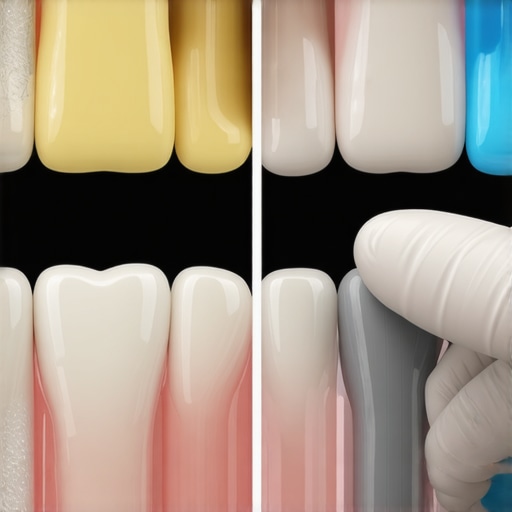
If the chemical route doesn’t give you the results you want, or if your teeth are too sensitive for months of bleach, you have to look at physical coverage. This is where you literally “mask” the gray with a new surface. I spent a lot of time researching veneers made simple because I wanted a permanent solution that didn’t involve constant touch-ups. Porcelain veneers are incredibly effective here because they are opaque enough to hide the gray banding underneath while still reflecting light like a natural tooth. However, you have to be careful with the preparation. If the gray is particularly dark, a very thin veneer might let some of that shadow peek through, making the final result look slightly dull or “dead.” This is why a skilled cosmetic dentist might suggest a slightly thicker porcelain or a specific blocking agent to ensure the base color doesn’t ruin the finish.
Avoid the Glow-in-the-Dark Look
A major pitfall when trying to cover up gray teeth is over-correcting. When I was choosing my shade, I was so desperate to get rid of the gray that I almost picked the whitest, brightest sample in the kit. My dentist stopped me, warning that choosing a shade that is too “refrigerator white” looks artificial against your skin tone. It is a common mistake to think that more white equals better, but you actually want depth and translucency. If you are going the veneer route, you must learn how to tell if your veneers are too white for your complexion before they are permanently bonded. I ended up choosing a shade that had a tiny bit of warmth, which actually made my smile look more vibrant and “real” than the blinding white options. This balance is crucial in family dentistry and cosmetic work alike: the goal is a healthy, natural glow, not a neon sign.
Check for Underlying Structural Issues First
Before you commit to a major aesthetic overhaul, make sure the gray isn’t masking something else. While tetracycline is the most common culprit for those bands, sometimes a tooth turns dark because of trauma or internal resorption. I once had a friend who thought she had a “gray stain” from childhood, only to find out the tooth was actually dying from an old sports injury. It is worth investigating the real reason your childs baby tooth is turning dark after a fall or checking your own adult teeth for similar signs of nerve damage before you start the bleaching process. If the nerve is compromised, no amount of external bleach will help until the internal issue is addressed.
Stop Chasing the Ultra-Thin Veneer Dream
In the world of cosmetic dentistry, everyone currently raves about ‘no-prep’ or ultra-thin veneers. The common belief is that the thinner the porcelain, the more natural the result. However, if you are dealing with deep tetracycline banding, this is a recipe for disaster. Thin veneers are translucent by design, meaning that muddy gray base color will shine right through, leaving you with a smile that looks murky rather than bright. I have seen so many people insist on ‘minimal prep’ only to be devastated when their expensive new teeth look dull. To truly mask intrinsic stains, you often need a specific thickness of porcelain or an opaquing layer to block the gray. This is a nuance often missed in expert tips for general patients; for us, the rules are different. Choosing veneers vs crowns depends entirely on how much of that underlying shadow we need to hide.
Don’t Treat Your Veneers Like Real Enamel
Once you finally achieve that bright smile, the biggest trap is falling back into old habits. Many people think that because porcelain is stain-resistant, they can use any toothpaste on the market. This is a massive mistake. Using highly abrasive ‘whitening’ pastes—especially those containing charcoal—is one of the fastest ways to ruin your investment. While the porcelain itself is tough, these abrasives can scratch the surface glaze, leading to a loss of luster over time. You must stop brushing your veneers like they are real teeth and switch to a non-abrasive gel. I learned this the hard way when I noticed my restorations were losing their ‘pop’ after just a few years. If you notice why your veneers feel like they are catching on your tongue, it might be due to microscopic scratches or a breakdown in the bonding agent from improper care.
Why does your bright smile still look ‘ashy’ in photos?
This is a sophisticated issue called metamerism. It happens when your teeth look white in the bathroom mirror but take on a gray or purple hue in sunlight or under office fluorescent lights. This occurs because the material used to mask the gray stains doesn’t reflect light the same way natural dentin does. According to a study published in the Journal of Esthetic and Restorative Dentistry, achieving a natural look with tetracycline-stained teeth requires a complex layering technique of opaque and translucent porcelains to mimic natural light reflection. If your dentist doesn’t account for this, you end up with ‘flat’ teeth. It is vital to learn how to stop your veneers from looking too white and fake by ensuring your dentist uses a multi-layered approach that creates depth.
The Aligners Won’t Fix the Color Trap
Another common nuance people miss is the relationship between tooth position and color perception. Many patients think that getting Invisalign innovation will somehow make their gray teeth look better just by straightening them. While alignment helps with light distribution, it can actually make gray stains more obvious because the shadows that once hid in the ‘crowding’ are now front and center. I often tell people that if they are planning a full overhaul, the sequence matters. You want to straighten first, then address the color, rather than trying to do both simultaneously with DIY kits. Have you ever fallen into the trap of buying ‘whitening’ toothpaste for a deep stain? Let me know in the comments.
Why a Waterpik is My Secret Weapon for Veneer Longevity
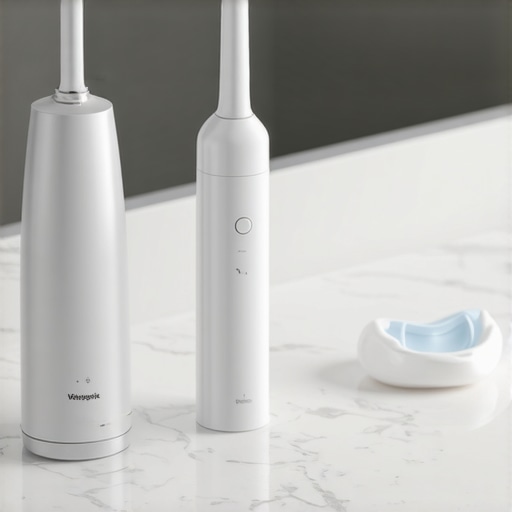
Once you have invested in a high-end smile, the maintenance game changes completely. I used to be a casual flosser, but now I swear by the Waterpik Aquarius Professional. I do not just use it because it feels clean; I use it because the pulse-modulation technology is one of the few ways to effectively clear debris from the delicate margins where your veneer meets your gum line. If you are curious about why your veneers feel like they are catching on your tongue, it is often because of tiny plaque buildup at these junctions that a standard brush simply cannot reach. According to a study in the Journal of Clinical Dentistry, water flossing is significantly more effective at reducing gingival inflammation around prosthetic crowns and veneers than string floss. I also make it a point to learn how to keep your teeth white without giving up black tea by using a straw and rinsing immediately after my morning cup.
The Shift Toward Digital Smile Design and AI
Looking ahead, I predict that the ‘guesswork’ of cosmetic dentistry is about to vanish. We are moving into an era of Digital Smile Design (DSD) where AI-driven software analyzes your facial symmetry to create the most ‘math-correct’ smile possible. This technology is already influencing Invisalign secrets for faster tracking and better outcomes. In fact, the real reason Culpeper dentists are swapping traditional x-rays for 3d scans is to provide this level of precision. In the next few years, I expect we will see bioactive veneers that actually release fluoride or minerals to the natural tooth structure underneath, effectively ending the worry of decay beneath a restoration.
How do I maintain my results over the next decade?
The most important tool in my kit isn’t a brush—it is a custom-milled occlusal guard. If you grind your teeth at night, you can shatter thousands of dollars of porcelain in a single week. I spent the extra money on a lab-created guard because the store-bought ones are too soft and can actually encourage more grinding. This is a vital part of ensuring family dental care stays affordable over the long term; preventing damage is always cheaper than repairing it. You also need to be aware of why your porcelain veneers look dull after five years of wear, which is usually due to using abrasive polishes at the hygienist’s office. Always insist on a non-abrasive polishing paste like Prisma Gloss during your cleanings.
Protect Your Investment While You Sleep
Scaling your dental health means thinking about the environment your teeth live in. I have started using a pH-balancing mouthrinse to keep my oral microbiome in check, which is just as important for kids as it is for adults following family dentistry tips. If your mouth is too acidic, even the strongest bonding agents can eventually weaken. My best advice? Buy a high-quality electric toothbrush with a pressure sensor. It stops you from ‘scrubbing’ and potentially causing the gum recession that leads to those ugly dark lines at the top of your teeth. Try switching to a nano-hydroxyapatite toothpaste tonight—it mimics your natural enamel and can help keep that ‘intrinsic’ brightness alive from the outside in.
Lessons I Learned the Hard Way While Fixing My Muddy-Gray Smile
My biggest lightbulb moment was realizing that patience is actually your most powerful tool. When you try to rush deep bleaching, you don’t just get sensitivity; you often get inconsistent results that fade within weeks because the pigment hasn’t been fully neutralized. I also had to accept that ‘natural’ is a spectrum—aiming for a color that matches the whites of my eyes made my smile look far more authentic than trying to achieve a neon-white glow. Finally, never underestimate the power of a second opinion. One professional told me my only option was invasive crowns, while another helped me achieve success with transform your smile with veneers expert tips that preserved more of my natural tooth structure.
The Essentials for a Long-Lasting Bright Smile
To keep my investment looking sharp, I rely on a few non-negotiable tools. First, a high-quality water flosser is essential for keeping those veneer margins clean where a brush might fail. Second, I’ve swapped my old harsh pastes for a non-abrasive gel to avoid the micro-scratches that cause why your porcelain veneers look dull after five years of wear. I also highly recommend the book The Dental Diet by Dr. Steven Lin; it completely changed how I view my oral health from the inside out, which is a key part of ensuring family dental care stays on track for my whole household. Finally, I never travel without my custom night guard—it is the only thing standing between me and a very expensive repair bill if I grind my teeth in my sleep.
#IMAGE_PLACEHOLDER_E#
Stop Hiding Your Laugh Behind Your Hands
Dealing with tetracycline stains is exhausting, but the technology available in the ultimate guide to teeth whitening options in 2025 means you don’t have to live with a shadow over your confidence anymore. Whether you choose a marathon bleaching session or a total surface transformation, taking that first step is the hardest part. You deserve a smile that reflects who you are, not a medication you took decades ago. Your journey to a brighter teeth whitening result starts with that first consultation. Have you ever spent money on a whitening kit only to see zero results on your gray stains? Let me know in the comments below!