How to manage the pain of a mouth ulcer from your braces
I remember my first week with braces vividly; I tried to bite into a piece of warm sourdough bread, and it felt like a tiny lightning bolt had struck the inside of my cheek. That first mouth ulcer wasn’t just a small annoyance; it was a crater of pure misery that made me regret every orthodontic decision I had ever made. We have all been there, standing in front of the bathroom mirror, wondering how such a small piece of metal can cause such an outsized amount of throbbing pain. Today, I am going to share exactly how I moved past that constant stinging so you can finally stop dreading every meal and get back to your life.
Win the Battle Against Bracket Friction
If you are currently dealing with a sore that feels like it is being poked by a needle every time you speak, you are not alone. I made a huge mistake early on by thinking I could just ‘tough it out’ or, even worse, trying to pick at my braces with household items to move a wire. Trust me, that only makes things worse. The real secret is finding the best way to soothe a sore mouth before the inflammation takes over your entire day. According to a study published in the American Journal of Orthodontics and Dentofacial Orthopedics, nearly 75% of patients experience some form of mucosal irritation during the first few months of treatment. It is a biological rite of passage, but it does not have to be a miserable one.
Is this stinging pain actually worth the hype?
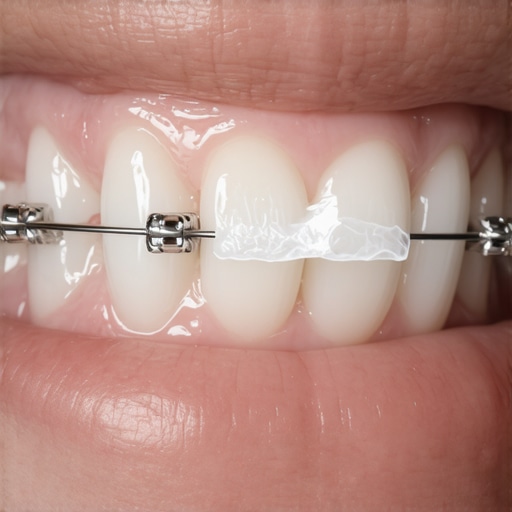
You might be questioning if the ‘perfect smile’ is worth this constant rubbing. I certainly did. However, once I learned the best way to stop my lips from sticking to my braces, the game changed. Using orthodontic wax properly—not just a tiny dot, but a smooth, flattened pancake over the bracket—is the difference between a restful night and waking up with a cheek stuck to your metal. If you have kids in treatment, you also have to be vigilant about keeping them from biting their cheeks out of habit when things feel weird. Have you ever had a bracket feel like a cheese grater against your lip for three days straight? It is the absolute worst. But don’t worry, we are going to dive into the tactical steps to numb the pain and speed up the healing of those pesky ulcers right now.
Stop Fighting Your Wax and Make it Stick
Most people fail at using wax because they try to apply it to a wet surface. Physics is not on your side there. To get that barrier to actually hold, you need to dry the offending bracket or wire with a cotton swab or the corner of a clean towel first. If you don’t, the saliva acts as a lubricant, and that expensive little ball of wax will be floating around your mouth within five minutes. I remember sitting in the back of a bumpy taxi, desperately trying to smash a piece of wax onto a wire that was digging into my gum. I didn’t dry it, and three seconds later, I accidentally swallowed the wax while trying to speak to the driver. It was a mess. Now, I always carry a few Q-tips in my pocket for this exact reason. Learning how to fix the sharp edge on a broken tooth with dental wax is a similar skill that every patient should master, whether they have a bracket or a chipped molar.
Why a Simple Saltwater Rinse is Your Best Friend
When you have an open sore, your mouth’s pH balance is your biggest enemy. Bacteria thrive in acidic environments, which keeps that ulcer ‘angry’ and red. Mixing half a teaspoon of salt into a cup of warm water isn’t just an old wives’ tale; it draws out the fluid from the inflamed tissue through osmosis. This reduces the swelling and creates an environment where the skin can actually knit itself back together. If your kids are struggling with similar issues, family dentistry tips creating a healthy smile for your kids often start with these basic, non-invasive home remedies. It’s significantly more effective than many store-bought rinses that contain alcohol, which can actually dry out the wound and make the stinging worse.
How to Protect Your Lips from Catching on Hardware
It’s not just the brackets that cause trouble; sometimes the wires or even the attachments on modern trays can be the culprit. If you are using clear aligners, you might find yourself wondering how to stop your aligners from catching on your inner lip because those edges can be surprisingly sharp. The solution is often a tiny bit of orthodontic silicone, which is more durable than wax. For those of us with traditional metal, the best way to soothe a sore mouth after an orthodontic adjustment is to apply these barriers immediately—don’t wait for the pain to start. I used to wait until I felt a ‘hot spot’ on my cheek, but by then, the damage was done. Proactive shielding is the only way to avoid the week-long healing cycle of a deep ulcer. Also, be mindful of your brushing habits during this time; why your gums feel sore after switching to a harder toothbrush is often linked to the extra sensitivity caused by the braces themselves. Use a soft-bristled brush to navigate around the hardware without aggravating the existing sores.If you think the struggle ends with perfecting the placement of your orthodontic wax, you are only halfway through the journey. Once the hardware comes off, many people rush into cosmetic enhancements like veneers or professional whitening without understanding the high-level nuances that can make or break a smile. One of the most common shocks for patients moving into restorative work is the transition period. For instance, you must understand why your temporary veneers feel way thicker than the real ones before you panic. These temporaries are designed to protect the tooth and maintain the gum line, not to provide the final aesthetic. I have seen so many patients nearly cancel their procedure because the ‘temps’ felt like clunky plastic blocks, not realizing the final porcelain will be a fraction of the thickness and significantly more natural.
Stop expecting your temporary veneers to look like the final result
The real danger is when patients demand their dentist ‘slim down’ the temporaries. If you do this, you risk the temporary breaking or the underlying tooth structure becoming hypersensitive. It is a biological waiting game. Furthermore, once the permanent ones are in, you might notice why your veneers feel like they are catching on your tongue in the first few days. This usually is not a manufacturing error but rather the way your tongue adapts to the new lingual contours of the porcelain. If you are aiming for a total transformation, you also need to know how to stop your veneers from looking too white and fake. Nature has a specific translucency; if you go for a ‘monochromatic’ white, you end up with what we call the ‘chiclet’ look, which is an instant giveaway.
Why do whitening strips always fail on your dental bonding?
This is a question I hear constantly from people who have had minor chips repaired. Most people assume that whitening gel is a universal eraser for stains, but here is the expert truth: whitening agents only work on natural enamel. If you have composite resin or porcelain, the gel will not change its color. This creates a massive ‘oops’ factor where your natural teeth get whiter, but your dental work stays the same shade, leaving you with a patchy, uneven smile. This is the mistake of using whitening strips on dental bonding that can lead to an expensive replacement of all your composite work. According to a study in the Journal of Dentistry, over-bleaching can also lead to a decrease in enamel micro-hardness, which actually makes the teeth look more translucent and ‘gray’ rather than bright. If you have ever wondered why your teeth look gray instead of yellow and how to fix it, you might actually be over-whitening and losing the opaque dentin layer that provides that healthy white glow.
The odor trap you didn’t see coming with clear aligners
Even if you choose a more modern path like Invisalign, there are sophisticated maintenance errors that even the most diligent patients make. You might find the hidden reason your clear aligners have a persistent odor is not just ‘bacteria,’ but the microscopic scratches you create when you brush them with abrasive toothpaste. These tiny grooves trap sulfur-producing bacteria that no soak can reach. To maintain a truly high-end result, you must balance aesthetics with material science. Whether it is understanding teeth whitening secrets for a sparkling smile in 2025 or managing the nuances of porcelain, the goal is always health over ‘perfection.’ Have you ever fallen into this trap where a cosmetic fix caused a new problem? Let me know in the comments.I spent years scrubbing my clear aligners with a soft toothbrush, only to realize I was making them look like a scratched-up CD. If you really want to keep them crystal clear, stop scrubbing and start using an ultrasonic bath. I bought a small, high-frequency ultrasonic cleaner that uses 42,000Hz sound waves to vibrate the plaque off. It is the same tech jewelers use. This is literally the best way to clean your night guard so it doesn’t smell and it works wonders for Invisalign too. I personally use a compact dental pod because it fits in my travel bag and does not require harsh chemicals—just water and a single cleaning tablet. If you are investing thousands into veneers made simple or long-term orthodontic work, a cleaning pod is the cheapest insurance policy you will ever buy.
How do I keep my smile looking fresh years after treatment?
The answer is consistency and protection. Many people think once the braces are off or the veneers are bonded, the job is finished. However, the International Journal of Prosthodontics highlights that the survival rate of porcelain work drops significantly without a night guard, particularly for patients with subconscious bruxism. I never go to bed without mine. If you are prone to clenching, learning how to keep your veneers from chipping if you grind your teeth is essential to protecting that porcelain. Furthermore, you must respect the retention phase. Teeth have a ‘memory’ and will try to migrate back to their original crowded positions if you do not wear your retainer. I’ve seen friends lose years of progress because they got lazy after month six; you have to know how to stop your teeth from shifting after your braces come off by sticking to your nightly retainer schedule indefinitely.
Expect more AI in your bathroom mirror by 2030
Looking ahead, I predict we are moving toward a world where your toothbrush handles the diagnostics. We are already seeing the beginning of this with apps that scan your mouth for enamel wear. In the future, I believe teeth whitening secrets for a sparkling smile in 2025 will involve bio-active minerals that don’t just bleach the tooth but actually rebuild the hydroxyapatite layer while you sleep. We are moving away from ‘fixing’ and toward ‘constant regeneration.’ For those of us who love our caffeine, the future looks bright as well—new sealants are being developed that prevent tannins from bonding to porcelain or enamel. Until then, you need to master how to keep your coffee habit without ruining your new veneers by using a reusable straw and rinsing with water immediately after your morning cup. I challenge you to try the ultrasonic cleaning method for one week. It will transform the way your mouth feels and smells every morning.
The Hard Truths I Discovered After My First Brace Adjustment
Reflecting on my own journey, the biggest ‘lightbulb moment’ was realizing that comfort is something you have to actively manage, not just wait for. I used to think the soreness was a sign of progress, but I eventually learned that inflammation actually slows down the healing of your oral tissues. Another realization was that the ‘ugly duckling’ phase of orthodontics is a necessary bridge to something better. Whether you are dealing with a wire poke or wondering why your temporary veneers feel way thicker than the real ones, remember that these are transient steps toward a permanent upgrade. Lastly, I learned that transparency with your provider is key—if a bracket is sharp, don’t wait for your next appointment; speak up immediately to prevent a full-blown ulcer before it ruins your week.
The Kit Every Braces and Veneer Patient Needs
To keep your mouth from feeling like a constant battleground, I recommend a few specific tools that I have come to trust over the years. First, skip the generic drug store wax and look for medical-grade orthodontic silicone; it stays put much longer and won’t dissolve if you enjoy a hot drink. Second, for those of us moving into cosmetic work, a high-quality soft-bristle electric toothbrush is non-negotiable to prevent receding gums despite brushing twice a day. Finally, I highly advocate for reading up on family dentistry building healthy smiles for every generation to understand how your current treatment fits into your long-term oral health. Once the alignment is finished, many people find that exploring teeth whitening options in 2025 provides the final polish to their new look. Having these resources at hand turns a stressful process into a manageable routine.
#IMAGE_PLACEHOLDER_E#
Your New Smile Is Only a Few Decisions Away
Taking the leap into orthodontic or cosmetic dental work can feel overwhelming, especially when you are dealing with the day-to-day irritation of hardware. But as someone who has come out on the other side, I can tell you that the confidence boost of a healthy, aligned smile is worth every saltwater rinse and every careful application of wax. Don’t be afraid to ask for expert tips to transform your smile with veneers or to explore invisalign secrets for a perfect smile if you want a more discreet path than traditional metal. Your comfort and your results are within your control—you just have to stay consistent and proactive. Have you ever struggled with getting your orthodontic wax to actually stay in place when you have a sore spot? Let me know below.