
The best way to store your dentures overnight without them drying out
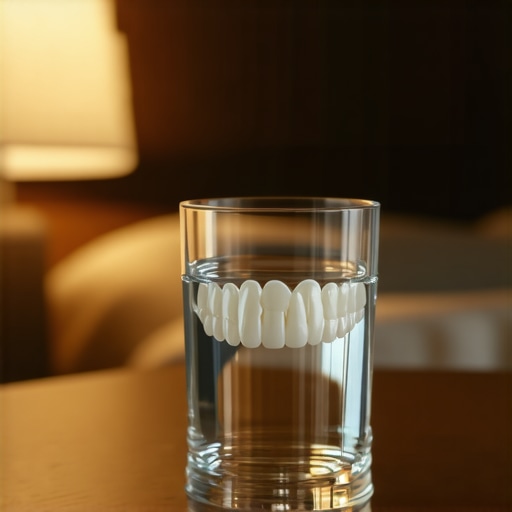
I woke up at 3 AM with a sudden, sinking feeling in my stomach. It wasn’t the late-night snack; it was the realization that my expensive dentures were sitting on the nightstand, bone-dry and vulnerable. I’d made the classic mistake of thinking they needed to “air out” to stay clean. When I finally picked them up, they felt brittle, almost like they might snap if I gripped them too hard. That morning was a wake-up call. If you’ve ever worried about your smile losing its shape or becoming uncomfortable overnight, you aren’t alone. It’s a visceral fear—that one morning you’ll go to put them in and they simply won’t belong in your mouth anymore.
Why your dentures need a constant soak
[IMAGE_PLACEHOLDER] Maintaining that perfect fit isn’t just about the initial fitting at your local office; it’s about what you do when the sun goes down. Most people assume that because they aren’t in your mouth, they don’t need moisture. But the acrylic and metal components are designed to live in a wet environment. When they dry out, they warp. I learned the hard way that even a slight change in shape makes them feel like a foreign object in your mouth the next day. It’s a similar lesson to what I tell friends who ask how to keep your coffee habit without ruining your new veneers: protection is a 24/7 job. You can’t just flip a switch and stop caring for your teeth once you head to bed. In my early days, I used to think a quick rinse was enough. I treated them more like a pair of glasses than a biological replacement. I actually once left them in a dry drawer for a whole weekend while I was sick, and let me tell you, the clicking sound they made afterward was enough to make me want to hide under the covers. If you’ve spent any time looking into family dentistry building healthy smiles for every generation, you know that consistency is everything. Whether it’s teaching kids to brush or keeping your own prosthetic gear in top shape, the habits you form today prevent the expensive headaches of tomorrow. We often focus so much on the cosmetic side, but the mechanics of how these devices interact with your gums is where the real comfort lies.
Is it really that bad to leave them out for one night?
You might be thinking, “Surely one night won’t hurt, right?” Well, the truth is that microscopic changes happen faster than you’d think. According to the American College of Prosthodontists, dentures that are allowed to dry out can lose their dimensional stability, leading to sore spots and a loose fit that no amount of adhesive can fix. It’s like trying to wear a pair of leather shoes that have sat in the sun for a month; they lose their flex. Have you ever skipped the soak and regretted it the next morning? I’ve seen people try to fix this by using extra adhesive, but that’s just a band-aid on a bigger problem. I remember talking to my neighbor, Martha, who’s had her set for twenty years. She told me the biggest mistake people make isn’t the cleaning—it’s the “rest” period. She treats her overnight soak like a spa treatment for her teeth. If you start thinking about it as essential maintenance rather than a chore, you’ll find your morning routine goes much smoother. No more struggling to get them seated or dealing with that raw, irritated feeling on your gums by noon. Today, I’m going to walk you through exactly how to set up your nighttime routine so you never have to worry about brittle or warped dentures again. We’ll cover the best solutions, the temperature traps to avoid (hot water is the enemy!), and a few neighborly tips I’ve picked up over the years. This isn’t just about hygiene—though that’s huge—it’s about protecting your investment and your comfort. If you’ve struggled with other gear, like learning the best way to clean your night guard so it doesnt smell, you’ll find these habits feel very natural once you get the hang of them. Let’s make sure your smile stays as fresh and functional as the day you first got it.
Stop using regular toothpaste on your acrylic
First things first: put down the whitening toothpaste. I know the temptation is there to get them as bright as possible—everyone wants that look, similar to the results people seek when researching the ultimate guide to teeth whitening options in 2025—but your dentures aren’t made of enamel. They are porous acrylic. Using regular toothpaste on them is like using a scouring pad on a fine silk dress. It creates microscopic scratches that act as tiny havens for bacteria and plaque. I learned this the hard way when I noticed a weird, lingering smell I couldn’t brush away. It turns out I had basically sanded my dentures into a porous mess. Instead, use a specialized non-abrasive cleaner or even a mild dish soap. Use a brush specifically designed for dentures, which has bristles contoured to reach the nooks and crannies of the plate. If you’ve ever had to figure out how to clean the stubborn gunk out of your night guard, you already know that a gentle touch is more effective than brute force. 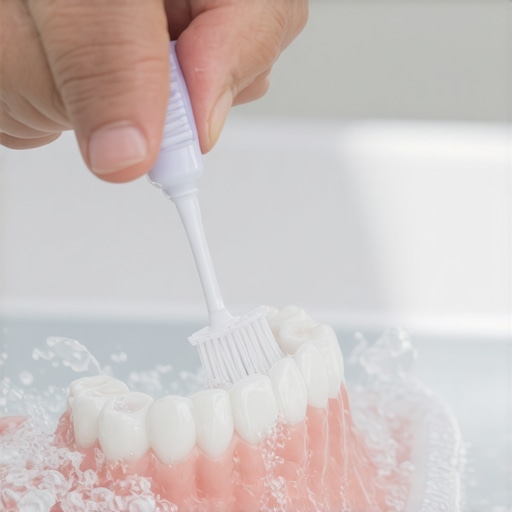
Why lukewarm water is the magic temperature for a soak
There is a persistent myth that boiling water is the best way to ‘sanitize’ dental appliances. Please, for the sake of your wallet, don’t do this. I once thought I was being extra hygienic by using a kettle-full of steaming water to soak my plate. The result? A warped piece of plastic that fit my mouth about as well as a square peg in a round hole. The heat causes the acrylic to expand and lose its custom-molded shape. You want lukewarm water—think of it like the temperature of a baby’s bath. This is the same principle I followed when I noticed why your clear aligners have started to look cloudy; excessive heat or harsh chemicals can permanently alter the transparency and structure of the material. Drop in your cleaning tablet and let the effervescence do the heavy lifting. This chemical reaction breaks down the biofilm that your brush might have missed.
The chemical rinse you can’t afford to skip
Once you wake up, your dentures have been sitting in a cocktail of cleaning agents for eight hours. You wouldn’t drink a glass of cleaning solution, so don’t put those dentures straight into your mouth. I once rushed out the door and popped my set in after only a three-second rinse. By lunchtime, my gums felt like they were on fire from the residual chemicals. Take a full minute to rinse them under a steady stream of cool water. This step is also the perfect time to inspect the ‘fit’ surface for any signs of wear or buildup. If you notice your gear is starting to look dull, it’s often a sign that the soak wasn’t thorough enough, much like why your aligner trays are starting to turn yellow no matter how much you soak them. Consistency in rinsing prevents that yellowing and keeps the material from absorbing odors. Finally, give your gums and tongue a gentle brush with a soft-bristled toothbrush. This stimulates blood flow and clears away the natural bacteria that accumulated while you slept without your teeth in.But cleaning the surfaces is only half the battle; the real nuance lies in understanding that your ‘new’ teeth do not behave like your old ones. Most people assume that once they invest in high-end cosmetic work, the hard part is over. They think materials like porcelain or acrylic are bulletproof compared to enamel. In my experience, this mindset is exactly how people end up back in the chair sooner than they planned.
Stop treating your veneers like natural enamel
Everyone tells you to brush twice a day, but the ‘how’ matters more than the ‘how often.’ Many patients believe they can use the same aggressive whitening strips or abrasive charcoal pastes on their prosthetics that they used on their natural teeth. This is a major mistake. If you have ever wondered about the mistake of using whitening strips on dental bonding, you will know that chemicals designed for organic enamel can actually cause synthetic resins to become brittle or even change color in ways that cannot be reversed. 
Why does one tooth look longer than the others suddenly?
This is an advanced concern that often points to a shift in how your mouth is supporting your dental work. While some might dismiss it as a visual quirk of aging, the truth about why one tooth looks longer than the others suddenly often involves subtle gum recession or the way your bite forces are distributed. A study published in the Journal of Prosthodontics notes that the surface roughness of dental resins can increase significantly if you use the wrong mechanical cleaning tools, which then leads to more plaque buildup and potential gum irritation. This irritation is what causes the tissue to pull away, exposing more of the prosthetic.
The ‘whitening’ trap that creates permanent stains
There is a persistent myth that if your porcelain looks a bit stained, a quick trip to the store for a whitening kit will fix it. In reality, why your porcelain veneers look dull after five years of wear usually comes down to the loss of the factory glaze. Once that glaze is gone—often due to using those very same whitening toothpastes—the surface becomes porous. No amount of at-home bleaching will brighten it; in fact, it often makes the staining worse by etching the material further. If you are also managing more complex hardware, you need to be even more vigilant. Learning how to tell if your dental implant is actually failing involves looking for these same subtle changes in the gum line and texture. If your gear starts to feel different, such as why your veneers feel like they are catching on your tongue, it is a sign that micro-fractures are forming. You also need to protect the physical structure from mechanical stress; knowing how to keep your veneers from chipping if you grind your teeth is essential for anyone who wants their investment to last a decade instead of a few years. Consistency in using a night guard or a specialized soak is the only way to avoid these hidden traps. Have you ever fallen into this trap? Let me know in the comments.The ultrasonic cleaner changed my morning routine forever. When I first heard about ultrasonic cleaners, I thought it was just another gadget I’d eventually shove in the back of my cabinet. I was wrong. For anyone with dentures, night guards, or retainers, this thing is a lifesaver. It uses high-frequency sound waves to create cavitation bubbles that literally blast away plaque and biofilm from areas your brush can’t reach. I personally use a compact iSonic model every morning for five minutes with a single drop of mild dish soap. If you’ve been struggling with the best way to clean your night guard so it doesnt smell, this is the secret weapon. It prevents that grainy feeling that often leads people to wonder the reason your porcelain veneers feel gritty to your tongue. 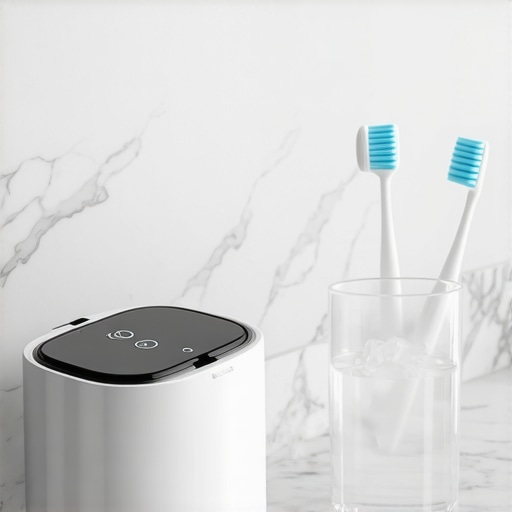
How do I keep my dental work looking brand new for years?
Longevity isn’t about one big deep clean; it’s about the small, daily protections. For my friends with aligners, the biggest threat isn’t just physical wear, but the discoloration that happens when you don’t rinse immediately after eating or drinking. I’ve seen people lose heart when they notice why your clear aligners have started to look cloudy. According to research published in the International Journal of Periodontics & Restorative Dentistry, the cumulative effect of low-pH beverages on dental resins can lead to significant surface degradation and increased staining over a five-year period. This is why I always carry a travel kit with a soft pick and a small bottle of water. If you are trying to transform your smile with veneers, you have to treat them like the high-end investment they are. I also recommend checking how to keep your veneers from chipping if you grind your teeth because a nighttime grinding habit can undo thousands of dollars worth of work in a single month. This level of consistency isn’t just for personal cosmetic work; it’s a pillar of family dentistry building healthy smiles for every generation, ensuring that even the kids learn the value of protecting their gear.
Smart sensors are the future of home maintenance
Looking ahead, I predict we’re going to see a massive shift toward ‘smart’ dental appliances. We are already seeing Invisalign innovation and invisible braces changing smiles in 2025, but the next step is likely built-in sensors that alert your phone when your appliance needs a deep soak or when your bite pressure is uneven. This kind of tech will take the guesswork out of how to tell if your dental implant is actually failing by monitoring bone density and stability in real-time. Until then, my best advice is to stay ahead of the yellowing. If you’ve ever felt frustrated by why your professional whitening didn’t work as well as last time, it’s usually because the maintenance routine between appointments slipped. Try this today: Buy a dedicated ultrasonic cleaner for your bathroom counter. It’s the single most effective tool I’ve found to keep my smile feeling fresh and my gear lasting longer. Trust me, your gums will thank you.
Three Things Your Dentist Might Forget to Mention
First, your confidence doesn’t just come from the physical look of the teeth; it comes from the peace of mind that they are secure and healthy. I’ve found that the psychological transition to wearing dentures or veneers is just as significant as the physical one. Second, your jaw bone and gums actually change density over time, which is why professional check-ups are non-negotiable. You shouldn’t ignore the real cost of skipping your six month cleaning because those visits catch structural shifts before they become painful. Lastly, even if you are meticulous, life happens—don’t beat yourself up if you miss a single soak, just get back on track the very next night to prevent long-term warping.
Tools That Make a Noticeable Difference
If you want to keep your gear in top shape for a decade rather than a few years, I highly recommend investing in a high-quality travel container with a locking lid. It’s far too easy to wrap appliances in a tissue at a restaurant and accidentally toss them. Knowing the best way to store your clear aligners when you arent wearing them is a principle that applies to almost all dental hardware: if it’s not in your mouth, it should be in a case or a soak. I also trust specialized pH-balanced cleaning tablets over DIY vinegar soaks, as they are gentler on the delicate acrylic resins. For parents helping their kids navigate new appliances, staying updated on ensuring family dental care what parents need to know in 2025 is the best way to ensure the next generation builds these protective habits early.
Your Smile Deserves the Extra Five Minutes
It might feel like a chore at 11 PM when you are exhausted, but those few minutes spent cleaning and soaking are what stand between you and an uncomfortable, expensive morning. Your smile is your signature. Whether you are maintaining a full set of dentures or looking to transform your smile with veneers expert tips, the consistency you provide now pays off in years of pain-free confidence. You’ve already done the hard work of investing in your dental health—now you just have to keep it shining. Have you ever forgotten to soak your dentures overnight? Let me know about your experience in the comments below!