
Why your jaw pops when you open your mouth wide to eat a sandwich

There I was, sitting at my favorite little sandwich shop downtown, staring down a triple-decker club sandwich that looked like a work of art. I didn’t think twice. I opened my mouth as wide as I could, ready for that first perfect bite, and then it happened: POP. It wasn’t just a quiet little click; it was a bone-jarring sound that felt like a firecracker went off in my ear. I froze, sandwich halfway to my face, wondering if my jaw was going to get stuck forever right then and there. If you’ve ever felt that sharp, clicking sensation or the fear that your jaw might actually lock, you know exactly how unsettling it is. It turns out, why your jaw clicks every time you chew gum or take a big bite isn’t just a quirk; it is a specific signal your Temporomandibular Joint (TMJ) is sending you. Today, I want to walk you through exactly why this happens and how we can get you back to eating without the sound effects.
The Scary Truth About That Sudden Jaw Noise
For a long time, I made a massive mistake: I thought if I just kept popping it manually, like cracking my knuckles, the tension would eventually go away. I would sit on my couch, shifting my jaw side-to-side until I heard that satisfying click. I was so wrong. All I was doing was irritating the delicate disc of cartilage that acts as a cushion in the joint. According to the National Institute of Dental and Craniofacial Research, TMJ disorders affect over 10 million Americans, and many of us are unknowingly making it worse by trying to self-adjust. Sometimes, the tension isn’t just about how you eat; for instance, some people notice why your jaw feels tight every time you start a new aligner tray, which shows just how sensitive these joints are to even minor shifts in your bite. Have you ever had your jaw actually lock up on you mid-meal, or are you just dealing with the annoying sound for now?
Is this clicking sound actually a sign of something serious?
I get this question all the time because we all hope it will just go away on its own. You might be worried that this means surgery is in your future or that you will never be able to eat a crisp apple again. The good news is that most of the time, it is a manageable issue involving the way your muscles and joints work together. Whether it is related to stress, teeth grinding, or even a need for family dentistry experts to look at your overall alignment, there are real solutions. If you are tired of the pop being the loudest part of your lunch, you can always reach out to a professional to see what is really going on under the surface. Let us dive into what is actually happening inside that joint when you reach for that sandwich.
Give Your Jaw a Six-Week Vacation
Think of your jaw joint like the suspension system on an old pickup truck. If you keep driving it over deep potholes without slowing down, the shocks are eventually going to fail completely. When your jaw is clicking, it is basically screaming that it needs a break from the heavy lifting. I learned this the hard way a few years ago when I tried to power through a celebratory steak dinner despite a week of clicking. By the time the check came, I could barely open my mouth wide enough to say ‘thank you’ to the server. Now, I advocate for the ‘six-week soft diet’ rule. This means swapping the crusty baguettes and chewy jerky for things like scrambled eggs, smoothies, and mashed potatoes. By reducing the mechanical load, you allow the inflammation in the joint space to subside. During this time, you should also be mindful of how you are managing any current dental hardware, as knowing the best way to soothe a sore mouth after an orthodontic adjustment can help prevent you from clenching your jaw in response to temporary discomfort.

Master the Lips Together, Teeth Apart Mantra
Most people don’t realize that their teeth should almost never be touching throughout the day unless they are actively chewing. If you are reading this right now and your upper and lower teeth are resting against each other, you are effectively doing a low-grade bicep curl with your face muscles all day long. This constant engagement keeps the disc in your jaw joint from sliding back into its proper home. The mantra is simple: lips together, teeth apart. Your jaw should feel heavy, like it is hanging loosely. I used to put little red sticker dots on my computer monitor and my car’s dashboard. Every time I saw a dot, I checked my jaw. Usually, I found I was clenching so hard my molars were practically fused. Relaxing those muscles is the first step toward stopping that bone-on-bone clicking sound. If you are already dealing with alignment issues, you might even notice the reason your bottom retainer keeps clicking out of place is often linked to these subtle, forceful muscle habits.
Stop the Nighttime Battle Against Your Own Jaw
The real damage often happens while you are fast asleep. Bruxism, or nighttime teeth grinding, puts an immense amount of pressure on the Temporomandibular Joint, often causing that signature morning clicking or stiffness. If you wake up with a dull headache or feel like you’ve been chewing gum in your sleep, you are likely a grinder. This isn’t just bad for your joints; it can be disastrous for any restorative work you’ve had done. For instance, learning how to keep your veneers from chipping if you grind your teeth usually starts with a custom-fitted night guard. This small piece of acrylic acts like a helmet for your teeth, absorbing the force and preventing the joint from being crushed under the weight of your own bite. It is much easier to wear a guard for eight hours than it is to deal with a locked jaw for eight days. Often, these issues can be spotted early during routine visits with family dentistry experts who can see the wear patterns on your teeth before you even feel the first pop.
Heat and Massage to Reset the System
When the muscles around your jaw get tight, they pull the joint out of alignment, which causes that ‘pop’ as the disc tries to snap back into place. You can manually reset this by applying moist heat to the sides of your face for about 15 minutes. This increases blood flow and tells the muscles to stop guarding the joint. I like to follow this with a very gentle massage of the masseter muscle—that’s the big one that bulges at the corner of your jaw when you bite down. Don’t press hard; just use circular motions with two fingers. If you’ve noticed why your jaw feels tight every time you start a new aligner tray, these heat and massage techniques are absolute lifesavers for easing that transition and keeping your jaw movement fluid and silent.
While we are talking about giving your jaw a much-needed break, I want to challenge a common belief that often keeps people stuck in a cycle of clicking and discomfort. Most people view aesthetic treatments like veneers or clear aligners as purely vanity-driven projects. In my professional experience, treating these as ‘just for looks’ is a fundamental misunderstanding of dental mechanics. We often see patients who have struggled with chronic jaw clicking for years find significant relief through a combined approach. For instance, when looking at transform-your-smile-with-veneers-expert-tips, the conversation should be as much about function as it is about fashion. If your molars are worn down from years of grinding, your jaw has to over-close every time you bite, putting immense pressure on the joint. By restoring that lost tooth height, you are not just getting a ‘Hollywood smile’; you are literally recalibrating the structural support of your entire face.
Stop treating cosmetic work like a luxury
The contrarian truth is that the ‘perfect’ alignment of your teeth is the primary defense mechanism for your TMJ. When your bite is off, your muscles have to work overtime to compensate, leading to that bone-jarring pop you heard during lunch. This is why comparing veneers vs. crowns is actually a diagnostic decision. According to a study published in the Journal of Oral Rehabilitation, even a minor discrepancy in occlusal stability—how your teeth meet—can significantly increase the electromyographic activity in the masseter muscles. By choosing the right restoration, you are essentially ‘deprogramming’ the muscle tension that causes the clicking. It is not just about the sparkle; it is about creating a stable platform for your jaw to rest upon.
The whitening trap that ruins your dental bonding
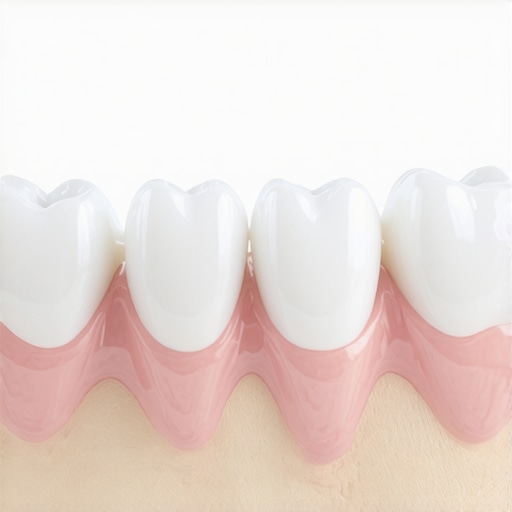
Here is a specific ‘oops’ factor I see all the time: the DIY whitening obsession. Many patients attempt to fix ‘dull’ or ‘yellow’ teeth with aggressive over-the-counter kits, not realizing they are falling into the mistake of using whitening strips on dental bonding. Resin and porcelain do not respond to peroxide. All you end up doing is creating a mismatched smile and irritating your gums, which often leads to protective clenching—the exact opposite of what your clicking jaw needs. If you are hunting for teeth whitening secrets for a sparkling smile in 2025, professional oversight is the only way to ensure you aren’t masking a serious structural issue with a temporary chemical fix.
Does a perfectly straight smile guarantee the clicking will stop?
This is the sophisticated question I get from patients who have successfully navigated Invisalign secrets for achieving a perfect smile discreetly. The answer is a nuanced ‘not necessarily.’ While straight teeth make it much easier for the jaw to find its proper ‘home,’ your muscles have a long memory. If you have spent a decade clenching, your nervous system is still wired for that stress response. This is why family dentistry experts take a holistic view. Sometimes, the reason your smile looks uneven after orthodontic treatment isn’t about the position of the teeth at all, but rather how your asymmetrical jaw muscles are pulling on the joint. Have you ever fallen into the trap of thinking a dental issue was ‘only cosmetic’ and ended up with more pain? Let me know in the comments below.
The six-week soft diet was just the beginning of my journey toward a silent jaw. To keep that clicking from returning and to ensure my dental work doesn’t fail prematurely, I’ve had to become obsessive about the specific tools I use. Most people think a standard toothbrush is enough, but if you have restorative work, you are playing a different game.
Stop Brushing Like You’re Scrubbing a Deck
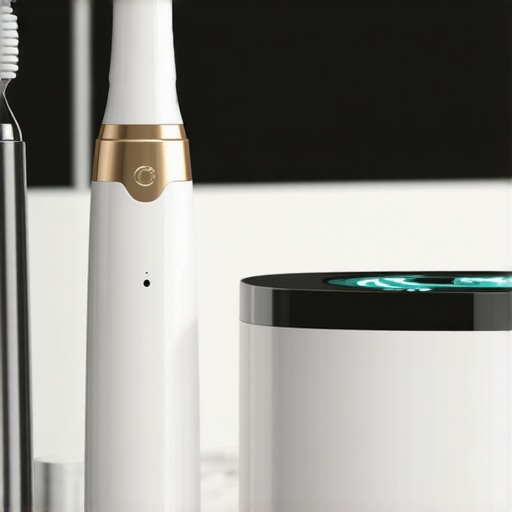
For years, I treated my teeth like a DIY project, scrubbing hard to get them clean. When I got my first set of restorations, I realized stop brushing your veneers like they are real teeth is the most important piece of advice you’ll ever get. I personally switched to a high-end sonic toothbrush with a built-in pressure sensor. Why? Because the pressure sensor vibrates or lights up the second I press too hard. This protects the delicate margins where the veneer meets the natural tooth, preventing that tiny gap where bacteria love to hide. If you ignore this, you’ll eventually find the reason your porcelain veneers feel gritty to your tongue is often due to micro-scratches from abrasive pastes and aggressive technique.
The Ultrasonic Trick for Clear Aligner Hygiene
If you are navigating the world of Invisalign innovation and invisible braces, you know the struggle of keeping those trays clear. I don’t just soak them; I use a small countertop ultrasonic cleaner. It uses sound waves to create microscopic bubbles that implode against the plastic, blasting away biofilm that a brush can’t reach. It’s the same technology used to clean jewelry, and it keeps trays from turning that murky yellow.
How do I keep my smile stable for the next decade?
Long-term results aren’t about luck; they are about engineering. Dr. Gordon Christensen, a world-renowned clinical researcher, emphasizes that using non-abrasive polishing pastes is critical for maintaining the glaze on porcelain restorations. This is why I always check the RDA (Relative Dentin Abrasivity) score of my toothpaste. Anything over 70 is banned from my bathroom. When you combine this with the ultimate guide to teeth whitening options in 2025, you can maintain the brightness without compromising the structural integrity of your enamel.
The Future of Biofeedback in Your Mouth
Where is this all heading? I predict we are moving toward ‘Smart’ dental appliances. We are already seeing prototypes of night guards with embedded biofeedback sensors. These devices detect the specific frequency of clenching and provide a gentle vibration to alert your brain to relax without fully waking you up. It’s essentially ‘physical therapy while you sleep,’ moving beyond just protecting teeth to actually curing the habit of bruxism. If you want to start today, try setting a recurring timer on your phone for a 60-second ‘jaw check’ every hour to train your brain. If you’re unsure if your current setup is working, you can always contact us for a professional evaluation of your joint health.
The Massive Realization That Finally Silenced My Jaw
I used to think that a clicking jaw was just a quirky personality trait, but my perspective shifted once I saw how much my alignment dictated my daily comfort. I learned that pain is a lagging indicator; by the time your jaw actually hurts, the joint has often been under severe stress for months. This is why proactive care with family dentistry experts is much easier and more effective than waiting for an emergency. Additionally, I realized that the alignment of your teeth is a structural repair for adults, not just a cosmetic choice. Using Invisalign innovation and invisible braces helped me find a stable bite that finally gave my joint the rest it needed to stop popping. Finally, I discovered that self-adjusting your jaw is a trap that only stretches your ligaments further, making the problem worse in the long run.
Gear That Actually Makes a Difference
If you want to move beyond basic maintenance and truly protect your dental health, I highly recommend investing in a few specific items. First, look into a custom-fitted night guard rather than a generic store-bought version; the difference in joint relief and protection is night and day. Second, I always suggest reviewing the ultimate guide to teeth whitening options in 2025 to ensure any brightness goals do not come at the cost of enamel sensitivity. Finally, keep a high-quality water flosser nearby, especially if you have had veneers made simple, to keep the margins healthy without the abrasive scrubbing that can damage porcelain restorations.
#IMAGE_PLACEHOLDER_E#
Take Control of Your Daily Comfort
Dealing with a clicking jaw or dental discomfort can feel like a full-time job, but it does not have to stay that way. By merging functional health with modern aesthetics—whether through Invisalign secrets or better daily habits—you can reclaim your ability to eat, laugh, and speak without fear. Your smile is the foundation of your confidence; do not be afraid to give it the expert attention it deserves. If you ever feel overwhelmed by the pops and clicks, you can always contact us to start your journey toward a quieter, healthier mouth. Have you ever noticed your jaw clicking more during times of high stress? Let me know your experience in the comments below!