
How to get a stuck popcorn kernel out from under your bridge
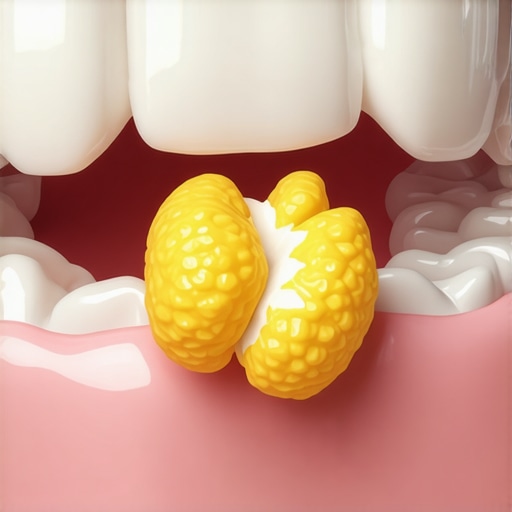
I was halfway through a massive bowl of stovetop popcorn—the kind with extra butter that makes you forget your diet exists—when it happened. One minute I am enjoying a classic thriller, and the next, I feel that sharp, maddening jab right under my dental bridge. It was like a tiny wooden splinter had decided to set up camp in the most sensitive spot in my mouth. I spent the next hour doing exactly what I tell my friends never to do: I was poking at it with whatever I could find until my gums were raw and throbbing. We have all been there, haven’t we? That moment of pure frustration where you’d almost consider a pair of pliers just to get some relief.
Stop Prodding Your Gums and Try These Bridge-Safe Tricks Instead
I will be honest with you; in my early days of having a bridge, I made the amateur mistake of reaching for a safety pin. It sounds crazy now, but the desperation is real. However, the danger of using safety pins or other sharp metal objects near your dental work cannot be overstated. You can scratch the porcelain or, worse, puncture your gum tissue, leading to an infection that is way more painful than a popcorn hull. Today, I am going to share the exact methods I learned through trial, error, and a few frantic calls to my dentist so you can get that hull out safely. The goal is to clear the debris without compromising the integrity of your hardware or causing your gums to bleed unnecessarily. Have you ever felt like you were going to break your dental work just trying to clean it?
Is My Bridge Too Tight for These Methods to Work?
This is the biggest fear I hear from people. They worry that their bridge is so flush against the gumline that nothing—not even the thinnest floss—can get under there. While it is true that a well-fitted bridge should feel secure, there is always a way to navigate the space safely. In fact, if you feel like your dental bridge feels tight, it might actually be inflammation from the kernel itself rather than the bridge being ‘too small.’ According to the American Chemical Society, popcorn hulls (or pericarps) are made of a particularly durable cellulose that doesn’t break down easily with saliva, which is why they can sit under your bridge for days if you don’t intervene. Knowing how to clean a dental bridge without getting floss stuck is half the battle. We are going to look at the ‘water-first’ approach and the ‘loop-and-pull’ technique that saved my sanity last Tuesday. Let’s get that annoying bit of corn out so you can actually finish your movie in peace.
Flush Out the Hull with Targeted Water Pressure
Think of a water flosser as a miniature power washer for your mouth. This is your first line of defense because it uses hydraulic pressure rather than mechanical scraping. When that hull is wedged deep, the goal isn’t to push it further; it’s to create enough turbulence to float it out. I remember one Tuesday night, desperate to get a kernel out before bed, I cranked my Waterpik to the highest setting. Big mistake. I blasted my gums so hard they felt bruised for two days. The trick is to start on a low, pulsing setting and aim the tip at a 45-degree angle toward the base of the pontic—the fake tooth. This angle allows the water to sweep underneath the bridge rather than just hitting the side of it. 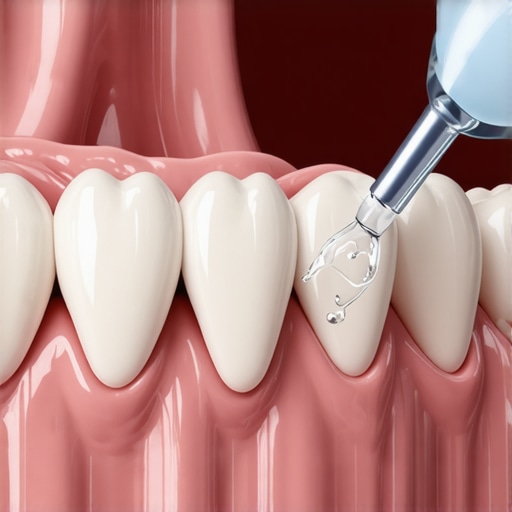
The Proper Way to Use a Floss Threader
If water doesn’t do the trick, it is time to bring in the specialized tools. You need a floss threader or ‘Super Floss.’ These are essentially plastic needles that allow you to guide a thick, tufted piece of floss into the gap. You have to be incredibly patient here. I once tried to rush this while sitting in a dimly lit hotel bathroom using a piece of high-test fishing line because I had forgotten my kit. I ended up with a nasty cut and realized why the secret to removing popcorn hulls from under a bridge is all about using the right tension, not the strongest string. Insert the threader from the cheek side, pull it through until the spongy part of the floss is under the bridge, and then move it in a gentle ‘C’ shape. This ‘loop-and-pull’ technique acts like a soft broom, catching the edges of the pericarp and sliding it out.
Why Force is Your Worst Enemy
It is tempting to keep digging when you can feel that sharp edge, but if the hull doesn’t move after a few tries, stop. The more you poke, the more your gums will swell. When the tissue inflames, it actually clamps down on the debris, making it even harder to remove. This is often why your dental bridge feels tight in the morning or after a heavy cleaning session. You are dealing with localized edema. If you notice a bit of pink in the sink, do not panic, but do take it as a sign to switch to a saltwater rinse for an hour before trying again. Knowing how to clean a dental bridge without getting floss stuck means recognizing when the space has become too constricted by swelling to proceed safely.
Calm Your Gums Before the Final Attempt
Sometimes the best way to get a hull to budge is to soften it up first. Warm salt water can help reduce the swelling of the gums, slightly opening that microscopic gap. While you wait for the inflammation to go down, you can reflect on your overall maintenance. For instance, you should stop brushing your veneers like they are real teeth if your bridge is anchored by them, as aggressive scrubbing can wear down the margins where food tends to get trapped. A gentle, vibrating motion with an electric brush can sometimes vibrate the hull just enough to loosen its grip before your next attempt with the water flosser. If you have been aggressive and need to know how to stop your gums from bleeding when you haven’t flossed in weeks, the answer is usually rest and cold compresses, not more poking.While you are busy excavating that stubborn popcorn hull, you might find yourself staring a little too closely at your smile in the bathroom mirror. It is usually in these moments of frustration that we start noticing other ‘flaws’—a slightly yellowed canine or a veneer that doesn’t quite match the bridge we just poked into oblivion. However, this is where many people fall into a common trap. The prevailing belief is that if your teeth aren’t white enough, you just need a higher concentration of peroxide. But in my experience, chasing a ‘blinding white’ smile with over-the-counter products often leads to more harm than good.
Why Your Whitening Strips Might Actually Make Your Smile Look Worse
Most people think whitening is a universal fix for any discoloration. The ‘oops’ factor here is significant: whitening strips only work on natural tooth enamel. If you have a bridge, a crown, or dental bonding, those materials are completely resistant to bleach. I have seen so many people make the mistake of using whitening strips on dental bonding only to realize they have brightened the surrounding tooth while the resin stays the same dull color. This creates a mismatched, ‘patchwork’ look that is much harder to fix than simple staining. Furthermore, a study published in the Journal of Evidence-Based Dental Practice indicates that excessive bleaching can alter the surface morphology of your enamel, potentially making it more porous and prone to future staining.
Can You Over-Bleach a Tooth Until It Becomes Translucent?
This is a question I get from readers who have noticed a strange, ‘glassy’ appearance at the edges of their teeth. The answer is a definitive yes. There is a tipping point where the chemical process of whitening begins to break down the organic matrix of the tooth too much. This is often why your teeth look gray instead of yellow; the tooth has lost its internal opacity. Once you reach this stage, you aren’t just dealing with sensitivity; you are dealing with a loss of structural integrity that no amount of toothpaste can reverse.
The Compliance Trap in Family Orthodontics
Moving beyond whitening, many parents approach family dentistry with the idea that the latest tech, like Invisalign innovation, is a set-it-and-forget-it solution for their kids. The nuance that often gets missed in ensuring family dental care is the ‘compliance curve.’ While clear aligners make it easier to clean out food debris compared to traditional braces, if they aren’t worn for the strict 22-hour-a-day window, the teeth don’t just stop moving—they can actually start to ‘jiggle’ in the socket, leading to root resorption. 
Avoiding the Piano Key Look with Veneers
If you are considering a permanent upgrade, don’t assume all porcelain is created equal. A common mistake is choosing a shade that is too bright for your complexion, resulting in veneers that look too white and fake. To avoid this, you need to look at transform your smile with veneers expert tips which emphasize the importance of translucency and ‘stump shade’ matching. If you push the process too fast or ignore the health of your underlying tissue, you might end up needing to know how to manage the zingers after a professional whitening session or a deep prep. Have you ever fallen into this trap of over-bleaching or trying to DIY a fix for a professional restoration? Let me know in the comments.Maintaining high-end dental work isn’t just about showing up for a professional cleaning twice a year; it is about the microscopic details you handle at home. I have personally swapped my standard drug-store floss for ultra-fine interdental brushes—specifically the 0.6mm variants that look like tiny pipe cleaners. Why the switch? Because bridges and veneers create these minuscule ‘ledges’ or margins where plaque loves to throw a party. If you don’t clear those, you will eventually find yourself wondering why your porcelain veneers look dull after five years of wear. It is usually not the porcelain itself losing its shine; it is the lack of gingival health at the margin causing the gum to pull back or darken. A meta-analysis published in the Journal of Clinical Periodontology actually found that interdental brushes are significantly more effective at removing interproximal plaque than traditional floss, especially in patients with restorative work. 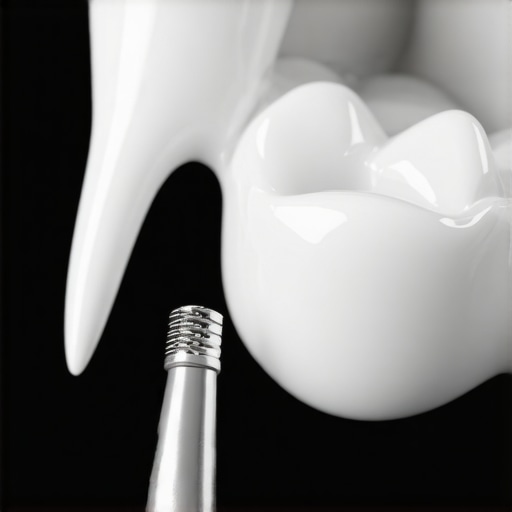
How do I keep my dental work looking fresh for a decade?
The secret is proactive protection rather than reactive repair. If you are a nighttime tooth-grinder like me, you absolutely need a custom-molded night guard from your dentist. I learned this the hard way after a small, jagged chip appeared on my lateral incisor. Knowing how to keep your veneers from chipping if you grind your teeth is basically the most important ‘insurance policy’ for your face. Also, do not feel like you have to give up your morning ritual. I use a specific alkaline or pH-balanced rinse immediately after my morning brew. Knowing how to keep your coffee habit without ruining your new veneers is more about chemistry than deprivation—you want to neutralize the acid before it can etch the glaze or stain the cement.
Look into the Future of Smart Smile Tracking
We are moving toward a world where your bathroom mirror might be your most honest dental advisor. I suspect that by late 2025, Invisalign innovation will fully integrate with AI-powered scanning apps on your smartphone. These apps will analyze your weekly progress and tell you exactly where you missed a spot while brushing around your attachments. This level of granular data is going to be a game-changer for ensuring family dental care stays on track, especially for teenagers who might be a bit lax with their hygiene. If you have a permanent wire from previous ortho work, make sure you know how to clean plaque off a permanent retainer wire using a specialized oscillating brush head designed for orthodontics. My Challenge to You: Pick up a pack of high-quality interdental brushes this week and try them once a day under your bridge or between your veneers. You might be shocked at what your high-end electric toothbrush has been leaving behind.
Dental Truths I Had to Learn the Hard Way
I used to think that a beautiful smile was something you just ‘bought’ at the dentist’s office and then forgot about. The reality is that whether you are dealing with natural enamel or a high-end bridge, your mouth is a living, changing environment. One of my biggest lightbulb moments was realizing that professional treatments are just the foundation; the daily maintenance is the actual construction work. I also learned that patience is a clinical necessity. Whether you are waiting for a popcorn hull to loosen or waiting for your Invisalign secrets to reveal a straighter path, you cannot rush biology. Pushing too hard with whitening gels or metal picks only leads to regression. Finally, I discovered that the best dental care is often invisible—it is the night guard you wear when no one is looking and the alkaline rinse you use after a latte that keeps the work pristine.
The Tools That Actually Saved My Teeth
If you are looking to build your own oral health arsenal, start with the basics but don’t be afraid of technology. I personally swear by a high-quality water flosser for those hard-to-reach spots under bridges where standard floss just shreds. For anyone feeling overwhelmed by cosmetic choices, I highly recommend reading through the ultimate guide to teeth whitening options in 2025 before you buy a single strip; it will save you from the mismatched shade disaster I experienced. If you are stuck between a restoration and a full cover, understanding veneers vs crowns which is right for your smile is essential reading that provides more clarity than a thirty-minute consultation ever could. These resources aren’t just articles; they are the benchmarks for making decisions that you won’t regret five years down the road.
Your Path to a Confident Smile
Taking care of your teeth can feel like a full-time job, especially when an unexpected popcorn hull tries to ruin your week. But remember, the effort you put in today determines how much you’ll enjoy your smile a decade from now. Whether you are focused on family dentistry building healthy smiles for every generation or simply trying to keep your own veneers from chipping, stay consistent and stay gentle. You only get one set of teeth (and even your replacements need love), so treat them with the respect they deserve. Have you ever accidentally over-whitened your teeth or struggled with a stuck popcorn kernel that just wouldn’t budge? Let me know your survival stories in the comments below!