
The Best Way to Handle a Loose Healing Cap on Your Dental Implant
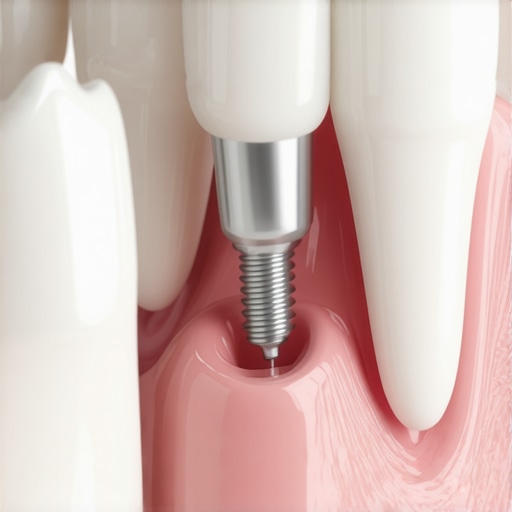
I was midway through a slice of sourdough when I felt it. A tiny, metallic click. My tongue went straight to the site of my new dental implant, and my heart sank. It felt like a loose tooth, but I knew better—that was a major investment sitting in my jaw. I spent the next twenty minutes in front of the bathroom mirror, sweating and wondering if I’d just ruined everything.
Stop Poking It and Just Breathe
Most of us have this knee-jerk reaction to fiddle with anything that feels off in our mouths. I’m guilty of it too. In fact, when my first healing cap started wobbling years ago, I actually tried to tighten it myself using a pair of clean tweezers. That was a huge mistake. Not only did I irritate my tender gums, but I also risked introducing bacteria into a site that was still trying to knit itself together. If you’re feeling that familiar wiggle, the first thing you need to do is realize that the healing cap—that little silver button—is not the actual implant. It’s just a placeholder. You aren’t necessarily facing a disaster, even if you worry that your dental implant is actually failing or something has gone horribly wrong under the surface.
Will my whole implant fall out if the cap is loose?
This is the fear that keeps most of us up at night. But here’s the reality: the healing cap is just a temporary cover for the implant screw that’s tucked safely inside your jawbone. According to the American Academy of Periodontology, dental implants have a success rate of up to 98 percent, and a loose accessory rarely spells doom for the underlying structure. Today, we’re going to walk through exactly how to handle it and when you really need to call the office. If you’ve ever felt that weird sensation where your crown feels slightly wiggly, you know how unnerving it can be. Have you ever felt that tiny metal cap start to dance around while you were eating? It’s a bizarre feeling, isn’t it?
Why These Little Caps Get a Mind of Their Own
Usually, it’s just simple physics. You chew, you talk, and your tongue constantly brushes against the metal. Over time, that constant micro-pressure can back the screw out just a tiny bit. It’s even more common if you’re someone who tends to clench or if you’ve been sticking to foods that are a bit too crunchy for the healing phase. Sometimes, the movement might even make it feel like your dental implant is throbbing, which is often just the loose cap pressing against the sensitive, healing gum tissue. Before we get into the step-by-step fix, let’s look at why this happens more often than dentists like to admit. [image_placeholder]When you feel that metal button wiggle, your first instinct is to push it back down with your finger. Don’t do it. It’s like a loose screw in a piece of furniture; if you keep jiggling it, you’ll eventually strip the threads or irritate the ‘wood’—which, in this case, is your sensitive gum tissue. Think of your healing cap like a temporary fence post. It is there to keep the gums from growing over the implant site until the permanent crown arrives. If the post is loose, the site is still safe, but you do not want to shove bacteria or debris into the gap. I once tried to ‘reset’ a loose cap by biting down on a thick piece of folded paper towel, thinking the even pressure would act like a wrench. Spoiler alert: It did not work. All I did was pinch my gum line so hard it turned purple, and I spent the rest of the night worrying because the dental implant felt like it was throbbing from the pressure I applied. The cap stayed just as loose, and I felt ridiculous in the dentist’s chair the next morning.
How to Test the Stability Without Doing Damage
Instead of using your tongue or fingers, which carry a surprising amount of force and bacteria, use a clean Q-tip. Gently press against the side of the silver cap. Does it move side-to-side, or does it actually spin? If it is spinning, the screw has simply backed out of the internal threads. This is a common mechanical issue and usually happens because the dentist opted for a lower torque setting while your bone was still in the early stages of integration. If you have ever looked into veneers made simple, you know that surface-level adjustments are one thing, but once you are working with hardware inside the jaw, the precision required is much higher.
The 24-Hour Observation Rule
If the cap is slightly loose but not falling out, you usually have a small window before the gum tissue starts to migrate. Your priority is keeping the area clean without being aggressive. Switch to a soft-bristled brush or, better yet, just a warm saltwater rinse. This is a staple in family dentistry building healthy smiles because it is the gentlest way to neutralize bacteria without physical friction. If the cap feels like it is about to come off, avoid chewing on that side entirely. 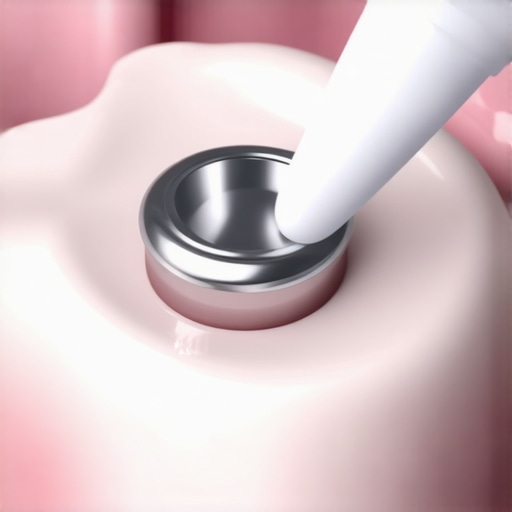
What to Do If the Cap Actually Falls Out
Do not panic if the silver button ends up in your hand. If it happens, put the cap in a small plastic bag and call your dentist immediately. The ’emergency’ here is not that the implant itself is lost; it is that your gums are incredibly fast at healing. If that hole closes up, the dentist might have to numb the area to clear the tissue again. It is a similar biological rush to why your jaw feels tight every time you start a new aligner tray—your mouth is constantly trying to close gaps and shift into new positions. You are essentially racing against your own body’s efficiency.
Identify the Warning Signs of Real Failure
You need to distinguish between a mechanical looseness (the cap) and a biological looseness (the implant). If the silver cap is rock solid but the whole area feels like it is shifting or painful to the touch, that is a different conversation. This is why it is vital to know how to tell if your dental implant is actually healing or failing. A loose cap is a minor inconvenience that takes two minutes to tighten; a loose implant requires immediate professional intervention. While invisalign secrets often focus on moving teeth, dental implants are all about staying perfectly still.Let’s dig deeper into the nuances of these procedures, because once that healing cap is replaced with a permanent crown, the aesthetic stakes go way up. Most people assume that once they get a dental implant or a set of veneers, they can just whiten their teeth whenever they want to keep everything bright. But here is the contrarian view: professional whitening is actually your worst enemy if you do it in the wrong order. Unlike your natural enamel, the porcelain or zirconia used in modern restorations is completely immune to whitening gels. If you whiten your teeth after your crown is placed, your natural teeth will brighten while your expensive new restoration stays exactly the same shade, leaving you with a mismatched smile that is impossible to ignore. This is essentially the mistake of using whitening strips on dental bonding or ceramic work; the chemical reaction just isn’t there.
Stop Chasing the Toilet Bowl White Trend
We have been conditioned to believe that ‘whiter is better,’ but in the world of high-end cosmetic dentistry, we often say that the best dental work is invisible. If you go too bright, you lose the natural ‘mamelons’—those tiny ridges and translucent edges that make a tooth look real. In fact, why your veneers look fake and how to avoid it often comes down to this exact issue: a lack of depth in the color. According to a study in the Journal of Esthetic and Restorative Dentistry, the most successful restorations are those that mimic the ‘polychromatic’ nature of natural teeth, which actually include hints of yellow and grey. 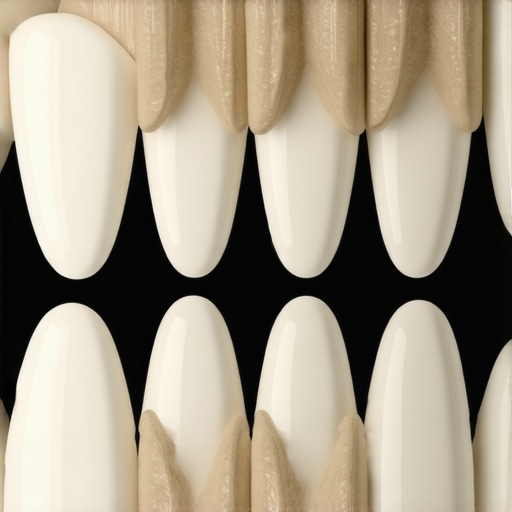
Can I whiten my teeth while I still have a healing cap?
Technically, you can, but it’s a risky move. While the metal cap itself won’t be harmed, the gum tissue around the implant is still in a state of flux. Using high-concentration peroxide near a healing site can lead to severe irritation or chemical burns. If you’ve ever wondered how to treat a burn on your gums from whitening gel, you know it is not an experience you want to repeat, especially near a surgical site. The ‘oops’ factor here is huge; people try to ‘prep’ their smile for the final crown by over-whitening, only to cause inflammation that delays the final placement.
The Invisible Trap of Modern Orthodontics
This same level of nuance applies to invisalign innovation and invisible braces. Many patients think the ‘secret’ is just wearing the trays, but the real nuance is in the ‘attachments’—those tiny tooth-colored bumps. If you are a heavy coffee drinker, those attachments can stain differently than your teeth, creating a spotted appearance that whitening can’t fix until the treatment is over. Have you ever fallen into this trap of mismatched dental work or ill-timed whitening? Let me know in the comments! I’d love to hear how you handled it.Maintaining a high-end dental transformation is less about the occasional office visit and more about the precision of your daily toolkit. I learned the hard way that a standard toothbrush is basically a blunt instrument when you are dealing with the intricate margins of new veneers or the snug fit of an aligner. If you want to keep your hardware pristine, you need to transition from ‘cleaning’ to ‘detailing.’ I personally swear by the ultrasonic cleaner for any removable appliance. Instead of scrubbing your trays with a brush—which creates micro-scratches where bacteria hide—you drop them into a pod that uses high-frequency sound waves to blast away biofilm. This is the only real way to how to stop your clear aligners from turning yellow after eating turmeric or other staining spices.
How do I maintain my smile’s new alignment and brightness over time?
Consistency with specific tools is the answer. For those with implants, I recommend ditching traditional string floss for interdental brushes. According to a systematic review published in the Journal of Clinical Periodontology, interdental brushes are significantly more effective than flossing for reducing plaque and gingival inflammation around dental implants because they can mechanically debride the concave surfaces of the implant neck. If you have been worried because your dental implant crown feels slightly wiggly when you chew, it might be a sign that plaque buildup is irritating the area, making the tissue less stable. [image_placeholder]
Protect Your Porcelain While You Sleep
If you have invested in veneers made simple, your biggest nocturnal enemy is bruxism. I never thought I was a tooth-grinder until I saw the wear patterns on my night guard. You absolutely must have a custom-fitted guard to act as a shock absorber. This isn’t just about comfort; it is about how to keep your veneers from chipping if you grind your teeth during a stressful work week. Beyond the protection, you need to know the best way to clean your night guard so it doesnt smell, because porous plastics absorb odors incredibly fast.
Predicting the End of Physical Molds
Looking ahead, the future of maintenance is moving toward AI-integrated monitoring. Within the next few years, we will likely see ‘smart’ aligner cases that analyze the chemistry of your saliva to detect early-stage decay or shifts in tooth position before they are visible to the naked eye. We are already seeing invisalign innovation using virtual care apps to track progress remotely, reducing the need for constant chair time. If you want to stay ahead of the curve, I suggest implementing a ‘white-list only’ diet for the first 48 hours after any teeth whitening strategies you employ; it’s a simple advanced tip that doubles the longevity of your results. Try swapping your morning coffee for a caffeine pill or a light tea with a straw for just two days—you will be shocked at how much longer that ‘just-bleached’ glow lasts.
Hard-Won Truths from My Dental Misadventures
If I could go back to the day I got my first implant, I’d tell myself three things. First, the healing phase is not a sprint; it is a marathon where the finish line occasionally moves. Second, if you experience sudden discomfort after a cosmetic upgrade, you should learn how to manage the zingers after a professional whitening session before you panic, as sensitivity is often temporary. Lastly, never underestimate the power of a simple saltwater rinse—it’s the unsung hero of the truth about oil pulling for your dental health conversations because it actually works to keep surgical sites clean without the mess of unproven oils.
The Gear That Keeps My Smile Looking Expensive
You don’t need a drawer full of gadgets, but you do need the right ones for precision maintenance. I’ve found that a dedicated ultrasonic cleaner is the only way to ensure your hardware stays sanitary over the long term. This is especially true if you want to know the best way to clean your night guard so it doesnt smell or keep aligners from turning cloudy. I also recommend keeping a pack of interdental brushes in your car or purse. They are the precision tools that standard floss can’t touch when you’re dealing with the gaps around a loose healing cap or a new set of veneers. They allow you to clear debris without applying the lateral pressure that can further loosen a wobbly screw.
[image_placeholder]
The Journey to Your Best Smile Starts Now
Whether you are dealing with a wobbly metal button or planning a full mouth reconstruction, remember that modern family dentistry building healthy smiles for every generation has made these procedures safer and more predictable than ever before. Don’t let a small mechanical hiccup like a loose healing cap discourage you from the goal of a confident, healthy smile. You’ve already done the hard work of showing up; the rest is just consistent maintenance and a bit of patience. Your dental implant is an investment in your quality of life, and most minor issues are just part of the process. Have you ever had a moment where you thought your dental work was failing, only to find out it was a quick five-minute fix? Let me know your stories in the comments below!