
How to Stop Your Clear Aligners from Turning Yellow After Eating Turmeric
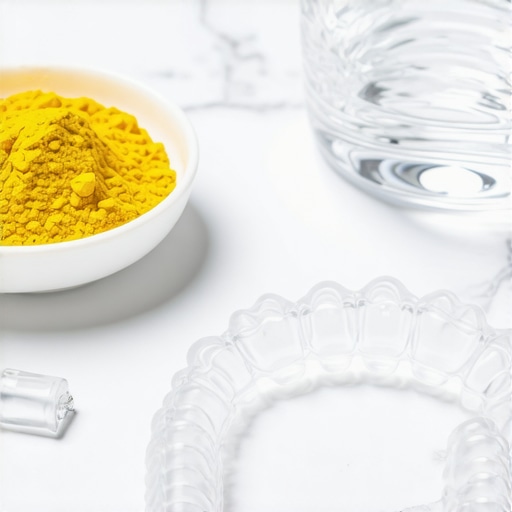
I sat there, frozen, staring into the bathroom mirror while my heart did a slow, heavy thud against my ribs. Just ten minutes ago, I was enjoying the most incredible chickpea curry, completely forgetting that my brand-new clear aligners were still hugging my teeth. When I finally pulled them out, they were not clear anymore. They were a violent, electric shade of neon yellow that looked less like a medical device and more like a prop from a low-budget sci-fi movie. [image_placeholder] I scrubbed, I soaked, and I prayed, but that turmeric pigment—curcumin—is a relentless beast. It is a mistake every Invisalign veteran has likely flirted with at least once, and if you are here, you are probably staring at a yellow tray right now wondering if you have just flushed thousands of dollars down the drain.
The Neon Mistake I Made with My First Tray
I have been through the ringer with modern invisible braces, and let me tell you, nothing humbles you faster than a turmeric-stained smile. My biggest early mistake was not just eating the food; it was thinking I could simply “rinse it off” afterward. Turmeric does not just sit on the surface; it bonds to the plastic. If you do not act fast, your aligner trays will start to look cloudy and yellow regardless of how much you soak them in standard cleaners later. This struggle is real because we want the benefits of a straight smile without giving up our favorite flavors. Today, I am sharing the exact routine I developed to prevent this “yellow-out” from happening again, and how to handle the panic when it does.
Can you really save a tray once it turns yellow?
You might be skeptical. I certainly was. I thought once that yellow tint took hold, the tray was a goner. But here is the thing: while turmeric is powerful, the chemistry of clear aligners allows for some recovery if you use the right approach. It is not just about aesthetics; it is about maintaining the structural integrity of the plastic so your treatment stays on track. Have you ever looked at your trays after a meal and felt that immediate wave of regret? You are not alone. According to research published by the National Center for Biotechnology Information, curcumin is hydrophobic, meaning it does not just wash away with water—it needs a specific intervention to break its bond with the polymer of your aligners.
If you are worried about your smile’s appearance, you might even be considering teeth whitening options to compensate, but the real solution starts with tray maintenance. We are going to dive into the “pre-game” strategy for eating curry and the “emergency protocol” for those moments when you forget to take your trays out. It is all about balance—enjoying your food while keeping your discreet smile actually discreet. Let’s get into the nitty-gritty of how to remove those stains without scratching the plastic.
I remember the first time I tried to “fix” a turmeric stain. I grabbed my regular toothbrush and some whitening toothpaste, thinking the abrasives would just scrub the yellow away. Big mistake. I ended up with microscopic scratches that made the tray look even duller—almost like I’d rubbed it with sandpaper. If you have noticed why your clear aligners have started to look cloudy, it is often because of these tiny scratches trapping debris. Instead, you need a chemical approach that breaks down the pigment without compromising the plastic.
The Cold Water Rinse and Gentle Agitation
The moment you realize you have eaten with your trays in, or put them back in too soon after a curry-heavy meal, get to a sink immediately. Use cold or lukewarm water—never hot. High heat can warp the medical-grade polymer, turning your expensive orthodontic tool into a useless piece of melted plastic. I once tried to “sanitize” my tray in boiling water during a panic, and it came out looking like a crumpled potato chip. Use a soft-bristled toothbrush and a bit of clear, unscented dish soap. Soap is designed to cut through grease and oils, which is exactly how turmeric—which is oil-soluble—likes to travel. Brush the inside and outside with circular motions, focusing on the crevices where the “neon” settles. This is the first step in how to remove turmeric stains from clear aligners without scratching them.
Mix Up a 50/50 Hydrogen Peroxide Bath
If the soap does not do the trick, it is time to bring out the big guns. I keep a bottle of 3% hydrogen peroxide in my medicine cabinet specifically for this. Mix equal parts peroxide and water in a small glass. Let the tray soak for about 30 minutes. This is a much safer alternative than trying various teeth whitening secrets for a sparkling smile in 2025 at 1248 that are meant for enamel, not plastic. The peroxide acts as an oxidizer, reaching into the pores of the plastic to lift the curcumin molecules. When I did this after a particularly bad incident with yellow mustard, the trays came out nearly 90% clearer. It is the same logic you would use when learning how to clean the stubborn gunk out of your night guard effectively.
Harness the Sun to Bleach Out the Yellow
This sounds like an old wives’ tale, but the chemistry is solid. Turmeric is incredibly sensitive to UV light. After you have cleaned and soaked your tray, place it on a clean, dry windowsill in direct sunlight for an hour or two. The UV rays help break down the remaining yellow pigment that the peroxide missed. I discovered this by accident when I left my “ruined” trays on my patio table while I went to look for my backup set. When I came back, the neon glow had faded significantly. It is a natural bleaching process that does not require scrubbing. Just be careful not to leave them out all day, as excessive heat remains the enemy of your modern invisible braces.
Stop the Scratch Cycle Before It Starts
The ultimate goal is to keep the surface of the tray as smooth as possible. If you use abrasive cleaners or stiff brushes, you create microscopic “pockets” where future stains will live forever. This is why your aligner trays are starting to look yellow no matter how much you soak them eventually; once the surface is damaged, it is a losing battle. By sticking to the cold-water, peroxide, and sun method, you can usually save a tray that looks like it belongs in a neon sign. This routine saved me from an embarrassing call to the dentist to explain why I could not resist a second helping of tikka masala.Once you have mastered the art of rescuing your aligners from the turmeric abyss, it is tempting to go overboard with aesthetics. Most people think that to get that Hollywood glow, you need the highest concentration of bleach possible for the longest amount of time. In my experience, this is the quickest way to end up with ‘zingers’—those sharp, electric shocks of pain—rather than a brighter smile. Let’s look at the nuances that even seasoned Invisalign and whitening fans often miss.
The Over-Whitening Trap That Actually Stalls Your Progress
Everyone says that more gel equals faster results, but the reality is quite the opposite. When you flood your tray with whitening agent, the excess oozes onto your gum tissue, causing chemical burns and irritation. This forces you to stop the treatment for days or weeks to let your mouth heal, ultimately delaying your results. Furthermore, over-whitening can lead to ‘technicolor teeth’ where the edges become translucent or even bluish. According to a study published in the Journal of Evidence-Based Dental Practice, excessive bleaching can alter the micro-hardness of enamel, making it more porous and ironically more prone to future staining. If you have already started the process, knowing how to manage the zingers after a professional whitening session is crucial for staying the course safely.
Stop Trying to Bleach Your Porcelain and Bonding
The biggest ‘oops’ factor I see in the dental community involves people trying to whiten their way out of old dental work. If you have crowns, veneers, or composite fillings, those materials are essentially color-fast. They will not budge. I have seen people spend hundreds on the ultimate guide to teeth whitening options in 2025 only to be devastated when their natural teeth get brighter, but their front-and-center dental work stays the same dingy shade. This creates a mismatched, patchy look that is far worse than the original yellow tint. You must avoid the mistake of using whitening strips on dental bonding or you will end up needing a full replacement of your restorations. When deciding between veneers vs crowns which is right for your smile, always remember that the color you choose on day one is the color you have for the life of the restoration.
Why are my bottom teeth still yellow while my top teeth look like piano keys?
This is a classic frustration for many, and it usually comes down to anatomy and lighting rather than a failure of the product. The enamel on your bottom teeth is naturally thinner than on your top teeth, which allows the yellowish dentin underneath to show through more clearly. Additionally, your bottom teeth are often shielded from light by your lower lip, making them appear darker in shadows. If you are struggling with this, read more on why your top teeth are white but the bottom ones stay yellow to understand the structural reasons behind the disparity. For parents ensuring family dental care what parents need to know in 2025, keep in mind that children’s teeth have even different mineral densities, so professional guidance is always better than DIY experimentation. Have you ever fallen into this trap? Let me know in the comments.If you want to keep that clarity without the constant elbow grease, you really need to look into ultrasonic cleaners. I used to think they were just an expensive gadget for jewelry, but after diving into a study in the Journal of Clinical Dentistry which highlighted how 42,000Hz ultrasonic vibrations can disrupt complex biofilm significantly better than manual brushing, I was completely sold. I use a compact, sleek silver pod every single morning while I make my coffee. You just drop the trays in, hit a button, and the high-frequency sound waves create millions of microscopic bubbles that implode and literally blast the plaque off. It is the same logic you would apply when learning how to clean the stubborn gunk out of your night guard; manual scrubbing just cannot reach the microscopic pores of the medical-grade plastic. This is especially vital as we move further into the era of Invisalign innovation and invisible braces in 2025 where the materials are becoming more specialized. These newer plastics are designed for better tooth grip, but that extra texture means more places for bacteria to hide.
How can I keep my results from fading after the treatment ends?
The hard truth that your dentist might soft-pedal is that the active part of your orthodontic journey is only the first half. Maintaining that perfect alignment is a lifelong commitment to retainers. I have seen so many people let their guard down after six months, only to find themselves frantically searching for how to stop your teeth from shifting after your braces come off. To prevent this, I have adopted a fail-safe system. I keep two sets of retainers at all times. One stays permanently on my nightstand, and the other lives in my always-packed travel toiletry bag. For parents ensuring family dental care in 2025, I recommend making the retainer part of the evening ritual, just like charging a phone to ensure it never gets forgotten or lost in a school cafeteria. 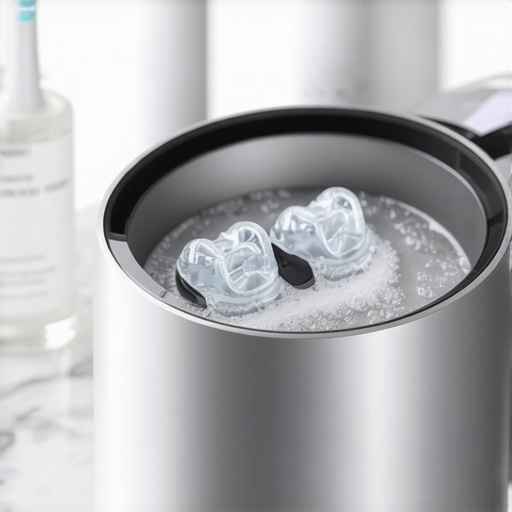
Why AI Scans are the Next Big Thing for Your Smile
Looking ahead, I predict that the traditional check-up for aligners or cosmetic work will become almost entirely digital. We are already seeing the rise of dental monitoring scan-boxes—small cradles that attach to your smartphone. You simply insert your phone, take a video of your teeth, and an AI platform compares the current state of your smile to your digital treatment plan. It can detect if a tray is not tracking correctly or if there is a marginal change in the health of your veneers vs crowns. This is a game-changer for anyone with a busy schedule because it scales professional oversight without the need for a commute. Along with these digital tools, I personally swear by a cordless water flosser with a pulsating mode. It is much gentler on the gums than the old-school string floss, which is crucial when your teeth are being moved and the roots are a bit sensitive. If you are serious about your results, my best advice is to grab an ultrasonic cleaner today; it is the single most effective tool I have found for keeping everything looking brand new.
Dealing with clear aligners is as much a mental game as it is a physical one. After my neon-yellow incident, I realized that the journey to a perfect smile isn’t just about following a plan, but about how you adapt when things go sideways.
The Hardest Lessons I Learned While Managing My Invisible Braces
- The ‘Go-Bag’ is non-negotiable: I quickly learned that relying on bathroom sinks in public is a gamble. Having a portable kit with a brush, floss, and a case is the only way to avoid the temptation of putting stained trays back in your mouth.
- Timing is everything: It is not just about the 22 hours of wear time; it is about the ‘cool down’ period after eating. Putting trays back in while your saliva is still acidic from a meal is a recipe for enamel erosion and tray cloudiness.
- Stains happen, but they aren’t permanent: A single yellow tray feels like a catastrophe, but it is actually a great teacher. It taught me the chemistry of my own mouth and led me to discover top teeth whitening strategies today that work in harmony with orthodontic plastic.
My Proven Arsenal for Perfect Aligner Maintenance
If I could go back to my first day of treatment, I would have stocked my cabinet differently. Beyond the standard toothbrush, these three items are what actually kept my trays clear through months of coffee and curry. First, a dedicated ultrasonic cleaner is the only way to reach the microscopic pores of the tray. Second, a simple bottle of 3% hydrogen peroxide is your best friend for a weekly deep soak. Finally, I recommend keeping a backup set of retainers ready for the moment your treatment ends. I learned this the hard way after seeing how to stop your teeth from shifting after your braces come off requires constant vigilance. [image_placeholder_final]
Take the Next Step Toward Your Brightest Smile Yet
Your smile is one of the few things you wear every single day, so the effort you put into maintaining it is always worth the payoff. Whether you are navigating the world of Invisalign innovation or simply looking to refresh your look, remember that consistency beats intensity every time. Don’t let a turmeric stain or a forgotten hour of wear time derail your progress. Stay the course, keep your trays clean, and the results will speak for themselves. Have you ever had a ‘neon yellow’ moment with your aligners, or did you find a cleaning trick that works even better than the sun? Let me know in the comments below!