
Why Your Veneers Look Opaque and Fake in Flash Photography
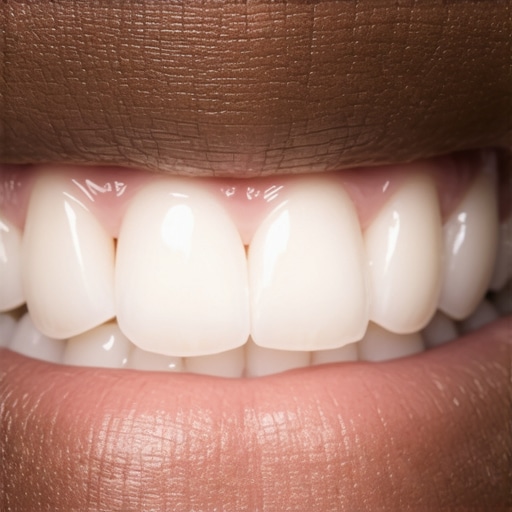
I will never forget the sinking feeling in my stomach when I opened my sister’s wedding album. I had spent months planning my new smile, endured the prep work, and finally felt like a million bucks. But in every single professional photo, my teeth didn’t look like teeth—they looked like glowing, flat-white chiclets. I was mortified. If you have ever cringed at a tagged photo on social media because your smile looks like it belongs on a LEGO figurine rather than a human face, you are not alone. That “flash fail” is a classic sign of an issue we rarely talk about until it’s too late: opacity. Today, I am going to walk you through exactly why this happens and how you can stop your veneers from looking too white and fake when the cameras come out. [IMAGE_PLACEHOLDER]
The Secret Science of Why Flash Photography Ruins Everything
When I first sat in that dental chair, I made the classic rookie mistake. I was so focused on getting rid of my old stains that I demanded the highest bleach shade on the chart. I thought more white equaled more beauty. I didn’t realize that by choosing a shade with zero gradient, I was essentially asking for a smile made of bathroom tile. Natural teeth are not solid blocks of color; they are incredibly complex layers of enamel and dentin. Real enamel is translucent, meaning it allows light to penetrate the surface and reflect back from within. Transforming your tooth aesthetics successfully requires mimicking this depth. According to research published in the Journal of Esthetic and Restorative Dentistry, the way a material scatters light—a property called the ‘opalescence effect’—is what gives a smile its life. When a high-intensity camera flash hits a veneer that is too thick or too opaque, the light hits a wall and bounces straight back at the lens, creating that flat, chalky “piano key” look.
Can a fake-looking smile actually be fixed without starting over?
That is the big fear, isn’t it? You have already invested the time and money, and the idea of going through the process again is exhausting. But here is the good news: you do not always need a full replacement to see an improvement. Whether it is adjusting the surface texture to diffuse light differently or learning how to communicate better with your ceramist, there are solutions. Have you ever looked at a photo and wondered why your teeth looked so different in the mirror versus on camera? I would love to hear your story, so feel free to reach out to us and share your experience. Understanding why your veneers look fake is the first step toward reclaiming a smile that looks like it actually belongs to you. We are going to look at the specific technical reasons your lab might have missed the mark and explore expert tips for a better transformation that stands up to any lighting.
Get the Texture Right to Scatter the Light
To stop your smile from looking like a row of white dominoes, you have to master surface texture. Think of a freshly waxed car versus a natural leaf. The car is perfectly smooth, so light bounces off it in one harsh, blinding direction. The leaf has tiny ridges and bumps that scatter light softly. This is called micro-morphology. I remember sitting in the dental chair for my revision, terrified I’d end up with the same result. My dentist took a fine diamond burr and manually added tiny, horizontal ridges—called perikymata—to the porcelain surface. At first, I was worried he was ruining the ‘perfect’ finish, but when I looked in the mirror, the difference was staggering. The teeth didn’t glow; they shimmered. This texture is the key to preventing the reason your veneers look gray in certain lighting or overly flat under a camera flash. 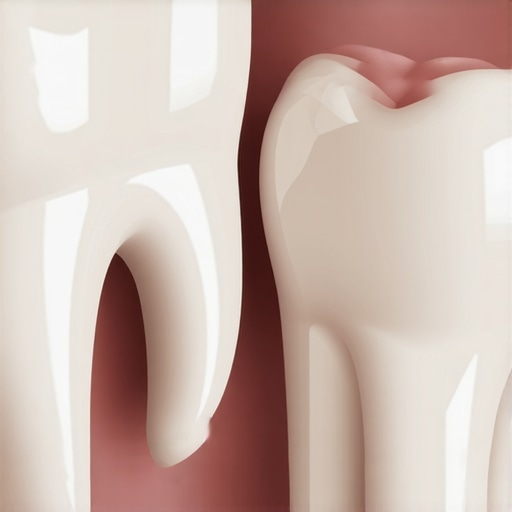
Why You Should Ask for a Natural Gradient
Natural teeth are not one solid color from the gum line to the tip. They follow a gradient: they are more saturated (yellowish) at the gums and more translucent (clear) at the edges. If your veneers are one solid block of ‘Bleach White,’ they will look fake every single time. When choosing between veneers vs crowns, you must ensure your ceramist uses ‘incisal translucency.’ This means the bottom edges of the teeth should actually be slightly see-through. During my second try, my dentist showed me a sample where the edge of the veneer almost disappeared when held up to the light. That transparency allows the shadows of your mouth to peek through slightly, which creates the depth needed for a believable smile.
Stop Chasing the Pure White Shade
We are often blinded by the desire for the brightest possible result, but ‘white’ is not a single color in dentistry. It is a combination of hue, chroma, and value. Value is the most important factor—it’s the brightness of the tooth. If the value is too high, it looks like you’re wearing a mouthguard. In family dentistry, we often see patients who regret choosing a shade that doesn’t match the whites of their eyes. A better approach than picking the highest bleach shade is to look at the ultimate guide to teeth whitening options to see what natural brightness looks like on your specific skin tone. I once saw a patient who insisted on a ‘Paper White’ shade, only to realize it made her skin look washed out and sallow.
Fix the Foundation Before Applying Porcelain
You cannot build a beautiful house on a crooked foundation. If your natural teeth are severely misaligned, the dentist might have to make the veneers extra thick to compensate for the ‘in and out’ of your natural arch. This is the real reason your new veneers feel bulky against your lips. In many cases, it is better to spend a few months using Invisalign innovation to straighten the teeth first. By aligning the teeth before the porcelain is applied, the dentist can use much thinner veneers, which allow more of your natural tooth light to reflect through, resulting in a much more lifelike appearance.
Stop Chasing Mathematical Perfection
Most people believe that a perfect smile means absolute symmetry. I have seen countless patients walk into a consultation with photos of celebrities, demanding that their left side match their right down to the last millimeter. However, the biggest secret in high-end cosmetic dentistry is that perfect symmetry is actually a ‘dead giveaway’ of dental work. In nature, our faces are asymmetrical, and a smile that is too mathematically perfect looks like a prosthetic. I call this the ‘piano key’ trap. When we design a transformation, we aim for ‘dynamic harmony’ rather than mirror-image symmetry. A subtle, intentional rotation of a lateral incisor or a micro-variation in the length of the central teeth can be the difference between a fake look and one that is breathtakingly natural. Expert research in the Journal of Esthetic and Restorative Dentistry indicates that ‘human’ imperfections in the incisal edge are what the eye perceives as authentic beauty. Have you ever fallen into this trap where you prioritized perfection over character? Let me know in the comments. 
High Strength Often Means Low Esthetics
One of the most common ‘oops’ factors I encounter is the obsession with material strength over light transmission. Many patients request the strongest possible material, like high-strength zirconia, assuming it will last longer. The trap here is that high-strength materials are often incredibly opaque; they block light rather than letting it pass through. If you are debating veneers vs crowns, you must understand that the most beautiful results often come from feldspathic porcelain or layered lithium disilicate. These materials mimic the ‘incisal halo’—that slightly blue or clear edge on a natural tooth. When you choose a monolithic, ultra-strong material, you sacrifice that life-like shimmer for a flat, dense appearance. This is a core part of veneers made simple: choosing the right ‘canvas’ before you ever pick a color.
Why does my smile look different when I talk versus when I pose for a selfie?
This is a sophisticated question that touches on the ‘phi’ of facial aesthetics. In a still photo, your lips are often retracted, showing the full surface of the veneer. But when you speak, your teeth are partially obscured, and the way light hits the surfaces changes constantly. If your dentist didn’t account for your ‘phonetic’ display, the teeth might look too long or too white in motion. This is why we often recommend teeth whitening secrets for a sparkling smile in 2025 to brighten the lower arch first, ensuring the contrast between top and bottom isn’t jarring during conversation. In family dentistry, we see that aging naturally changes the lip line, which is why a ‘one-size-fits-all’ veneer shape never works. Furthermore, understanding why your teeth look yellow in certain bathroom lighting helps you realize that your veneers must be tested under multiple light sources—natural sun, fluorescent office bulbs, and warm home lighting—before they are permanently bonded. If you want a more subtle alignment first, exploring Invisalign innovation can often minimize the amount of porcelain needed later, preserving your natural tooth structure and its inherent light-reflecting properties.
Treat Your Porcelain Like a Luxury Sports Car
If you think the hard work ends once you leave the dentist’s office, I have a wake-up call for you. Maintaining a high-end cosmetic result requires a different mindset than standard oral care. Think of your new veneers as a luxury car; you wouldn’t take a Ferrari through a cheap, abrasive car wash, right? The same logic applies to your teeth. The absolute fastest way to ruin a realistic smile is by using the wrong tools. I see so many people fall for the marketing and try the truth about using charcoal toothpaste on porcelain surfaces, only to find that the gritty particles have micro-scratched the glaze off their $20,000 investment. Once that factory-finish glaze is gone, the porcelain becomes porous and starts to pick up stains like a sponge. This is precisely why your porcelain veneers look dull after five years of wear. To keep that light-scattering texture we talked about earlier, you must stick to a low-abrasive toothpaste with an RDA (Relative Dentin Abrasivity) value under 70.
The One Tool That Saved My Ten-Thousand-Dollar Smile
My personal secret weapon isn’t a fancy brush; it is the Waterpik. Standard string floss is great, but it can sometimes snag on the tiny ‘ledge’ where the veneer meets the natural tooth. A high-quality water flosser at a medium setting flushes out the bacteria at the gingival margin without risking any mechanical leverage that could stress the bond. I also learned the hard way about the ‘coffee tax.’ If you are a daily drinker, you need to learn how to keep your coffee habit without ruining your new veneers by rinsing with water immediately after your cup. As noted in the American Academy of Cosmetic Dentistry (AACD) clinical guidelines, the use of specialized, non-abrasive polishing pastes during your professional cleanings is the only way to maintain that high-gloss luster without causing long-term damage. 
How do I keep my new smile looking fresh for decades?
Maintenance is a game of prevention. If you have any history of clenching your jaw when you are stressed, you absolutely must wear a custom-fabricated night guard. This isn’t optional. Porcelain is incredibly strong under vertical pressure but brittle under lateral (side-to-side) grinding forces. Knowing how to keep your veneers from chipping if you grind your teeth is the difference between a smile that lasts twenty years and one that fails in two. Once you have that guard, you have to be diligent; make sure you know the best way to clean your night guard so it doesnt smell so you actually feel comfortable wearing it every single night. Even in ensuring family dental care what parents need to know in 2025, we emphasize that the stability of the bite is the foundation for all cosmetic work.
Where the Future of Smile Maintenance is Headed
We are moving into an era of digital smile tracking. In the very near future, I expect we will all be using smartphone apps that utilize AI to scan our teeth weekly. These apps will be able to detect the earliest signs of gum recession or microscopic porcelain fatigue long before you see them in the mirror. This allows for ‘micro-interventions’ rather than major revisions. If you’ve had orthodontic work as part of your prep, you should already be using Invisalign secrets like Vivera retainers to ensure your foundation never shifts. My best advice? Check your toothpaste’s RDA score tonight; if it’s above 100, throw it out immediately and switch to a gentle, pH-neutral formula to save your glaze.
Stop Aiming for the Hollywood Standard
The most profound realization I had during my own journey was that celebrity smiles are often the worst blueprints for a natural look. When I finally let go of the idea of mathematical perfection, my confidence actually tripled. Here are the lightbulb moments that saved me:
- Character over uniformity: A tiny, intentional tilt in one tooth makes the whole set look like yours, not something you bought at a shop.
- Transparency is your best friend: If the light doesn’t pass through the edges, you will always have that flat chiclet effect in photos.
- The Mirror vs. The Camera: Always check your shade in natural sunlight, not just the bright LED lights of the clinic.
Many patients make the mistake of using whitening strips on dental bonding or porcelain, hoping for more shine, but you really need the right surface texture from the start to avoid why your veneers look fake and how to avoid it in the future.
My Non-Negotiable Daily Smile Kit
To protect that delicate porcelain glaze and maintain the lifelike shimmer, I have curated a specific toolkit. I trust these tools because they prioritize the integrity of the bond and the health of the gingival margin.
- Low-Abrasive Paste: I strictly avoid anything with charcoal. You should read the truth about charcoal toothpaste and your tooth enamel before you brush again.
- The Deep-Clean Secret: A high-quality water flosser is the only way to reach those tiny junctions without stressing the veneer.
- Hygienic Night Guards: If you grind, a guard is mandatory. But you must learn how to clean the stubborn gunk out of your night guard to keep your breath fresh and your gums healthy.
Reclaiming Your Natural Sparkle
Investing in your smile isn’t just about the porcelain; it’s about the confidence that comes with a look that feels authentic to who you are. Whether you are navigating family dentistry building healthy smiles for every generation or seeking transform your smile with veneers expert tips, remember that the most beautiful smile is the one that lets your personality shine through, not your dental work. You deserve a transformation that stands up to every camera flash and every candid laugh. Have you ever felt that your smile didn’t quite match the person you see in the mirror? Let me know in the comments below!