
The Secret to Removing Stubborn Red Wine Stains Without Damaging Enamel
I will never forget the night I nearly sanded my own front teeth off in a fancy restaurant bathroom. It was a gala dinner, the kind where you wear your best clothes and drink the ‘good’ Cabernet. Halfway through the main course, I excused myself to the restroom, caught my reflection, and gasped. My smile looked like a bruised plum. In a panic, I grabbed a rough paper towel and started scrubbing like I was trying to remove rust from a car bumper. Big mistake. Huge. I ended up with raw gums and teeth that felt more sensitive than ever. We have all been there, hovering over the sink and wondering if our love for a bold Malbec is worth the ‘vampire’ look. Today, I am going to share the actual secrets to getting those stains off without stripping your enamel or ending up with those painful ‘zingers’ we all dread.
Stop Treating Your Teeth Like a Kitchen Countertop
The first thing I learned after my paper-towel disaster is that enamel is tough, but it is not invincible. When you drink red wine, the acidity actually softens your enamel temporarily. If you start scrubbing immediately with a hard brush or abrasive materials, you are literally brushing away your protection. I used to think the more friction, the better, but the truth about charcoal toothpaste and your tooth enamel taught me that high abrasion is the enemy of a long-term white smile. Maybe you have noticed that why your teeth look yellow in certain bathroom lighting often comes down to the thinness of that enamel layer, allowing the yellowish dentin to show through. If you have had dental work done, you have to be even more cautious. A friend of mine who recently got a smile makeover was terrified of a glass of Merlot until she learned how to keep your coffee habit without ruining your new veneers, which applies to wine drinkers too!
Will my teeth ever look white again after a heavy red?
It is the question that haunts every dinner party. The short answer is yes, but the method matters more than the speed. According to the American Dental Association, the combination of tannins, acids, and chromogens in red wine creates the perfect storm for surface staining. However, these are extrinsic stains, meaning they live on the surface—if you treat them right. If you have been struggling with deep-set discoloration, you might be looking for teeth whitening secrets for a sparkling smile in 2025 that actually protect your health. I’ve made every mistake in the book so you don’t have to, from over-whitening to using DIY pastes that tasted like laundry detergent. Have you ever found yourself hiding your smile behind a wine glass because you were afraid of the ‘purple tint’ taking over? We are going to fix that today with some gentle, neighborly advice that actually works.
Flush the Wine Before It Sets
The easiest way to keep those tannins from bonding to your teeth is the swish and swallow method with water. Think of your enamel like a white linen tablecloth. If you spill red wine on a cloth, you do not wait until the next morning to clean it; you dab it immediately. Drink a full glass of water for every glass of wine you consume. I remember a wedding in Tuscany where I was so focused on the Chianti that I completely forgot the water ritual. By the time the cake was served, my smile was a haunting shade of deep lavender in the photos. Now, I keep a glass of sparkling water handy to keep the acids moving and prevent them from settling into the microscopic pits of my teeth. 
How a Wedge of Cheese Saves Your Enamel
There is a real scientific reason why wine and cheese are traditionally paired. Cheese creates a thin, waxy coating on your teeth and helps balance the pH levels in your mouth. Hard cheeses like Parmigiano or aged cheddar are especially effective because they stimulate saliva production. Saliva is your body’s primary natural defense mechanism, neutralizing the acids that make your teeth vulnerable to staining in the first place. If you have noticed the real reason your coffee stains keep coming back after a cleaning, it is often because that initial acid-strike was not neutralized quickly enough, allowing the pigments to dive deep.
The 30-Minute Rule You Cannot Break
Wait at least thirty minutes after your last sip before you even think about picking up a toothbrush. If you brush while your enamel is still soft from the wine’s acidity, you are effectively sanding down your teeth. This is why many people find why your teeth look yellow in certain bathroom lighting; they have thinned their enamel so much through over-aggressive brushing that the yellow dentin underneath is screaming for attention. I once made the mistake of brushing immediately after a tasting flight, and my teeth felt gritty and raw for days. Let your saliva do its job of remineralizing the surface before you introduce any bristles.
Managing the Zingers and Sensitivity
If you overdo the cleaning or use a harsh whitening strip too soon after a wine night, you might experience those sharp, electric shocks known as zingers. Learning how to manage the zingers after a professional whitening session is crucial if you have naturally sensitive teeth. I once tried a high-concentration whitening gel right after a weekend of vineyard tours, and I spent the next four hours clutching my jaw in a dark room. Do not be like me. Use a desensitizing toothpaste and look into the ultimate guide to teeth whitening options in 2025 to find a balance that fits your lifestyle without the physical pain. If you find that why your teeth feel sensitive to sugar but not to cold, it might be a sign that your enamel is already compromised and needs a gentler touch.
Most people assume that if they buy a high-strength whitening kit, every part of their smile will magically brighten. This is the biggest ‘oops’ in the world of home aesthetics. If you have any dental bonding, crowns, or veneers, they are physically incapable of changing color. I have seen so many people make the mistake of using whitening strips on dental bonding, only to end up with a smile that looks like a checkerboard. Your natural teeth get whiter, but that composite resin stays exactly the same shade it was years ago. The contrarian truth is that teeth are not meant to look like bleached paper; natural, healthy enamel has a slight translucency. When you over-whiten, you strip away too much, and your teeth can actually start to look gray or translucent because you are seeing the dark oral cavity through the thinned enamel. It is the exact opposite of the ‘radiant’ look most are chasing.
The Veneer Trap You Need to Avoid
In my experience, the ‘more is more’ approach to whitening is a dangerous trap. People think if they keep applying gel, eventually the prosthetic material will ‘catch up.’ It will not. In fact, a study published in the Journal of Esthetic and Restorative Dentistry highlights that excessive peroxide exposure can actually degrade the surface integrity of composite resins, making them more prone to picking up future stains. It is a vicious cycle. You might even find why your porcelain veneers look dull after five years of wear is actually due to microscopic scratching from abrasive ‘whitening’ toothpastes rather than actual pigment changes. If you are using charcoal or grit on your porcelain, you are essentially sanding off the glaze that keeps them looking like real teeth.
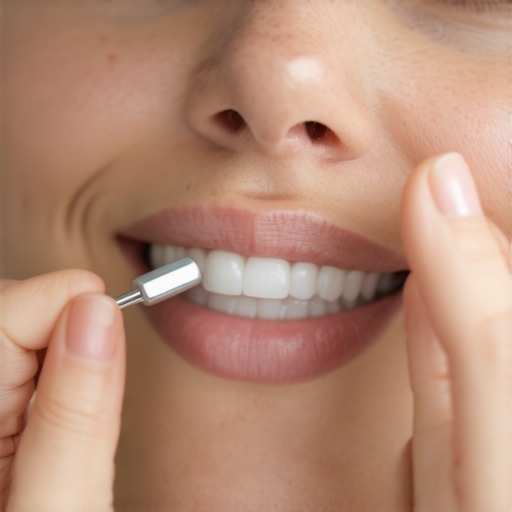
Can you actually whiten a smile that already has veneers or bonding?
The short answer is no, not without replacing the old work. If you are currently debating veneers vs crowns which is right for your smile, you must whiten your natural teeth before the permanent porcelain is set. Once that porcelain is fired in a kiln, its color is locked in forever. This is why why your veneers look opaque and fake in flash photography often happens—the shade was picked to match a bleached-white smile that the patient could not maintain, or the material lacks the subtle light-play of natural enamel. Another nuance people miss is the ‘halo effect’ around the gums. Have you noticed why your porcelain crowns look darker near the gum line over time? It is usually not the porcelain changing; it is your natural tooth root or gum recession showing through. If you try to ‘whiten’ that dark line away, you are just going to irritate your gums. Instead, focus on learning how to stop your veneers from looking too white and fake by prioritizing health and texture over pure blinding brightness. Have you ever fallen into this trap? Let me know in the comments.
The Gear That Actually Makes a Difference
I used to think a standard toothbrush and some floss were enough until I committed to a full smile makeover. I realized quickly that the ‘biofilm’—that thin layer of bacteria that feels like a fuzzy sweater on your teeth—is remarkably stubborn. For anyone using aligners, I cannot recommend a small ultrasonic cleaner enough. I’m talking about those little pods that use high-frequency sound waves to blast away debris. It’s not just for jewelry anymore. If you’ve been wondering why your clear aligners have started to look cloudy, it is likely because manual brushing creates microscopic scratches where bacteria set up camp. A 2022 study published in the International Journal of Environmental Research and Public Health confirmed that ultrasonic cleaning is significantly more effective at removing Streptococcus mutans than traditional rinsing or brushing. It’s a game-changer for maintaining that invisalign secrets achieving a perfect smile discreetly look without the ‘funk’ that usually comes with long-term wear.
Stop Scrubbing and Start Vibrating
For my friends with porcelain work, please put down the charcoal and the hard-bristle brushes. You need a high-end electric toothbrush with a pressure sensor. I personally use one that flashes red if I press too hard because I have a tendency to take my frustration out on my gums. This is especially vital if you are following how to keep your coffee habit without ruining your new veneers. You want to gently vibrate the stains away, not sand down the glaze. I also rely heavily on a water flosser. If you have a bridge or veneers, traditional floss can sometimes catch, but a pressurized stream of water gets into those tight spaces without the drama. It’s also the best way to learn how to clean the stubborn gunk out of your night guard or retainers without using abrasive chemicals that can degrade the plastic over time.
How do I maintain my bright results over the next decade?
The secret is consistency and the right chemicals, not the strongest ones. We are moving toward an era of ‘bio-active’ dental care. In the next few years, I predict we will see toothpastes that actually remineralize enamel using synthetic hydroxyapatite—effectively filling in those microscopic pits before stains can ever take hold. This will make the current the ultimate guide to teeth whitening options in 2025 look like ancient history. For now, focus on pH balance. I use a pH-neutralizing mouthwash after every meal to ensure my mouth isn’t a breeding ground for acid-loving bacteria. This is particularly important for ensuring family dental care what parents need to know in 2025, as kids often have much more acidic diets than we realize. If you want to keep that ‘just-dentist-cleaned’ feeling, stop looking for a quick fix and start investing in the right tools. My challenge to you: swap your manual brush for an ultrasonic cleaner for your aligners or retainers this week and see how much clearer they stay. You will never go back.
The Hard Lessons My Mirror Taught Me After Midnight
Looking back at my ‘vampire teeth’ era, I realize now that I was fighting against my own biology. The biggest lightbulb moment came when I understood that over-bleaching is often the culprit behind why your teeth look gray instead of yellow. You cannot just blast away stains without reinforcing the structure underneath. Another hard truth? Your genetics play a huge role in how much pigment your teeth absorb; some of us just have naturally more porous enamel, and that is perfectly okay. It just means our dental ritual needs to be more about proactive maintenance and less about emergency bathroom scrubbing.
Tools That Actually Earned a Spot on My Bathroom Counter
If you want to move past the amateur level of dental care, you need a strategy that goes beyond a basic drugstore tube. I swear by three specific things: First, a pH-balancing mouthwash—it is the only way to stop acid in its tracks before it softens your enamel. Second, for those with restorative work, understanding veneers made simple means using non-abrasive gels that do not scratch the delicate porcelain surface. Finally, I always suggest keeping a set of ‘maintenance’ trays ready. Whether you use the latest teeth whitening secrets for a sparkling smile in 2025 or a custom dentist-made kit, consistency is your best friend. I trust these methods because they focus on the long game of health, not just a one-night visual fix.
Keep Sipping and Keep Smiling Without the Guilt
At the end of the day, a glass of red wine is one of life’s great pleasures. You should never have to choose between a sophisticated dinner and a confident, bright smile. By shifting your focus from ‘cleaning up the mess’ to ‘preventing the damage,’ you protect the long-term investment you have made in your oral health. Whether you are managing ensuring family dental care what parents need to know in 2025 for your household or maintaining your own professional results, remember that a healthy mouth is the true foundation of any beauty routine. You have the tools, the science, and the knowledge—now go enjoy that Malbec with total confidence!
Have you ever had a major ‘stain emergency’ at a social event that completely changed how you view your dental routine? Let me know in the comments below!