
Why Your Dental Implant Crown Feels Loose Even When the Post is Solid
I was three bites into a medium-rare ribeye when it happened. A tiny, unmistakable click resonated through my jawbone. My heart immediately skipped a beat. I have spent more time in a dentist’s chair than I would like to admit, so I knew that feeling meant trouble. But when I reached in to check, something strange happened. The crown—the tooth part you actually see—was definitely moving, but the metal post underneath felt like it was welded into my skull. It is a terrifying sensation, honestly. You start thinking about failed surgeries and massive bills. But here is the secret I learned the hard way: a loose crown does not always mean a failed implant. Today, I am going to walk you through exactly why your hardware is acting up and how we can get that smile back to being rock-solid. Have you ever felt that weird little click while you were eating something totally normal?
That Wiggle Does Not Always Mean Your Implant is Failing
Before you start looking up the cost of a full replacement, you need to know how to tell if your dental implant is actually failing versus just having a minor mechanical hiccup. Most of the time, the issue is not the titanium post in your bone; it is the tiny screw or the cement holding the crown on top. I made the mistake of thinking I could just ignore it for a month, hoping it would settle back into place. Spoiler alert: it did not, and I almost swallowed my crown during a lunch meeting. It is a completely different sensation than when your dental crown is loose or just sensitive on a natural tooth because there are no nerves in the implant itself. According to the American Academy of Implant Dentistry, while dental implants have a success rate of up to 98%, the components sitting on top of them can sometimes require a quick tightening. This specific problem often stems from why your dental implant crown feels slightly wiggly when you chew, which is usually a simple fix for your dentist involving a torque wrench and two minutes of your time.
Is it actually worth getting this looked at right away?
You might be tempted to wait until your next cleaning, but a loose crown is an open door for bacteria to sneak down toward the implant post. If you let it go, you risk turning a simple tightening appointment into an actual infection. We want to keep that foundation healthy so you can focus on other things, like the best teeth whitening options for your new smile. Let’s dig into the common causes for this looseness and what your next steps should be to protect your investment.
How to Identify the Source of the Movement
To figure out what is actually going on inside your mouth, you need to perform a simple diagnostic check. Use a clean finger to apply gentle horizontal pressure to the crown. If the base stays put but the top wobbles, you are likely dealing with a loose abutment screw. This is remarkably similar to a loose lug nut on a car wheel; the wheel (the crown) is fine, but the fastener (the screw) has backed out. If you have ever dealt with why your dental implant crown feels slightly wiggly when you chew, you know that the sensation is more of a vibration than a sharp pain.
The Mechanics of the Abutment Screw
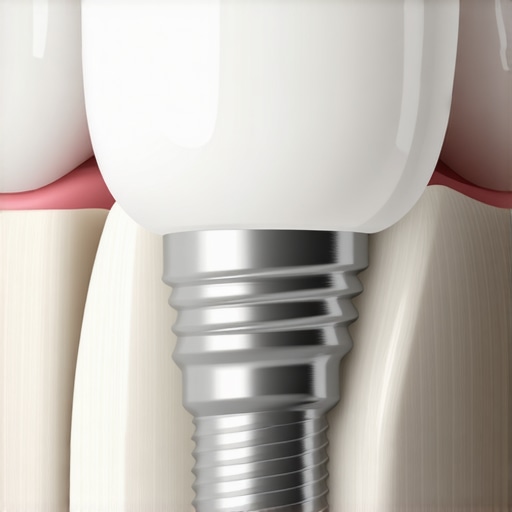
Most dental implants are a three-part system: the implant post (the root), the abutment (the connector), and the crown (the tooth). These parts are held together by a tiny screw that is torqued to a specific Newton-centimeter level. Over years of chewing, that torque can slowly dissipate. It is a much more common mechanical issue than people realize, often occurring when patients skip maintenance, which highlights the real cost of skipping your six month cleaning. When that screw is loose, the crown can pivot, creating a gap where food debris and bacteria collect. This tiny gap is the perfect breeding ground for inflammation, so even if it does not hurt yet, it needs professional attention. #IMAGE_PLACE_HOLDER_B#
Immediate Steps to Protect Your Implant
While you wait for your appointment, stop chewing on that side of your mouth immediately. I once made the mistake of thinking I could test the looseness by eating a bag of pretzels. I ended up nearly stripping the internal threads of the implant itself, which would have turned a 10-minute fix into a multi-thousand-dollar disaster. If you are also managing other dental work, like deciding between veneers vs crowns which is right for your smile, you already know that precision is everything in restorative dentistry.
Avoid the Temptation of DIY Repairs
Do not, under any circumstances, try to use over-the-counter dental glue or superglue to secure the crown. This can block the screw access hole, making it impossible for your dentist to reach the hardware without drilling through your expensive porcelain. If the crown actually falls out, keep it in a clean container and check the site. You might see a small silver post sticking out of your gum; this is normal. You can learn the best way to handle a loose healing cap on your dental implant if the metal part itself feels like it is moving. This is much like managing a loose tile in your bathroom; applying the wrong adhesive only makes the professional’s job ten times harder when they arrive to do it right.
How the Professional Fix Works
When you get to the office, the dentist won’t usually need to numb you because the implant has no nerves. They will remove the small composite plug on the biting surface of your crown, reach in with a specialized tiny torque wrench, and simply tighten the screw back to the manufacturer’s specifications. It is a relief that is almost as satisfying as learning how to manage the zingers after a professional whitening session. They will then reseal the hole with a fresh bit of tooth-colored filling, and you’ll be back to eating steak that same night. This process ensures the longevity of your hardware and confirms how to tell if your dental implant is actually healing or failing by verifying the stability of the underlying post. They might also check your bite alignment to ensure you aren’t putting too much heavy pressure on that specific tooth when you grind or clench.
Fixing a loose implant crown is a prime example of why comprehensive care matters. Most people treat dentistry like a series of isolated repairs, but that’s a dangerous way to look at your mouth. We often see patients who view cosmetic changes as purely ‘extra,’ yet the reality is far more nuanced. In my experience, what we call cosmetic is often the key to long-term structural health. For instance, while most people think of family dentistry building healthy smiles for every generation as just routine cleanings and fillings, it is actually the frontline for spotting bite misalignments before they ruin expensive work. If your bite is not calibrated, even the most expensive implant or crown will eventually wiggle loose due to excessive force. This is the ‘hidden’ side of dental care that rarely gets talked about in the waiting room.
The Vanity Myth and Why It Costs You More Later
Everyone says veneers are just for Hollywood stars who want a bright white smile, but I challenge that common belief. Often, transform your smile with veneers expert tips reveal that these restorations are actually used to protect teeth that have been structurally compromised by acid reflux or severe grinding. The ‘trap’ here is assuming you can just fix one tooth in a vacuum. If you don’t address why a tooth was damaged in the first place, you’ll be back in the chair in two years. A study published in the Journal of Esthetic and Restorative Dentistry suggests that failure to account for functional occlusion (how your teeth meet) is the leading cause of ceramic restoration failure. It is not just about the glue; it is about the physics of your jaw.
Why does my bite feel ‘off’ even if my veneers look perfect?
This is a sophisticated question that gets to the heart of dental proprioception. Your brain is incredibly sensitive to even a hair’s breadth of difference in tooth height. If your new restorations are even slightly too thick, you might experience the real reason your new veneers feel bulky against your lips or even chronic headaches. This is why ‘discount’ cosmetic work is such a gamble; it lacks the precise adjustment needed to harmonize with your muscles. It is also why many people feel why your jaw aches every time you wear your new invisalign tray; your muscles are fighting against a new alignment. Professional care ensures that your aesthetic goals do not come at the cost of your comfort.
#IMAGE_PLACE_HOLDER_C#
Another major ‘oops’ factor I see constantly involves DIY whitening. People are obsessed with a brighter smile, but they often fall for the mistake of using whitening strips on dental bonding or crowns. Since porcelain and resin do not bleach, you end up with a mismatched, ‘checkerboard’ smile. Instead of a uniform glow, you highlight every single restoration in your mouth. If you want real results, you need to understand teeth whitening secrets for a sparkling smile in 2025, which involves planning your whitening before you replace any front-facing crowns or veneers. Similarly, with orthodontic shifts, many patients fall into the problem with wearing your aligners for only 18 hours a day. They think they can ‘catch up’ the next day, but teeth require constant, gentle pressure to move safely. Moving them sporadically is like trying to bend a wire back and forth; eventually, something is going to snap or lose its grip. Have you ever fallen into this trap of thinking you could ‘short-cut’ your dental treatment? Let me know in the comments.
The specific tools that keep my hardware from failing
Maintaining a smile that has undergone serious restorative work—implants, veneers, or even a long stint with aligners—requires more than just a cheap toothbrush from the grocery store. I personally swear by a high-quality water flosser, but here is the trade secret: I only use the specialized orthodontic tip. This isn’t just about spraying water; it is about disrupting the biofilm at the exact point where my implant crown meets the gum tissue. If you don’t clear that gap, you are inviting inflammation that can lead to bone loss. This high-level maintenance is a cornerstone of ensuring family dental care what parents need to know in 2025. If you are a chronic grinder like me, a custom-fitted night guard is non-negotiable to how to keep your veneers from chipping if you grind your teeth. I have seen people crack a multi-thousand-dollar restoration in a single night of stress-induced clenching because they thought they could just ‘muscle through’ it.
How do I maintain these results over the next decade?
Consistency is your best friend, but you have to use the right chemistry. One of the biggest mistakes I see is people using abrasive ‘whitening’ toothpastes on their new porcelain. According to the Journal of Clinical Periodontology, mechanical plaque control is essential, but using high-abrasivity formulas can actually microscopically scratch the glaze on your veneers. I always check the RDA (Relative Dentin Abrasivity) value of my toothpaste; I aim for anything under 70. This prevents the surface from becoming dull over time. If you ignore this, you’ll find the truth about charcoal toothpaste and your tooth enamel the hard way—porcelain doesn’t heal once the polish is gone. We want that veneers made simple transform your tooth aesthetics in 2025 at 1822 look to stay fresh, not turn matte and stained within five years.
#IMAGE_PLACE_HOLDER_D#
Why an ultrasonic cleaner changed my Invisalign game
If you are still scrubbing your aligners or retainers with a manual toothbrush, you are doing it wrong. I switched to a dedicated ultrasonic cleaner—the kind that uses high-frequency sound waves to create cavitation bubbles—and it was a total revelation. It is literally the only way to stop your clear aligners from smelling like old saliva and getting that gross, cloudy buildup. Looking forward, I predict we will soon see ‘smart’ retainers with embedded biosensors that track your oral microbiome and pH levels in real-time, syncing directly to your dentist’s office. This kind of tech will take the guesswork out of maintenance. For now, my advanced tip for you is this: buy an ultrasonic cleaner today. It takes five minutes, requires zero scrubbing, and keeps your orthodontic hardware crystal clear. Give it a try for one week, and you will never go back to manual cleaning again.
Hard Truths About Maintaining a High-End Smile
After years of navigating the world of restorative work, I have realized that a dental implant is not a ‘set it and forget it’ solution. It is an investment that requires an active partnership with your dentist. One of the biggest lightbulb moments for me was realizing that family dentistry building healthy smiles for every generation means having a provider who knows the history of your specific bite patterns and how you wear down your restorations. Another lesson? Don’t wait for pain. In the world of implants, mechanical looseness is a silent warning. If you ignore it, you’re not just risking a crown; you’re risking the bone foundation itself. Lastly, remember that ensuring family dental care what parents need to know in 2025 is as much about the adults as it is the kids—the maintenance habits we form now dictate how long our expensive hardware stays in place.
The Gear I Use to Keep My Hardware Solid
I have tried every gadget on the market, but only a few have earned a permanent spot on my vanity. First, I highly recommend a Waterpik with the specialized Plaque Seeker tip; it is essential for getting under the edges of a dental implant where a toothbrush simply cannot reach. Second, I trust my custom-made occlusal guard more than my morning coffee. It protects my veneers made simple transform your tooth aesthetics in 2025 at 1822 by absorbing the force of my nighttime grinding. Third, check out the book The Dental Diet by Dr. Steven Lin—it completely changed how I view the relationship between nutrition and jaw health. Finally, never underestimate the power of an ultrasonic cleaner to handle the only way to stop your clear aligners from smelling like old saliva. These tools aren’t just ‘extras’; they are the insurance policy for your smile.
#IMAGE_PLACE_HOLDER_E#
Take the Fear Out of Your Next Dental Visit
Finding a loose part in your mouth can be terrifying, but it is almost always a solvable problem. Whether you are navigating the complexities of a dental implant or just looking for teeth whitening secrets for a sparkling smile in 2025, the goal is always the same: a healthy, functional smile that makes you feel like the best version of yourself. Don’t let a minor mechanical hiccup steal your confidence. Most dental issues are just maintenance steps on the road to a lifelong smile. Have you ever felt that terrifying ‘click’ in your jaw while eating, or did your crown give you a different warning sign? Let me know in the comments below!