
How to Manage the Lisp Caused by Your New Set of Braces
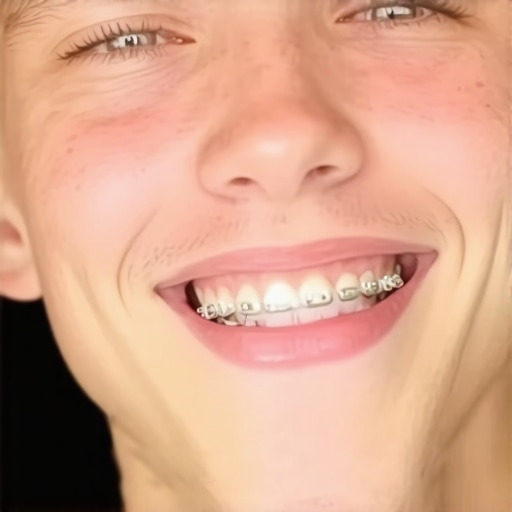
I remember walking into a coffee shop three days after getting my metal brackets and trying to order a simple ‘iced espresso.’ What came out was a wet, whistling ‘ithed ethpretho’ that made the barista tilt her head in genuine confusion. I felt my face turn beet red. It wasn’t just the physical discomfort of the metal; it was the sudden, jarring loss of my ability to speak like a functioning adult. I spent that first week nodding like a bobblehead just to avoid the humiliation of the ‘S’ sound. If you are currently hiding in your house because your tongue feels like a confused octopus trapped behind a silver fence, I have been exactly where you are. We are going to get your voice back today.
My Week of Sounding Like a Deflating Balloon
I made a massive mistake early on by trying to talk less to ‘save’ my dignity. I thought if I just kept my mouth shut, my tongue would magically figure it out. In reality, that just delayed the inevitable. Your tongue is a muscle, and it suddenly has zero ‘room to roam’ because of those new attachments. Whether you are dealing with traditional wire or the slightly smoother Invisalign innovation changing smiles, your speech is going to take a hit. According to the American Association of Orthodontists, nearly every patient experiences some form of speech adjustment period, but the good news is that your brain is incredibly adaptable. My breakthrough came when I stopped being afraid of the spray and started practicing in the shower. You have to retrain your mouth to find the new ‘sweet spots’ for your teeth and tongue to meet. While you are at it, you might want to learn how to stop your lips from sticking to your braces, because nothing kills a sentence faster than a snagged upper lip.
Is This Embarrassing S-Sound Disaster Actually Temporary?
You might be worried that you’ve traded a straight smile for a lifetime of sounding like a cartoon character, but I promise it is just a phase. The ‘lisp’ happens because your tongue is hitting the brackets instead of the back of your teeth. One trick I learned the hard way was to stop over-enunciating. I tried to speak so clearly that I ended up sounding even more robotic and weird. Instead, I found that speaking slightly slower and keeping my jaw relaxed did wonders. If the metal is actually cutting into your cheeks and making it hard to form words, don’t just suffer through it; you should definitely check out managing the pain of a mouth ulcer from your braces so you can focus on your speech rather than the sting. Have you had one of those ‘did I really just say that?’ moments yet, or are you still in the ‘avoiding all phone calls’ stage? If you’re really struggling with the fit, it might be time to contact us or your local orthodontist to ensure nothing is bent out of place.
Read Aloud Until the Words Stop Whistling
The only way out of the ‘braces lisp’ is straight through it. You cannot simply think your way into better speech; you have to muscle your way there through repetitive practice. Think of your tongue like a seasoned pianist who is suddenly forced to play on a keyboard where the keys are a different size and texture. You need to build entirely new muscle memory to navigate the metal. I spent an entire Tuesday afternoon in my parked car trying to recite the lyrics to a fast-paced song without spraying the dashboard or stumbling over the ‘S’ sounds. I looked like a madman to anyone walking by, but by the fortieth repetition, I discovered that if I tucked my tongue just a millimeter lower behind my bottom teeth than I was used to, the sharp whistle vanished. This learning curve is a big reason why many adults now opt for Invisalign secrets for achieving a perfect smile discreetly, as the thinner plastic is often easier for the tongue to navigate than bulky metal brackets. However, regardless of your hardware, the core solution is the same: grab a book or even a cereal box and read it out loud for fifteen minutes a day. Focus intensely on the sounds that make you trip—usually ‘S’, ‘T’, and ‘CH’ sounds. If you find that your mouth is getting too sore to continue the drills, you might need to look into how to keep your child from biting their cheeks while they have braces, because those protective techniques work just as well for adults who are constantly snagging their inner lips while practicing. 
Taming the Tongue with Precision Placement
When you first get braces, your tongue’s traditional ‘landing pad’ is effectively gone. To fix the lisp, you have to find a new sweet spot. Try making a hard ‘T’ sound and feel exactly where the tip of your tongue touches the roof of your mouth. Now, try to slide it just slightly further back toward your palate than you were used to before the brackets were glued on. You are effectively creating a new map of your mouth. It feels alien at first, almost like you are trying to talk while holding a marble under your tongue. I remember trying to explain a complex project at work and feeling my tongue literally get caught on a bracket mid-sentence. The result was a weird, stuttering halt that made me want to crawl under the conference table. I realized in that moment I was trying to talk at my pre-braces speed. You have to slow down. Slowing your speech by just ten percent gives your tongue the extra millisecond it needs to find its new home without getting snagged. If you are a parent helping a teenager through this transition, family dentistry building healthy smiles for every generation suggests that maintaining patience during this ‘re-learning’ phase is the best way to keep their confidence high.
Give Your Tired Jaw a Break
Expect to feel a physical toll during the first few weeks. Your face has dozens of tiny muscles that are suddenly working overtime to move your lips and cheeks around the new obstacles. It is very common to wonder why your jaw muscles feel exhausted after a long day of talking. When the fatigue sets in, do not push it. Use dental wax liberally on any bracket that feels like it is creating friction. The less physical resistance you have, the easier it is to articulate clearly. If you have pushed too hard and ended up with a painful spot inside your mouth, knowing how to manage the pain of a mouth ulcer from your braces is the only way to get back to practicing without flinching. Retraining your voice is a marathon, not a sprint, and your muscles need rest just like any other part of the body.While you are busy retraining your tongue, do not lose sight of the bigger picture. I have seen so many people focus entirely on alignment only to sabotage their results with DIY hacks later. For instance, a persistent myth in modern dentistry is that charcoal toothpaste is a natural miracle for whitening. In reality, it is often like using sandpaper on a finished wood floor. The truth about charcoal toothpaste and your tooth enamel is that it can strip away the protective layer, leaving your teeth more sensitive and prone to deep-set stains. According to a study published in the Journal of the American Dental Association, there is insufficient clinical evidence to support the safety or efficacy of charcoal-based powders for tooth whitening. If you want a brighter look without the permanent damage, you should stick to top teeth whitening strategies that preserve your mineral health.
Why Do Your Bottom Teeth Stubbornly Stay Yellow?
It is incredibly frustrating when your top row looks like a Hollywood billboard while the bottom row remains dull. This is not usually due to poor brushing; it is often a matter of anatomy and saliva flow. Your lower teeth are smaller and have thinner enamel, which allows the yellowish dentin underneath to show through more easily. Additionally, the reason why your top teeth are white but the bottom ones stay yellow often comes down to the pooling of saliva and minerals that lead to faster tartar buildup on the lower arch. You need a targeted approach for the bottom teeth rather than a one-size-fits-all whitening kit.
Stop Wasting Money Whitening Your Old Dental Work
Here is the ‘oops’ factor most people miss: whitening gel only affects natural tooth structure. If you have a filling, a crown, or dental bonding on your front teeth, those materials will not budge. I have seen patients spend hundreds on professional kits only to end up with a mismatched smile because they did not realize the mistake of using whitening strips on dental bonding. If you are looking to refresh your entire look, you might be better off exploring how expert tips for veneers can provide a uniform shade that stays consistent across all your teeth. 
The Trap of Choosing Convenience Over Compliance
If you decided on clear aligners to avoid the metal mouth look, you have to respect the clock. Many people assume they can get away with wearing their trays for 16 or 18 hours instead of the required 22. This micro-cheating leads to a phenomenon called lagging, where the tooth stops moving into the aligner’s programmed position. The problem with wearing your aligners for only 18 hours a day is that your teeth spend just enough time relapsing to negate the progress made during the night. Have you ever fallen into this trap of thinking you could catch up later? Let me know in the comments.Once you get past the initial learning curve of braces or aligners, the game changes from ‘surviving’ to ‘maintaining.’ I quickly learned that traditional brushing isn’t enough when you’ve invested in a premium smile. I spent months manually scrubbing my trays until I discovered the magic of a small ultrasonic cleaner. It uses high-frequency sound waves to blast away the biofilm that a toothbrush simply can’t reach; it is truly the only way to stop your clear aligners from smelling like old saliva. If you are wearing veneers, do not assume they are invincible. I have seen people treat them like real teeth only to realize later why your porcelain veneers look dull after five years of wear. It usually comes down to using the wrong polish or a highly abrasive paste. The American Dental Association (ADA) focuses heavily on the Relative Dentin Abrasivity (RDA) index; any toothpaste with an RDA score over 250 can literally sand down the luster of your expensive dental work over time. I personally stick to a low-abrasive gel so I can learn how to keep your coffee habit without ruining your new veneers. 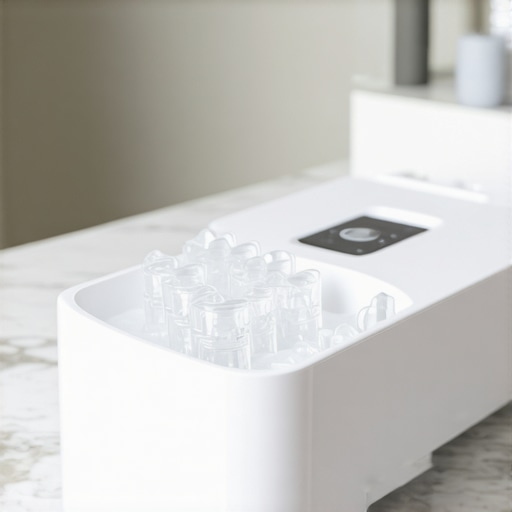
How do I protect my smile for the long haul?
The most common failure point isn’t the procedure itself; it is the ‘forgotten retainer.’ Your teeth have a metabolic memory, and they will naturally try to return to their original, crooked positions if left unchecked. You must commit to learning how to stop your teeth from shifting after your braces come off by wearing your night-guards or retainers religiously. Looking ahead, I predict that by 2030, we will move away from removable retainers entirely in favor of 3D-printed, permanent lingual splints that are integrated with micro-sensors to track tooth movement in real-time. For now, we must rely on the ultimate guide to teeth whitening options in 2025 to keep the shade consistent as the years go by. My advanced tip for you today is to try ‘double-cleansing’ your mouth: use a water flosser with a tiny splash of alcohol-free mouthwash before your regular brush. It reaches the microscopic pockets around attachments that traditional floss simply skips. Try this tonight and feel the immediate difference in your gum health.
What I Learned While Spraying Coffee on My Barista
I realized quickly that silence is actually the enemy of progress during orthodontic treatment. If you do not talk, your tongue never learns the new physical map of your mouth. I also discovered that recording yourself on your phone is not just for social media; it is a vital diagnostic tool. Hearing exactly where you “hiss” or “whistle” helps you micro-adjust your tongue placement in real-time. Also, do not ignore the physical fatigue of your facial muscles; if you find that your jaw feels tight every time you start a new aligner tray, give yourself permission to rest your voice for a few hours. This is a mental game as much as a physical one, and patience is your best friend.
The Gear That Saved My Sanity and Speech
To get through that first grueling month, I relied on a specific toolkit that kept me from giving up on my clarity. First, I kept a high-quality water flosser nearby because even the smallest bit of trapped food can change your vocal resonance and make you stumble. Second, I used a massive stash of medical-grade orthodontic wax; knowing how to fix the sharp edge with dental wax is a total lifesaver when a metal bracket starts rubbing your inner cheek raw during a long conversation. Lastly, I spent time studying the ultimate guide to teeth whitening options in 2025 to keep my focus on the aesthetic prize. Seeing the potential end result makes the temporary speech hurdle feel like a very small price to pay.
Your Journey Toward a Confident New Sound
This awkward, whistling stage is a tiny, temporary phase in the grand scheme of your dental health. Whether you are currently navigating Invisalign innovation changing smiles in 2025 or sticking with traditional metal hardware, the final result will far outlast the fleeting embarrassment of a few tripped-over words. One day very soon, you will be laughing and speaking without giving your tongue or your brackets a single thought. You have already done the hard part by starting the journey. Which sound is giving you the most trouble right now—the “S” or the “CH”? Let me know in the comments below so we can swap practice tips!